Moroccan cuisine features flavorful tagines and couscous, both infused with bold spices like ras el hanout, cumin, and saffron. These dishes celebrate a rich cultural heritage, blending aromatic ingredients and slow-cooking techniques to create layers of taste. Spices transform simple ingredients into extraordinary meals that nourish the body and spirit. If you want to explore how these vibrant flavors and traditional practices come together, there’s much more to discover below.
Key Takeaways
- Tagines are slow-cooked, aromatic dishes infused with traditional spice blends like Ras el Hanout, creating tender, layered flavors.
- Couscous serves as a neutral base, absorbing rich stews and vegetables flavored with Moroccan spices.
- Moroccan spice blends, especially Ras el Hanout, combine over a dozen ingredients for complex, balanced flavors in dishes.
- Spices such as cumin, saffron, cinnamon, and paprika are essential in creating vibrant, harmonious Moroccan dishes.
- Moroccan cuisine emphasizes bold flavors, cultural traditions, and sharing food as a symbol of hospitality and community.
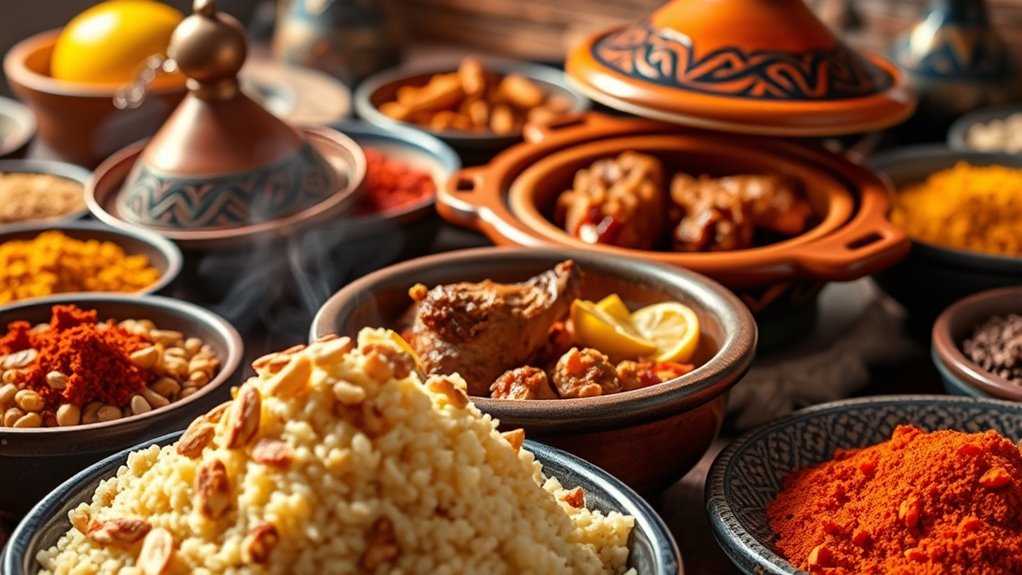
Have you ever wondered what makes Moroccan cuisine so uniquely flavorful and vibrant? It’s the combination of aromatic spices, rich traditions, and hearty dishes that create a sensory experience like no other. From the comforting warmth of harira soup to the invigorating sweetness of Moroccan mint tea, each element reflects a deep cultural heritage. You’ll find that the flavors are bold yet balanced, inviting you to explore a world of taste with every bite and sip.
Moroccan cuisine delights with bold spices, rich traditions, and vibrant flavors that awaken all senses.
Imagine sitting at a bustling Moroccan market, where the air is filled with the scent of cumin, cinnamon, and saffron. Here, the preparation of harira soup is a cherished ritual, especially during Ramadan. This hearty, tomato-based soup combines lentils, chickpeas, and tender chunks of meat, all simmered with a blend of spices that warm your soul. It’s a dish that embodies Moroccan hospitality, meant to nourish both body and spirit. As you savor each spoonful, you’ll notice how the spices dance on your palate, offering a comforting yet invigorating experience. Alongside harira, many Moroccans enjoy a glass of Moroccan mint tea—sweet, fragrant, and served in small, ornate glasses. It’s more than just a beverage; it’s a symbol of hospitality and friendship, often enjoyed after meals or during social gatherings. The cool, sweet mint tea cleanses your palate, balancing the richness of the food and cooling the heat from spices.
Moroccan cuisine isn’t just about individual dishes; it’s about the harmony of flavors achieved through skillful use of spice blends. Ras el Hanout, one of the most renowned, can contain over a dozen ingredients, including turmeric, paprika, coriander, and cloves. This complex mixture elevates tagines and couscous, transforming simple ingredients into extraordinary meals. As you taste a traditional tagine, you’ll notice how the slow-cooked meat or vegetables absorb the spices and aromatics, resulting in a tender, flavorful dish bursting with layers of taste. Couscous, often served with a stew of vegetables and meats, acts as a neutral canvas that soaks up all those delicious flavors. Moroccan cuisine invites you to experience a balance—spicy yet subtle, sweet yet savory, hearty yet refined. Additionally, the second trimester is a crucial period for monitoring fetal development and ensuring the health of both mother and baby during pregnancy.
In the end, what makes Moroccan cuisine truly stand out is its ability to bring people together around the table. The dishes and drinks are crafted not just for sustenance but to foster connection and celebration. Whether you’re sipping mint tea or indulging in a steaming bowl of harira, you’re part of a centuries-old tradition that celebrates warmth, hospitality, and the vibrant spirit of Morocco.
Frequently Asked Questions
What Are the Origins of Moroccan Spice Blends?
You’ll find that Moroccan spice blends have a rich history rooted in trade routes and cultural exchanges. They develop through generations, blending flavors like cumin, coriander, and cinnamon to create unique flavor combinations. These blends reflect Morocco’s diverse influences, including Arab, Berber, and Mediterranean traditions. By understanding their spice blend history, you’ll appreciate how each combination enhances dishes with layers of aromatic complexity, making Moroccan cuisine truly distinctive.
How Do Moroccan Tagines Differ From Other Stews?
You’ll notice Moroccan tagines differ from other stews through their unique cooking techniques and ingredient variations. The slow, simmered process in a conical clay pot helps flavors meld deeply, creating tender, aromatic dishes. Unlike typical stews, tagines often include specific spice blends like ras el hanout and ingredients such as dried fruits, nuts, and preserved lemons, giving them a distinctive, complex flavor profile that sets them apart.
What Is the Traditional Method of Preparing Couscous?
To prepare couscous traditionally, you start with grain preparation by rinsing the semolina to remove excess starch. Then, you use steaming techniques, placing the grains in a special couscoussier or a steamer basket over boiling water. You let the couscous steam until fluffy, occasionally fluffing with a fork, and repeat the process to guarantee even cooking. This method creates light, tender couscous perfect for serving with stews or vegetables.
Are There Regional Variations in Moroccan Cuisine?
Think of Moroccan cuisine as a tapestry woven with diverse regional flavor profiles; each region adds its unique thread. You’ll find the coastal areas emphasizing seafood and citrus, while the Atlas Mountains showcase hearty stews and spices. This culinary diversity symbolizes Morocco’s rich history and cultural mosaic, inviting you to explore varied tastes and traditions. Embrace these regional variations to truly experience the depth and vibrancy of Moroccan food.
How Are Moroccan Desserts Flavored and Prepared?
You’ll find Moroccan desserts are beautifully presented, often garnished with nuts, fruits, or edible flowers. They’re flavored through flavor infusion techniques like soaking dried fruits in honey or infusing syrups with spices like orange blossom or rosewater. You might enjoy the delicate balance of sweetness and aromatic spice, creating a sensory experience. Preparing these treats involves layering flavors and presenting them attractively, making every dessert a feast for both your eyes and palate.
Conclusion
As you savor the rich flavors of Moroccan cuisine, let each bite transport you to a land where spices dance and traditions simmer. Embrace the vibrant tapestry of tagines, couscous, and spice blends, and realize that every meal is a story waiting to be told. In this symphony of tastes, you don’t just eat—you set out on a journey. So, indulge, explore, and let Moroccan flavors awaken your senses and ignite your culinary curiosity.