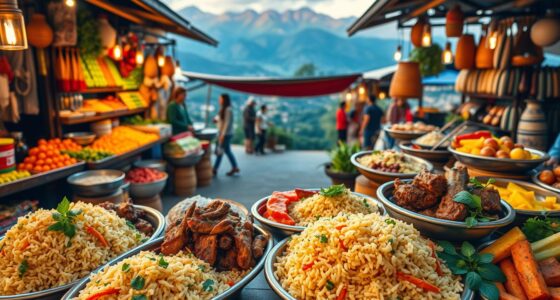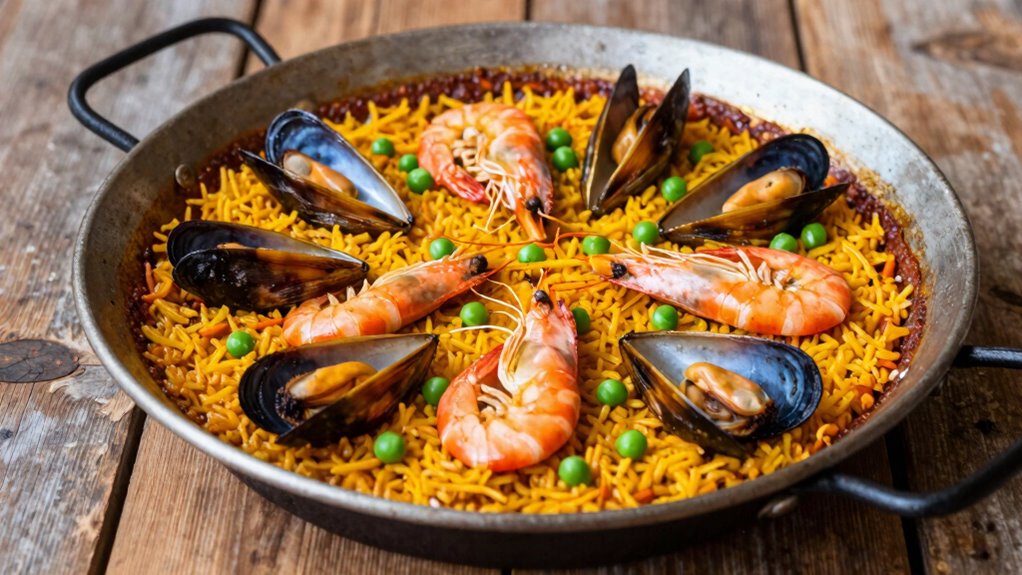
Choosing the right paella pan is key for authentic flavor, even heat, and that perfect socarrat. Opt for a pan that’s wide enough to spread ingredients thinly and allows for good heat conduction. Use medium heat to cook ingredients, then turn up slightly at the end to develop the crispy bottom. Proper size and heat control help create the crust that makes paella special—stay tuned to learn the secrets behind mastering this technique.
Key Takeaways
- Choose a pan with the right diameter (15-18 inches) for even heat distribution and sufficient surface area.
- Use materials like carbon steel or enameled cast iron for optimal heat conduction and retention.
- Control heat carefully—medium to high heat helps develop the socarrat without burning the rice.
- Properly preheat the pan, then cook ingredients at consistent heat to promote even cooking and flavor development.
- Achieve socarrat by increasing heat near the end, allowing the rice bottom to caramelize and form a crispy crust.
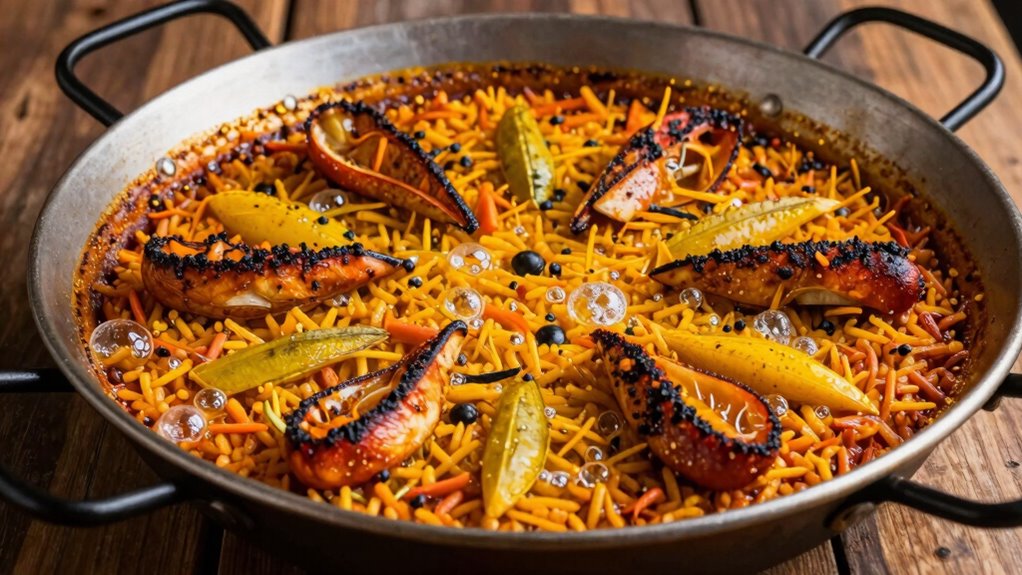
A good paella pan is indispensable for making authentic, flavorful paella. The right pan helps you master the cooking techniques that give this dish its unique texture and taste. When choosing your pan, consider the material, size, and shape, as each impacts how heat distributes and how ingredients cook. A well-made pan allows heat to spread evenly, preventing hot spots that can burn rice or undercook ingredients. This even heat distribution is critical for developing the perfect socarrat, the crispy, caramelized layer at the bottom that’s the hallmark of a great paella.
Ingredient selection plays a significant role in achieving the ideal result. Fresh, high-quality ingredients—such as saffron, seafood, chicken, and vegetables—bring depth and authenticity to your paella. When selecting ingredients, think about how they’ll cook together and how their flavors will meld. For example, opting for fresh seafood that’s added towards the end ensures it remains tender and flavorful, rather than overcooked and rubbery. Similarly, choosing the right rice—preferably short or medium grain—absorbs flavors well and creates the desired texture.
Choosing fresh, high-quality ingredients like saffron, seafood, and vegetables enhances flavor and authenticity.
Mastering cooking techniques is essential. Start by heating your pan over medium heat, then add oil and sauté aromatics like garlic and onion. Once softened, add your proteins and cook them just enough to develop flavor. Next, incorporate your rice, stirring briefly to coat each grain in the flavorful base. Proper ingredient selection complements these techniques, ensuring each component cooks at the right pace. Pour in broth and saffron, then let the mixture simmer without stirring, allowing the rice to absorb the liquid evenly. This step requires patience and attention to heat, which is where your pan’s quality truly makes a difference.
To develop the socarrat, you need to increase the heat slightly toward the end of cooking. This caramelizes the rice at the bottom, creating that crispy, flavorful crust. Achieving this requires precise temperature control and understanding how your pan conducts heat. If your pan heats unevenly, you might struggle to form a good socarrat or risk burning the rice. That’s why selecting a pan that heats uniformly and is suitable for your stove type is essential. With the right techniques, proper ingredient selection, and a quality pan, you’ll be able to produce authentic paella with that irresistible crust and perfectly cooked ingredients every time.

Emeril Lagasse Extra Large French Door Air Fryer Toaster Oven Combo, 24 Cooking Functions and Digital Controls, 7 Accessories Included, Stainless Steel Finish, 26QT Capacity
A VERSATILE AIR FRYER AND MULTI-COOKER COMBO: Elevates practically any meal, from air frying quick after-school snacks to...
As an affiliate, we earn on qualifying purchases.
Frequently Asked Questions
Can I Use a Paella Pan on Induction Cooktops?
Yes, you can use a paella pan on induction cooktops if it’s induction-compatible. Check your pan’s cookware materials—look for ferrous metals like cast iron or certain stainless steels that work with induction. If a magnet sticks to the bottom, it’s compatible. Using an induction-compatible paella pan guarantees even heat distribution and prevents damage to your cooktop, making your cooking experience smoother and more efficient.
What Materials Are Best for Non-Stick Paella Pans?
You should look for a non-stick paella pan with a durable non-stick coating, like ceramic or PTFE, for easy release and cleanup. Make sure it’s metal compatible if you prefer using metal utensils without damaging the coating. Keep in mind, some non-stick coatings may not be ideal for high heat, so choose a pan that balances non-stick performance with heat tolerance to get that perfect socarrat.
How Do I Prevent Rice From Sticking to the Pan?
Think of your pan as a blank canvas ready for a masterpiece. To prevent rice from sticking, master seasoning techniques and choose a pan with quality non-stick coatings. Before cooking, lightly oil the surface and heat it gradually. Stir gently, and avoid overcrowding. With patience and proper care, your paella will glide effortlessly, like a dance partner, ensuring every grain stays separate and delicious without clinging to the pan.
Is a Deeper Pan Better for Traditional Paella?
A deeper pan isn’t necessarily better for traditional paella. You want a pan with a shallow, wide surface to guarantee even heat distribution, which helps develop the socarrat. A pan that’s too deep can trap heat unevenly, making it harder to achieve that crispy bottom. Focus on a shallow, wide pan that promotes good heat distribution and allows the rice to cook evenly, giving you authentic, flavorful paella.
How Do I Store a Paella Pan Properly?
You should store your paella pan in a dry, well-ventilated space to prevent rust. Imagine wiping it clean after each use, ensuring no food residues remain, then drying it thoroughly. When pan cleaning, avoid harsh abrasives. Store it with a thin layer of oil if it’s made of cast iron, or hang it up to prevent warping. Proper pan storage keeps it in top shape for your next delicious dish.
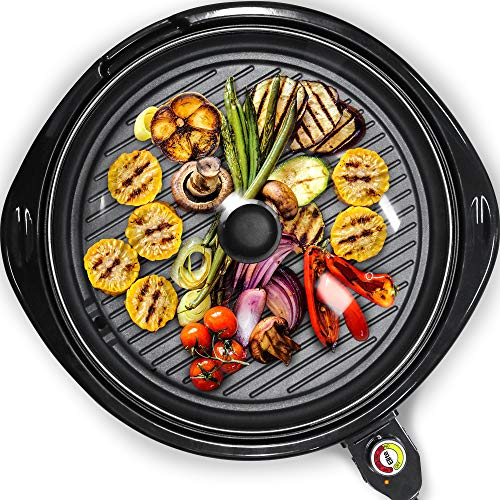
Elite Gourmet EMG-980B Smokeless Electric Tabletop Grill Nonstick, 6-Serving, Dishwasher Safe Removable Grilling Plate, Grill Indoor, Tempered Glass Lid, Adjustable Temperature, 14" Black
DON’T LET RAIN RUIN YOUR BARBECUES ANYMORE! – Enjoy all the fun of an outdoor BBQ in the...
As an affiliate, we earn on qualifying purchases.
Conclusion
Now that you know the secrets of choosing the perfect paella pan, mastering heat, and achieving that coveted socarrat, you’re almost there. But the true magic lies in your hands—will you ignite the flame just right, or let the moment slip away? Every detail counts, and the final dish depends on your touch. Get ready to reveal a culinary secret that will keep everyone guessing—what’s your next move?
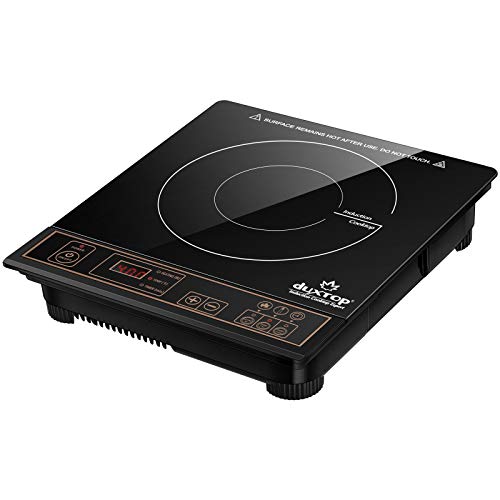
Duxtop 1800W Portable Induction Cooktop Countertop Burner, Gold 8100MC/BT-180G3
Requires induction compatible cookware. If a magnet sticks well to the bottom of the pan and is at...
As an affiliate, we earn on qualifying purchases.
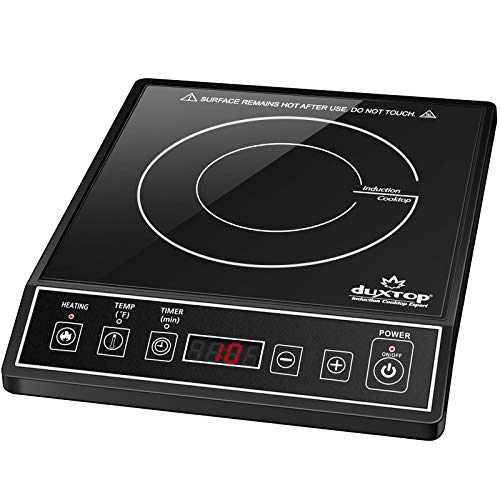
Duxtop 1800W Portable Induction Cooktop Countertop Burner, Black 9100MC/BT-M20B
PORTABLE INDUCTION BURNER Duxtop induction cooktop uses 120 V 15 amp electrical outlet–standard in all North American homes....
As an affiliate, we earn on qualifying purchases.