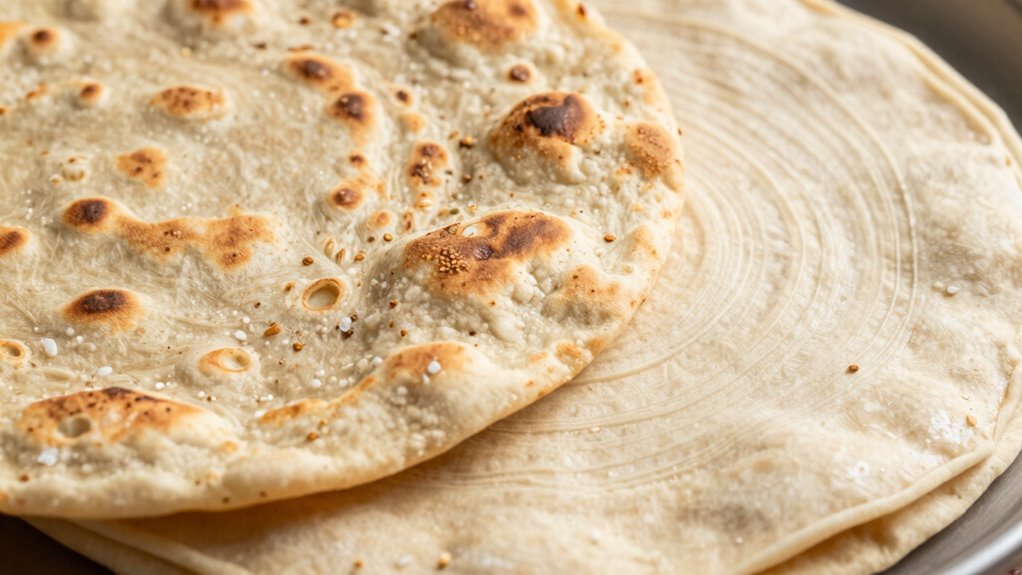

The main dough differences between roti and tortillas lie in gluten content and fermentation. Roti uses whole wheat flour with moderate gluten, giving it a chewy, elastic texture suitable for stretching and sturdy fillings. Tortillas, especially corn ones, have little to no gluten, making them softer and more delicate. Fermentation can enhance flavor and digestibility for both, but most roti dough isn’t fermented. Understanding these differences explains their unique textures and uses—keep exploring to learn more.

Get kitchen staples and gadgets delivered free — and shop member deals
- Fast, free delivery on millions of items
- Access to Prime Big Deal Days deals on October 6–7
- Prime Video, Amazon Music and more included
Key Takeaways
- Roti is made from whole wheat flour with moderate gluten, providing elasticity and chewy texture; tortillas often use corn or wheat with varying gluten levels.
- Roti dough is typically unfermented, while some variations involve fermentation, affecting flavor and digestibility.
- Corn tortillas use masa, which involves fermentation and lacks gluten, resulting in a softer, crumblier texture compared to wheat-based roti.
- Gluten content influences dough elasticity and ability to be rolled thin, with roti being more elastic than tortillas.
- Fermentation impacts flavor, digestibility, and texture, making fermented versions of both more complex and easier to digest.
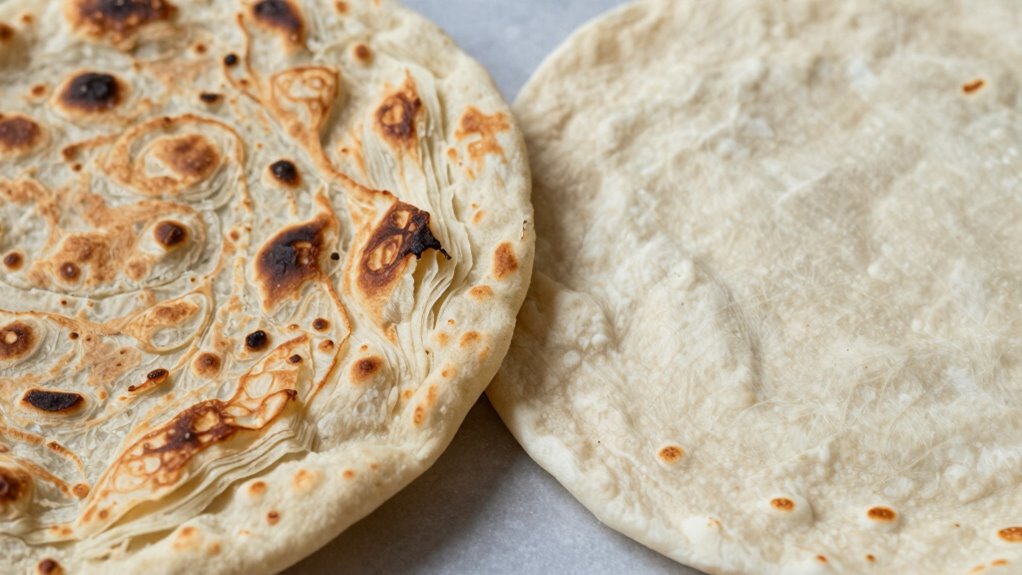
When it comes to flatbreads, roti and tortillas are two popular options that often get compared, but they each have unique characteristics that set them apart. One of the main differences lies in their gluten content. Roti, typically made from whole wheat flour, contains a moderate amount of gluten, which gives it a slightly chewy texture and allows it to be easily rolled out into thin, flexible discs. The gluten in roti also contributes to its elasticity, making it sturdy enough to hold fillings or toppings. Tortillas, especially the traditional ones made from corn, usually have little to no gluten, which results in a softer, more delicate texture. When made from wheat flour, tortillas tend to have a similar gluten structure to roti but often with less elasticity, leading to a slightly crumblier bite.
Another key difference comes from their fermentation processes. Roti dough is typically prepared without fermentation; it’s kneaded and cooked fresh, which keeps its flavor relatively neutral and straightforward. However, some variations of roti, like those made with sourdough or fermented wheat, undergo a fermentation process that enhances flavor complexity and improves digestibility. This fermentation can break down gluten and starches, making the bread easier on your stomach and adding a slight tanginess to the flavor. Fermentation process influences more than just flavor; it impacts texture and digestibility. Roti with a fermentation step tends to be more flavorful and easier to digest because fermentation reduces antinutrients and partially breaks down gluten. Tortillas, especially when made from corn, have a unique taste thanks to the masa preparation, and their softer texture makes them ideal for wrapping or folding. In essence, understanding these differences in gluten content and fermentation helps you appreciate why roti and tortillas behave differently when cooked and how they fit into various cuisines and dietary needs. Whether you prefer the chewiness of roti or the tender flexibility of a tortilla, knowing these dough differences makes your choice more intentional and informed.
As an affiliate, we earn on qualifying purchases.
Frequently Asked Questions
Which Is Healthier: Roti or Tortilla?
You’ll find that roti is generally healthier than tortillas because it often contains less fat and more fiber, boosting its nutritional content. Roti also holds deep cultural significance in South Asian cuisine, while tortillas are central to Latin American traditions. When choosing, consider your dietary goals and cultural preferences—both can be healthy options depending on how they’re made. Opt for whole wheat versions for added nutrients.
Can You Substitute Roti for Tortilla in Recipes?
Yes, you can substitute roti for tortillas in recipes, but consider their dough fermentation and flavor profiles. Roti’s dough often involves fermentation, giving it a richer flavor, while tortillas have a milder taste. Adjust your recipe to account for these differences—such as altering cooking times or seasonings—to make sure the final dish maintains the intended texture and flavor. Experimenting helps you find the best balance for your meal.
How Do Regional Ingredients Affect Dough Differences?
Regional ingredients considerably influence dough differences because regional spice variations and local grain influences shape their textures and flavors. You’ll notice that in some areas, spice blends are incorporated into the dough, adding unique flavors, while local grains like millet or sorghum alter the dough’s consistency. These regional differences mean that, when making roti or tortillas, you must adapt your recipe to reflect the local ingredients for authentic taste and texture.
Are There Gluten-Free Options for Both?
Yes, you can find gluten-free options for both. Instead of traditional wheat flour, you might use gluten-free flours like rice, almond, or chickpea. These alternative doughs create a different texture but still serve well for making roti or tortillas. While they may lack the elasticity of gluten, experimenting with these ingredients allows you to enjoy delicious, gluten-free versions of your favorite flatbreads, broadening your culinary options.
Which Has a Longer Shelf Life?
You’ll find tortillas generally have a longer shelf life than rotis. Proper storage duration and preservation methods, like refrigerating or freezing, help tortillas stay fresh longer—up to a week refrigerated or several months frozen. Rotis, on the other hand, typically last only a day or two at room temperature and lose freshness quickly without preservation. To extend their shelf, always keep them in airtight containers and freeze if needed.
Conclusion
Now that you know the key differences between roti and tortilla, you can confidently choose the right one for your meal. Don’t worry about myths—both are delicious in their own right, with unique textures and flavors. Whether you prefer the hearty, whole wheat taste of roti or the soft, versatile nature of tortillas, enjoy experimenting in the kitchen. Ultimately, it’s all about what suits your taste buds and the dish you’re creating.
NFL season / tailgating Picks
team gear
As an affiliate, we earn on qualifying purchases.