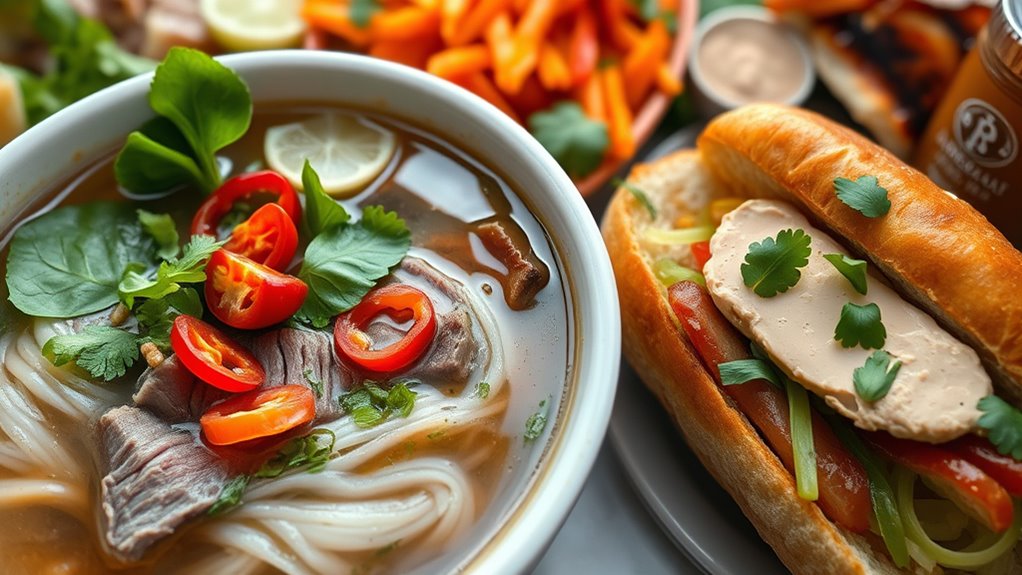
Vietnamese cuisine features iconic dishes like phở and bánh mì, reflecting rich regional diversity and cultural influences. You’ll find fragrant noodle soups filled with herbs and meats, and crispy baguette sandwiches with pickled veggies, showcasing the blend of French and Vietnamese flavors. Street food is central, offering quick, authentic bites that highlight fresh ingredients and bold tastes. If you’re curious about more flavors and specialties, there’s much more to discover in Vietnam’s vibrant food scene.
Key Takeaways
- Pho is a fragrant noodle soup with herbs, beef or chicken, originating from northern Vietnam and popular nationwide.
- Bánh mì is a Vietnamese sandwich with a crispy baguette, savory meats, pickled vegetables, and fresh herbs, reflecting French influence.
- Vietnamese cuisine features a vibrant street food culture, with quick, flavorful dishes like Pho and Bánh mì served from street vendors.
- Fusion dishes in Vietnam blend traditional flavors with modern or regional influences, showcasing culinary adaptability.
- Regional specialties highlight Vietnam’s diverse ingredients and cooking styles, from northern to southern culinary traditions.
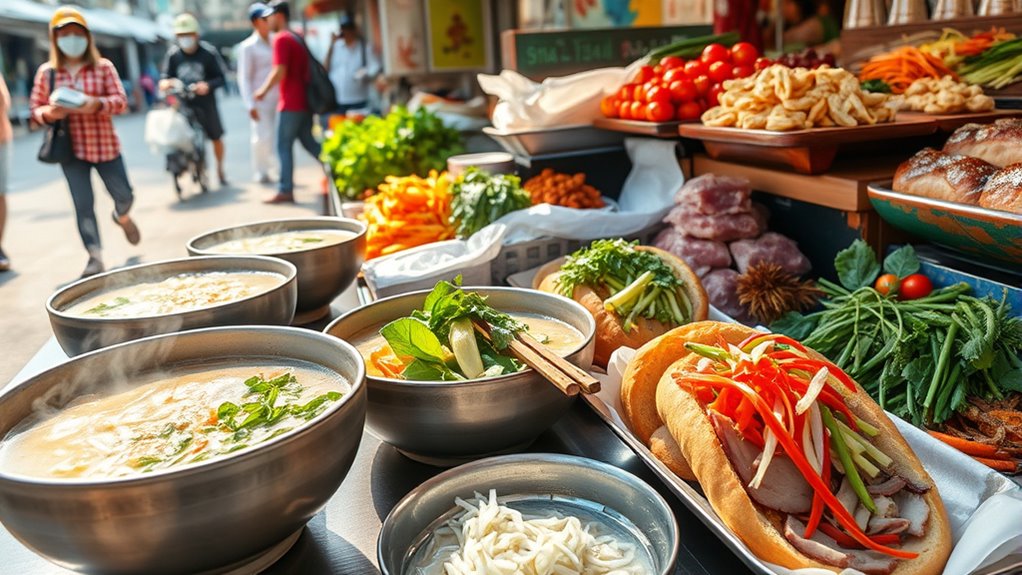
Have you ever wondered what makes Vietnamese cuisine so vibrant and flavorful? It’s a rich tapestry woven from centuries of history, cultural exchange, and local ingredients. One of the most exciting aspects is the way traditional recipes blend with contemporary influences to create fusion dishes that surprise and delight your palate. These fusion dishes often combine elements from neighboring countries or modern culinary trends, resulting in innovative spins on classic favorites. For example, you might encounter bánh mì sandwiches filled with unexpected ingredients like pâté, pickled vegetables, and spicy sauces, blending French colonial influence with local flavors. This culinary adaptability reflects Vietnam’s openness to new ideas while honoring its roots.
At the heart of Vietnamese cuisine is its street food culture, which plays an essential role in shaping the nation’s food scene. When you walk through bustling streets in Hanoi or Ho Chi Minh City, you’ll notice the aroma of grilled meats, fresh herbs, and fragrant broths wafting from tiny stalls. Street food vendors serve up quick, delicious bites that are often more authentic than sit-down restaurants. These vendors have perfected their craft over generations, offering a wide variety of dishes that showcase regional specialties and seasonal ingredients. The street food culture isn’t just about convenience; it’s a community experience where locals and travelers alike gather to enjoy affordable, flavorful meals.
In particular, street food dishes like bánh mì and phở exemplify Vietnam’s culinary ingenuity. Bánh mì, a crispy baguette filled with savory meats, pickled vegetables, and herbs, is a perfect example of how French influence has been seamlessly integrated into Vietnamese cuisine. Meanwhile, phở—a fragrant noodle soup with herbs, beef, or chicken—originates from northern Vietnam but has become a beloved dish nationwide. Both dishes showcase how fresh ingredients, herbs, and bold flavors come together in harmony. What makes these dishes even more exceptional is how accessible they are; you can find them at street carts or small eateries, making it easy to enjoy authentic flavors wherever you are in Vietnam.
Frequently Asked Questions
What Are the Regional Differences in Vietnamese Noodle Dishes?
You’ll notice regional flavor profiles in Vietnamese noodle dishes, shaped by local ingredients and traditions. In the North, the focus is on clear, delicate broths with flat rice noodles, emphasizing subtlety. Central Vietnam offers spicy, bold flavors with thicker noodles and varied toppings. The South features sweeter, richer broths with rice vermicelli, often incorporating tropical fruits. Noodle preparation techniques vary, from boiling to stir-frying, reflecting each region’s unique culinary style.
How Has Vietnamese Cuisine Evolved Outside Vietnam?
You’ll notice Vietnamese cuisine outside Vietnam has evolved through fusion cuisine and international adaptations. As you explore globally, you’ll find traditional dishes like pho and banh mi infused with local flavors and ingredients. Chefs blend Vietnamese techniques with regional tastes, creating exciting new variations. This dynamic evolution allows you to enjoy authentic flavors while experiencing innovative twists, making Vietnamese cuisine accessible and appealing to diverse palates worldwide.
What Are Traditional Drinks Served With Vietnamese Meals?
When you enjoy a Vietnamese meal, traditional beverages like green tea, jasmine tea, and herbal infusions often accompany your dishes. These herbal infusions, made from lemongrass, mint, or chrysanthemum, help balance flavors and aid digestion. You might also sip on sugarcane juice or coconut water for a revitalizing touch. These drinks enhance your dining experience by complementing the diverse and vibrant flavors of Vietnamese cuisine.
Are There Vegetarian or Vegan Options in Vietnamese Cuisine?
Yes, Vietnamese cuisine offers plenty of vegetarian alternatives and vegan substitutions. You can enjoy dishes like vegetable pho, tofu Banh Mi, and stir-fried greens with garlic. Many restaurants are accommodating and provide plant-based options, so you won’t miss out on authentic flavors. Just ask for vegan or vegetarian versions, and you’ll find delicious meals that suit your dietary choices while experiencing the rich culinary tradition.
How Do Seasonal Ingredients Influence Regional Specialties?
Seasonal ingredient variations greatly influence regional flavor profiles in Vietnamese cuisine. You’ll notice that during different seasons, local markets offer fresh herbs, vegetables, and meats, which chefs incorporate into their dishes. This dynamic use of seasonal ingredients keeps regional specialties vibrant and authentic. By adapting to what’s available, you experience unique flavors and textures that highlight the diverse culinary traditions across Vietnam’s regions.
Conclusion
Now that you’ve explored Vietnamese cuisine, you’re probably craving its vibrant flavors. Did you know that pho, Vietnam’s iconic noodle soup, is enjoyed by millions worldwide and even recognized by UNESCO as an intangible cultural heritage? Whether you’re savoring a steaming bowl or biting into a crispy banh mi, you’re experiencing a culinary tradition that’s deeply rooted in history. So next time you dine, remember—you’re part of a global appreciation for Vietnam’s delicious and diverse food.