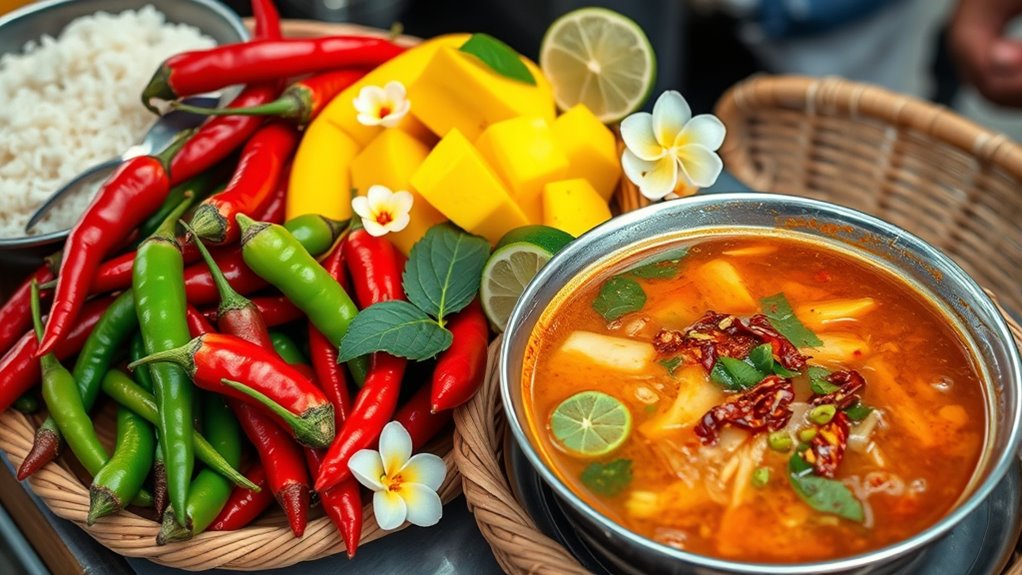

In Thai food culture, you find a skillful balance of sweet, sour, salty, and spicy flavors that create unforgettable dishes. Chefs and vendors adjust ingredients like lime, fish sauce, and palm sugar on the fly, reflecting regional and personal tastes. This harmony isn’t accidents; it’s a culinary art form passed down through generations. If you keep exploring, you’ll discover how these ingredients work together to make Thai cuisine truly unique.

Get kitchen staples and gadgets delivered free with Prime
- Fast, free delivery on millions of items
- Prime Video, Amazon Music and more included
- Member-only deals all year
Key Takeaways
- Thai cuisine masterfully combines sweet, sour, salty, and spicy flavors to create a harmonious and memorable taste experience.
- Key ingredients like fish sauce, lime juice, palm sugar, and herbs are carefully balanced to achieve flavor complexity.
- Street food vendors in Thailand prepare dishes in front of customers, emphasizing fresh ingredients and traditional methods.
- Chefs and vendors adjust ingredients dynamically, reflecting regional and personal preferences to maintain flavor harmony.
- The cultural significance of balancing flavors underscores Thai cuisine’s artistry and its deep-rooted culinary traditions.
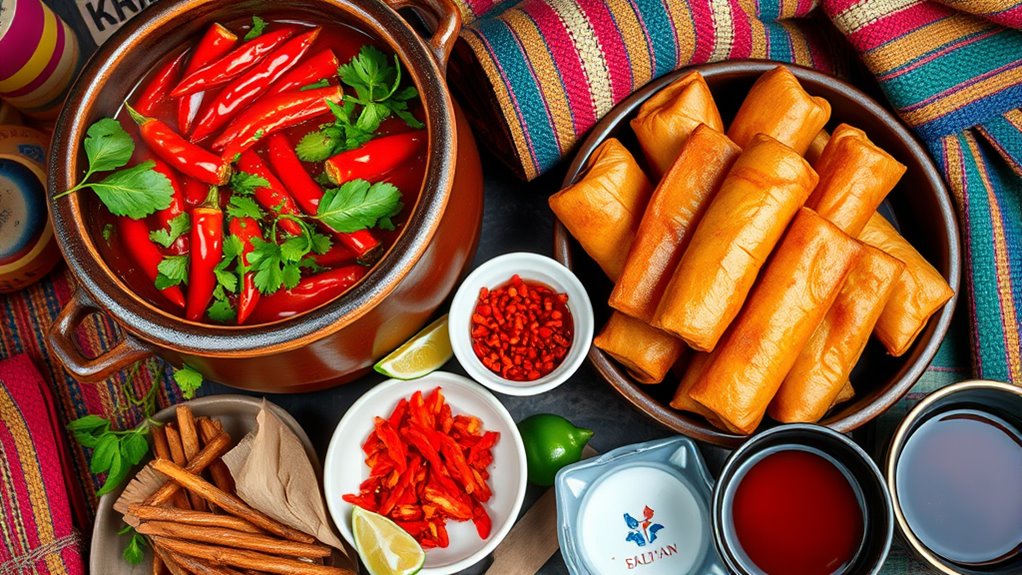
Have you ever wondered what makes Thai food so vibrant and flavorful? The answer lies in its masterful balance of tastes—sweet, sour, salty, and spicy—that come together to create a truly unforgettable experience. This harmony is what draws people to Thai cuisine, especially through the lively street food scenes that pulse through cities like Bangkok and Chiang Mai. When you walk along these bustling streets, you’re surrounded by vendors offering an array of dishes that showcase Thailand’s rich culinary heritage. The magic begins with the use of traditional ingredients that are fundamental to authentic Thai flavors. These include fragrant herbs like lemongrass, kaffir lime leaves, and Thai basil, as well as bold spices, fish sauce, and palm sugar. These ingredients are not just for flavor; they’re essential for creating the complex layers that define Thai dishes.
Street food in Thailand isn’t just about quick bites; it’s a cultural experience that highlights the importance of fresh, local, and traditional ingredients. As you sample a spicy papaya salad or a bowl of fragrant tom yum, you realize how each ingredient plays a crucial role. Lime juice and tamarind add the tartness that balances the heat from chili peppers, while a splash of fish sauce imparts a salty depth. The sweetness of palm sugar softens the acidity, resulting in a harmonious taste that excites your palate. This careful balancing act is what makes Thai food stand out. Street vendors often prepare dishes right in front of you, using traditional methods that have been passed down through generations. This ensures that each bite captures the authentic flavors rooted in Thailand’s culinary history. Additionally, the skillful adjustment of ingredients based on regional and personal preferences exemplifies the culinary artistry that defines Thai cuisine.
The art of balancing these flavors isn’t accidental; it’s a skill cultivated over centuries. Thai chefs and street food vendors understand how to adjust ingredients on the fly, depending on personal and regional preferences. For example, some prefer a spicier version, while others might emphasize the sour component more heavily. This flexibility allows each dish to be personalized without losing its fundamental Thai character. When you indulge in these street foods, you’re not just tasting a meal—you’re experiencing a culture that values harmony and balance in every bite. The use of traditional ingredients ensures that each dish remains true to its roots, allowing you to enjoy the authentic essence of Thai food, no matter where you are.
Frequently Asked Questions
How Do Thai Cooks Balance Flavors in Traditional Dishes?
You balance flavors in traditional Thai dishes by carefully combining flavor pairings like chili, lime, fish sauce, and sugar. You taste as you go, adjusting with ingredient substitutions if needed, to achieve harmony among sweet, sour, salty, and spicy elements. This approach allows you to create well-rounded dishes that highlight the vibrant, complex flavors characteristic of Thai cuisine, making each bite exciting and satisfying.
What Are Common Ingredients Used to Achieve the Flavor Balance?
You use ingredients like fish sauce, lime juice, palm sugar, and chili to balance flavors. If you need ingredient substitutions, try tamarind for sourness or honey for sweetness. Flavor enhancers like shrimp paste or soy sauce deepen the taste. By adjusting these ingredients, you create a harmonious blend of sweet, sour, salty, and spicy, ensuring your dish captures authentic Thai flavor and appeals to all taste buds.
How Does Regional Variation Affect Flavor Combinations in Thai Cuisine?
Regional variation greatly influences flavor combinations in Thai cuisine. You’ll notice that regional ingredients, like herbs, fruits, and seafood, shape each area’s unique tastes. Culinary techniques also differ, affecting how flavors develop—whether through grilling, steaming, or stir-frying. These variations create diverse flavor profiles across Thailand, from the spicy, sour dishes of Isan to the rich, aromatic flavors of central Thai cuisine, offering you a rich and authentic culinary experience.
Are There Specific Utensils Used to Prepare Balanced Thai Dishes?
Preparing balanced Thai dishes is like orchestrating a symphony, where each utensil plays a essential role. You’ll use Thai cooking utensils and flavor balancing tools, such as mortar and pestle, wok, and ceramic bowls, to blend ingredients perfectly. These tools help you control textures and intensities, ensuring each flavor—sweet, sour, salty, spicy—harmonizes beautifully. Mastering their use makes your dishes authentic, vibrant, and full of depth.
How Do Thai Food Customs Influence Flavor Preferences?
You’re influenced by Thai food customs that emphasize harmony through cultural dining etiquette and traditional flavor rituals. These practices encourage you to appreciate the balance of sweet, sour, salty, and spicy flavors in every dish. As you eat, you’re guided to taste and adjust seasonings, respecting the cultural importance of sharing meals that showcase this delicate balance. Your preferences naturally align with these customs, enriching your overall dining experience.
Conclusion
Your journey through Thai food culture reveals a vibrant tapestry of flavors that dance on your palate like no other cuisine. By balancing sweet, sour, salty, and spicy, you become part of a centuries-old tradition that awakens your senses and warms your soul. Embrace these bold combinations, and you’ll discover that Thai food isn’t just delicious—it’s a flavor revolution that can turn even the dullest day into an extraordinary adventure. Prepare to be forever enchanted by its magic!
Fall Picks
fall essentials
As an affiliate, we earn on qualifying purchases.