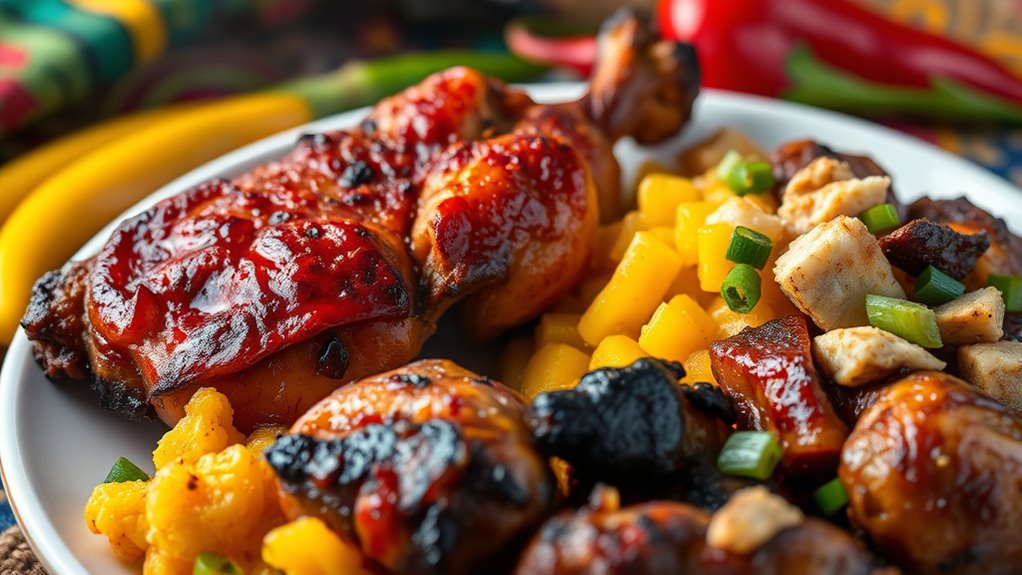
Jamaican flavors are bold, fiery, and vibrant, blending spices like allspice, Scotch bonnet peppers, thyme, and garlic to create signature dishes like jerk chicken. Tropical fruits such as pineapple and mango add sweetness and tang, balancing the spice. Ackee with saltfish captures the island’s unique combination of smoky, spicy, and fruity elements. Exploring these flavors will reveal the lively, colorful spirit of Jamaican cuisine—more delicious secrets await you.
Key Takeaways
- Jerk seasoning combines fiery Scotch bonnet peppers, allspice, thyme, garlic, and spices for a bold, smoky flavor profile.
- Ackee and saltfish use salted cod cooked with the tropical fruit ackee, creating a savory, buttery, and slightly nutty taste.
- Both dishes incorporate fresh herbs and tropical ingredients, emphasizing Jamaica’s vibrant, aromatic, and spicy culinary tradition.
- Jerk chicken’s marinade and rub develop a flavorful crust, while ackee and saltfish highlight the island’s love for savory and fruity pairings.
- These dishes exemplify Jamaica’s signature blend of heat, herbs, and tropical flavors, reflecting the island’s cultural and culinary vibrancy.
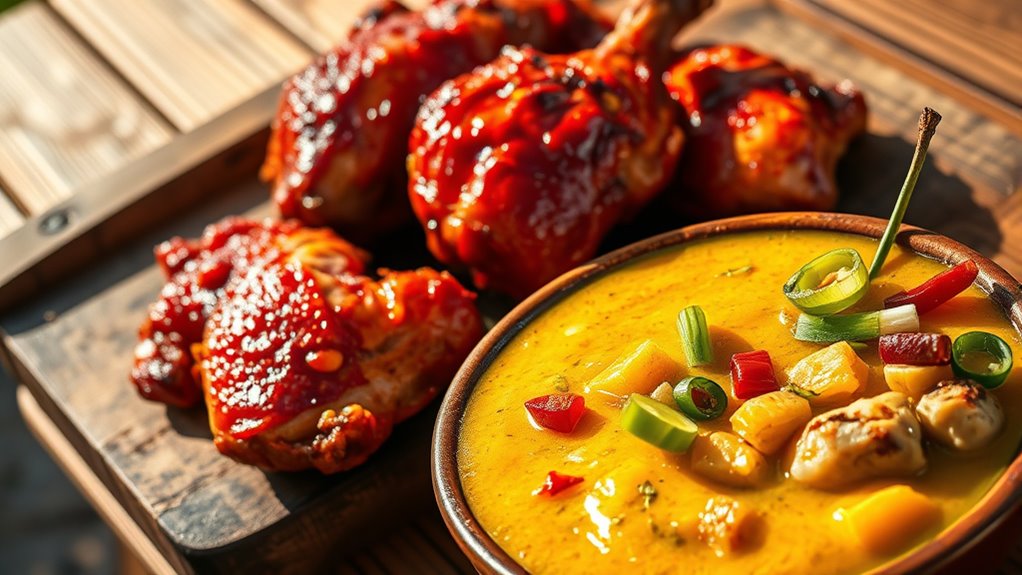
Jamaican flavors are a vibrant celebration of bold spices, fresh herbs, and tropical ingredients that instantly transport your taste buds to the Caribbean. When you immerse yourself in dishes like jerk chicken or curried goat, you’ll notice the masterful use of spice blends that define the island’s culinary identity. These spice blends, often a mixture of allspice, Scotch bonnet peppers, thyme, and other aromatic herbs, create a complex, fiery, and fragrant profile that keeps you coming back for more. The magic of Jamaican cuisine lies in how these spices harmonize with tropical fruits like pineapple, mango, and banana, adding a sweet and tangy dimension that balances the heat and savory elements perfectly.
Jamaican cuisine combines bold spices and tropical fruits for a fiery, fragrant, and vibrant flavor experience.
Imagine biting into jerk chicken, where the marinade is packed with a fiery blend of spices that coat the meat in a rich, flavorful crust. The rub might include ground allspice, cinnamon, nutmeg, garlic, and a splash of lime juice, all combined into a spice blend that awakens your senses. As you savor each bite, the warmth from the Scotch bonnet peppers is complemented by the sweetness of tropical fruits, which often find their way into sauces or salsas accompanying the dish. The use of tropical fruits isn’t just for flavor; it’s a way to bring freshness and juiciness that cuts through the richness of the meat, creating a lively, multilayered experience.
In traditional Jamaican cuisine, the inclusion of tropical fruits extends beyond just flavor—they symbolize the island’s natural abundance. Mangoes, with their sweet, slightly tart flavor, are often used in salsas or chutneys to add brightness to hearty dishes. Pineapple, with its sharp acidity and natural sweetness, is a common ingredient in marinades or grilled as a side, offering a tropical burst with every bite. These fruits aren’t just ingredients; they’re essential to capturing the true essence of Jamaican flavors, elevating simple dishes into vibrant culinary celebrations.
Additionally, the use of regional ingredients like fresh herbs and tropical fruits is crucial for authentic flavor, as they embody the island’s natural resources and culinary traditions. When you prepare or taste Jamaican food, you’ll quickly realize that the combination of spice blends and tropical fruits creates a dynamic flavor profile that’s both comforting and exciting. Whether it’s the smoky heat of jerk seasoning or the tender, flaky saltfish paired with spicy seasonings, the island’s cuisine invites you to experience its lively, colorful palette. It’s a culinary journey that’s rooted in tradition but always evolving, inviting you to savor the Caribbean’s rich, tropical spirit in every bite.

Walkerswood Traditional Jamaican Jerk Seasoning, Mild, 10 oz
- Mild Jamaican Jerk Flavor: Less heat, great for beginners
- Versatile Seasoning: Perfect for chicken, lamb, pork, fish, vegetables
- Easy to Use: Rub and marinate for best flavor
As an affiliate, we earn on qualifying purchases.
As an affiliate, we earn on qualifying purchases.
Frequently Asked Questions
What Are the Regional Variations of Jerk Seasoning in Jamaica?
You’ll find regional variations of jerk seasoning across Jamaica, each adding unique flavors. In the mountainous regions, jerk tends to be spicier with more allspice and Scotch bonnet peppers. In coastal areas, it’s often milder with a focus on smoky flavors from local wood. Some regions incorporate local herbs or extra seasoning, making each jerk seasoning distinctive. Exploring these variations gives you a true taste of Jamaica’s diverse culinary landscape.
How Is Ackee Safely Prepared for Consumption?
You must handle ackee with care to enjoy it safely. First, make certain it’s fully ripened; unripe ackee can be toxic. Proper ackee preparation methods involve removing the black seeds and discarding them, then boiling the fruit to eliminate toxins. Always use fresh, properly prepared ackee to avoid poisoning. Don’t rush the process—proper ackee safety is essential for a delicious, authentic experience that respects its unique flavor.
What Are Common Side Dishes Served With Saltfish?
You’ll often serve saltfish with traditional breakfast sides like fried plantains, hardo bread, or dumplings to create a hearty meal. Festive accompaniments include callaloo, Festival (fried dough), or roasted breadfruit, which add flavor and variety. These sides complement the saltfish’s savory taste, making your breakfast more satisfying. Incorporating these dishes guarantees you enjoy an authentic Jamaican experience with each bite.
Can These Flavors Be Adapted for Vegetarian Dishes?
You can definitely adapt these vibrant flavors for vegetarian dishes. By exploring creative vegetarian substitutions and plant-based adaptations, you’ll bring the essence of jerk and ackee to your meals without meat. Imagine smoky, spicy marinades or savory plant-based proteins that absorb these bold flavors. This approach lets you enjoy Jamaican-inspired dishes while keeping it vegetarian, adding depth and excitement to your culinary repertoire.
How Do Jamaican Spices Influence the Flavor Profile?
Jamaican spices create a vibrant, bold flavor profile by adding depth and warmth through spice blends like allspice, ginger, and Scotch bonnet peppers. You’ll notice how these spices influence the flavor complexity, balancing heat, sweetness, and earthiness. When you incorporate these spice blends into dishes, they transform simple ingredients into exciting, aromatic meals that reflect Jamaica’s rich culinary tradition. Their influence truly elevates any dish with a distinctive, lively character.
Conclusion
You’ve discovered the vibrant flavors of Jamaica, from spicy jerk to tender ackee and saltfish. Did you know Jamaica’s culinary traditions attract over 1.4 million visitors annually, enthusiastic to taste authentic dishes? These flavors aren’t just delicious—they’re a essential part of the island’s culture and history. So, next time you enjoy Jamaican cuisine, remember you’re savoring a piece of paradise that’s deeply rooted in resilience and rich heritage.