
If you have leftover veggies that are starting to lose their freshness, quick pickling is a smart way to transform them into tasty, crunchy condiments in just a few hours. Simply slice your vegetables, prepare a hot brine with vinegar, water, sugar, and salt, then pour it over the veggies along with your favorite spices. Seal the jar, refrigerate, and enjoy a flavorful upgrade that reduces waste and adds variety to your meals. Keep exploring to learn more tips and flavor ideas.
Key Takeaways
- Transform nearly spoiled vegetables into fresh, flavorful pickles by quick pickling, extending their usability and reducing waste.
- Customize flavors with various spices, herbs, and vinegars to elevate leftover veggies to gourmet-level condiments.
- Use a simple process: chop vegetables, prepare a hot brine, pour over, and refrigerate for crisp, tangy results in hours.
- Combine different vegetables for colorful, tasty medleys, experimenting with spice levels and flavor profiles easily.
- Quick pickling requires minimal equipment, supports sustainability, and offers an easy way to enjoy homemade, next-level leftovers.
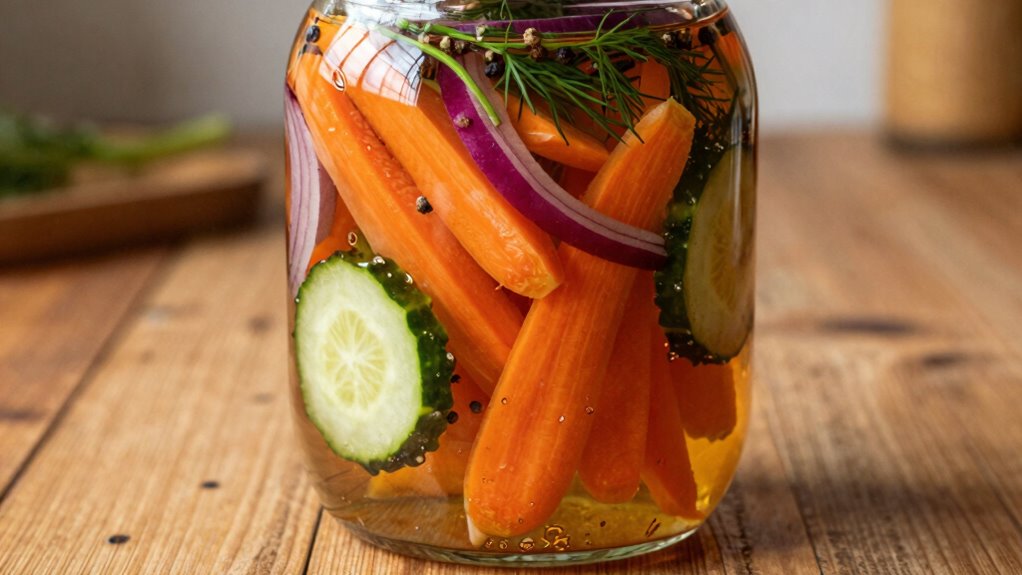
If you find yourself with leftover vegetables that are on the verge of spoiling, quick pickling offers a simple and tasty solution. Not only does it extend the life of your produce, but it also release a world of flavor possibilities. When you pickle vegetables quickly, you’re tapping into fermentation benefits like preserving nutrients and adding probiotics, which support gut health. Unlike traditional fermentation that can take weeks, quick pickling relies on vinegar and spices to produce a tangy crunch in just a matter of hours. This method is ideal for those busy days when you want to enjoy fresh-tasting veggies without waiting long.
One of the biggest perks of quick pickling is the variety of flavor variations you can achieve. By adjusting the spices, herbs, and vinegars, you can create a spectrum of tastes — from sweet and spicy to herby and savory. For example, adding garlic, dill, and peppercorns can give your pickles a classic, fresh flavor. If you prefer something bolder, throw in chili flakes or ginger for an extra kick. The versatility allows you to tailor each jar to your palate or even match it to specific dishes. Plus, these pickles can serve as vibrant toppings for salads, sandwiches, or charcuterie boards, elevating your meals with minimal effort.
Customize your pickles with spices and herbs for endless flavor options and culinary versatility.
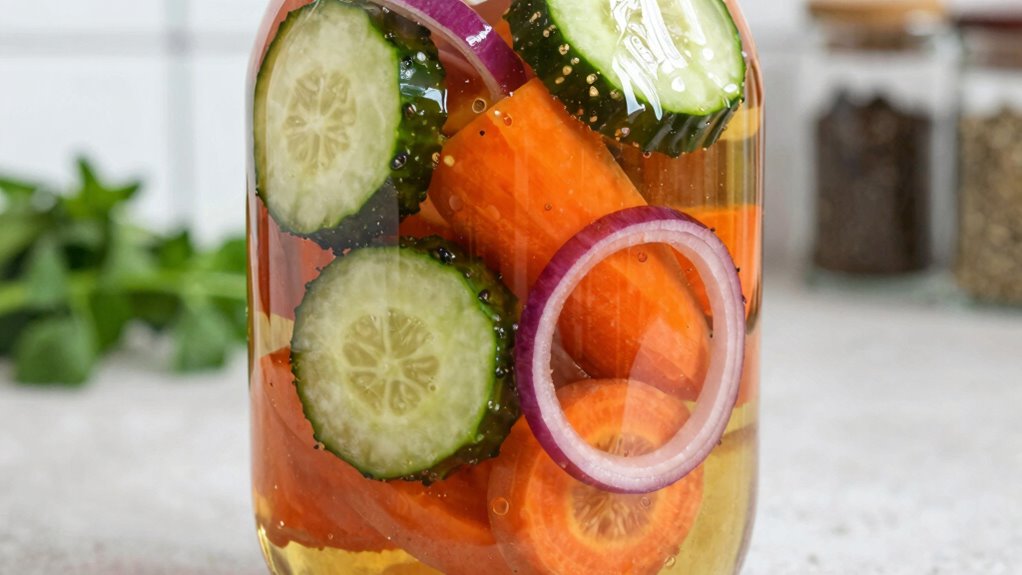
The process of quick pickling is straightforward. You start by slicing or chopping your vegetables into bite-sized pieces. Next, you prepare a hot brine using vinegar, water, sugar, and salt, then pour it over the veggies in a jar. Adding your preferred spices completes the flavor profile. Once sealed, the jar goes into the fridge, and within a few hours or overnight, your veggies transform into crisp, flavorful pickles. This method not only preserves your leftovers but also creates a delicious snack or condiment that lasts for weeks.
Another benefit of quick pickling is the flexibility it offers. You can experiment with different vegetables—cucumbers, carrots, peppers, or even cauliflower—and combine them for a colorful medley. Because the process is so fast, you can try out new flavor combinations without committing to long fermentation. Plus, since the pickles are stored in the fridge, they stay fresh and crunchy longer. This makes quick pickling an excellent way to reduce waste, add variety to your meals, and enjoy homemade, customized flavors without complex equipment or lengthy waiting times.
In short, quick pickling transforms almost-bad veggies into vibrant, tasty additions to your kitchen repertoire. It’s a smart, flavorful way to make the most of leftovers while exploring a range of taste variations and enjoying the fermentation benefits in a quick, convenient format. This method also aligns with sustainable practices by minimizing food waste.
As an affiliate, we earn on qualifying purchases.
Frequently Asked Questions
How Long Do Quick Pickled Veggies Last in the Fridge?
Quick pickled veggies typically last about 2 to 3 weeks in the fridge, depending on how well they’re stored. Your best bet is to keep them submerged in the pickling liquid and stored in a sealed jar. The storage duration affects their shelf life, so always check for signs of spoilage like bad odors or mold before enjoying. Proper storage helps make sure your quick pickled veggies stay fresh longer.
Can I Use Any Type of Vinegar for Pickling?
You can’t use any vinegar for pickling—stick to those with safe pH levels like white vinegar, apple cider vinegar, or rice vinegar. These varieties have consistent acidity, ensuring your veggies stay safe and crisp. Avoid vinegars with unpredictable pH levels, as they might not preserve properly or could be unsafe. Always check the label to guarantee your chosen vinegar is suitable for pickling and maintains the proper acidity.
Are There Vegetables Unsuitable for Quick Pickling?
Some vegetables aren’t ideal for quick pickling because of their textures and flavor variations. For example, soft or watery vegetables like cucumbers or zucchini can turn mushy, while delicate greens might lose their crunch. You’ll get better results with firmer vegetables like carrots, green beans, or radishes. These maintain their texture and flavor, making your quick pickled veggies more appealing and satisfying.
Do I Need to Sterilize Jars Before Pickling?
Did you know that properly sterilized jars can extend your pickles’ shelf life by up to a year? You definitely need to sterilize jars before pickling. Use boiling water or dishwasher cycles to make certain they’re free of bacteria. This step is vital regardless of whether you use vinegar varieties like apple cider or white vinegar. Clean jars prevent spoilage and guarantee your quick pickled veggies stay fresh and delicious.
Can I Reuse Pickling Brine for New Batches?
You can reuse pickling brine for new batches, but it’s important to prioritize pickling safety. Reusing brine may carry bacteria or spoilage, especially if it’s been used multiple times. To minimize risks, strain out leftover bits, boil the brine for at least 10 minutes, and verify it’s still acidic enough. When in doubt, make fresh brine to guarantee safety and crisp results.
Conclusion
Now that you’ve seen how simple it is to transform those nearing-spoil veggies into tangy, crunchy delights, imagine what else you could save from the trash. With just a little vinegar and patience, you hold the power to turn everyday leftovers into next-level snacks or garnishes. But don’t stop here—there’s a whole world of flavors waiting to be unveiled. Are you ready to discover what’s possible when you rethink leftovers? The delicious surprises are just a pickling away.