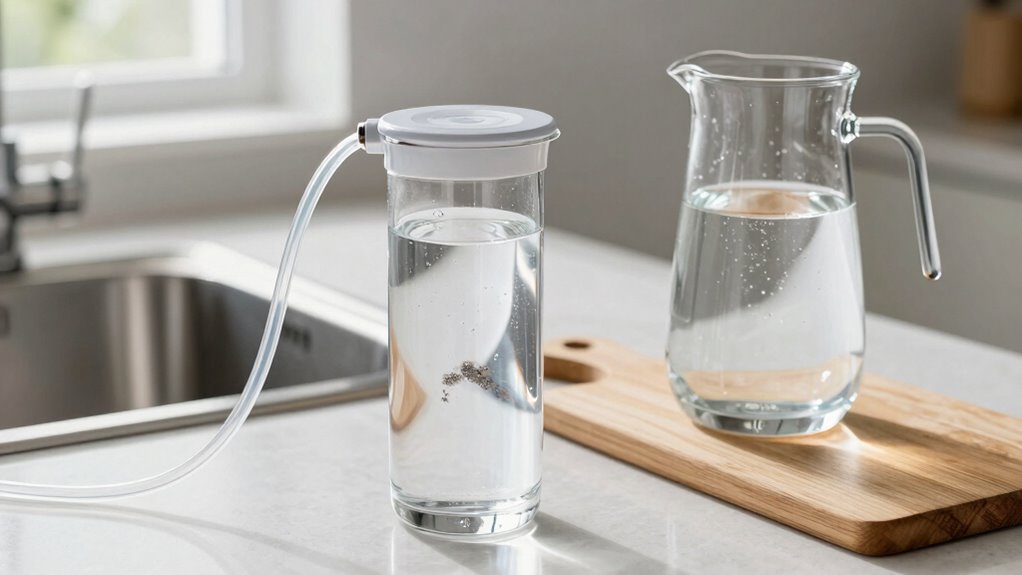

If you use reverse osmosis water for cooking, you might want to remineralize it because the process strips away beneficial minerals like calcium and magnesium, which can make water taste flat and dull. Reintroducing minerals can enhance flavor and improve the overall taste of your dishes. Whether you need to do this depends on your preferences and the type of cooking you do. To discover more about how to optimize your water for cooking, keep exploring the options available.
Key Takeaways
- Reverse osmosis removes minerals, which can cause water to taste flat and impact dish flavor.
- Re-mineralization restores beneficial minerals, enhancing taste and flavor development in cooking.
- For delicate dishes or where mineral balance is crucial, re-mineralizing RO water is recommended.
- If water taste is bland or off, adding minerals can improve overall flavor and culinary results.
- Consider your water source, taste preferences, and meal type to decide if re-mineralization is necessary.
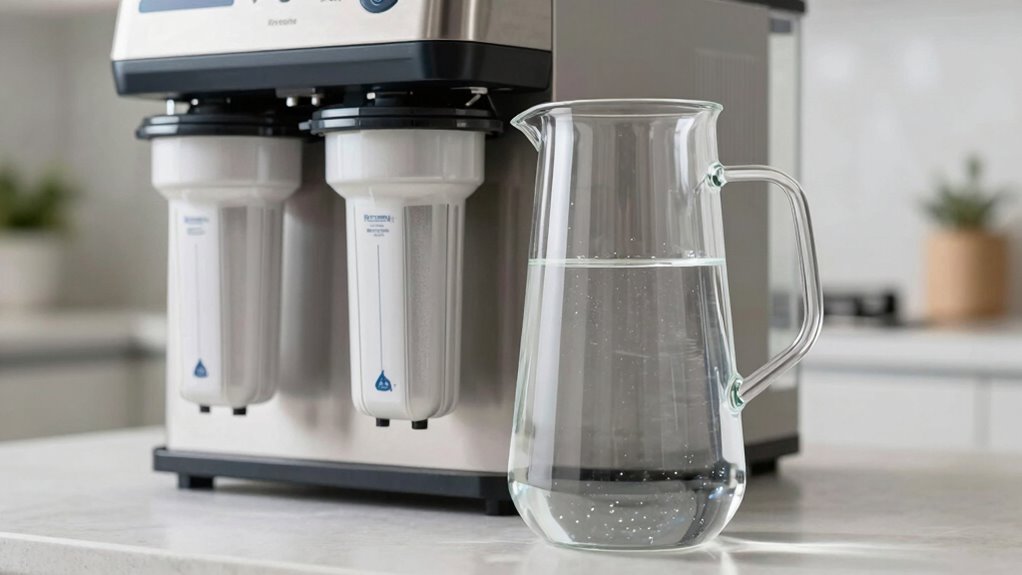
Clean water is vital for preparing delicious and safe meals, and reverse osmosis systems offer a reliable way to improve water quality in your kitchen. When you use a reverse osmosis unit, you markedly enhance water purity by removing contaminants, chemicals, and impurities that can affect the taste and safety of your food. This process guarantees that what you cook with is free from substances like chlorine, lead, pesticides, and other pollutants, giving you peace of mind with every meal.
One of the key benefits of using reverse osmosis water in cooking is flavor enhancement. When impurities are eliminated, the natural flavors of ingredients shine through more vividly. Whether you’re boiling pasta, making soup, or preparing sauces, the water’s improved clarity and purity can make a noticeable difference. The cleaner the water, the better your dishes taste, as there are fewer off-flavors or chemical aftertastes that can interfere with the true essence of your ingredients.
However, because reverse osmosis systems strip away minerals along with contaminants, you might notice that your water tastes somewhat flat or bland. This can impact not just drinking water but also the flavor of your cooked foods. Mineral content, like calcium and magnesium, plays a subtle yet important role in enhancing taste and even in the chemical reactions during cooking. When these minerals are missing, your dishes might lack a certain depth or richness.
That’s why some cooks choose to remineralize their reverse osmosis water before using it in recipes. Reintroducing beneficial minerals can restore water’s natural taste profile and contribute to better flavor development in your dishes. Re-mineralization can be achieved through specially formulated mineral drops or by adding mineral-rich salts, which help mimic the water’s natural mineral content and improve overall flavor. This step can be particularly advantageous if you’re preparing delicate sauces, baked goods, or beverages where water quality is vital.
Additionally, understanding the importance of water mineral balance can help you make informed choices about whether to remineralize your water or not. In the end, whether or not you need to remineralize depends on your taste preferences and the types of meals you prepare. If you notice that your dishes seem to lack depth or if you simply prefer a more vibrant flavor, adding minerals back into your water might be worthwhile. But for many, the pure, contaminant-free water produced by reverse osmosis already offers substantial benefits in both safety and flavor. By paying attention to water quality and considering remineralization, you’re guaranteeing your cooking is not only safe but also maximally flavorful.

MIZUDO 12 Months Remineralization Filter, 1/4"Quick Connect Alkaline Filter
- Service Life: Lasts up to 12 months or 1000 gallons
- Mineral Infusion: Adds calcium, magnesium, sodium for pH boost
- Easy Installation: Fits 1/4-inch quick connect for under-sink systems
As an affiliate, we earn on qualifying purchases.
As an affiliate, we earn on qualifying purchases.
Frequently Asked Questions
Can Remineralized Water Improve My Cooking Flavor?
Yes, remineralized water can improve your cooking flavor by enhancing flavor profiles and achieving better mineral balance. When water contains essential minerals, it brings out the natural flavors of ingredients, making dishes taste richer and more balanced. Without proper mineral content, water can taste flat or bland, dulling your food’s taste. Remineralizing guarantees your water supports ideal flavor extraction and offers a more satisfying culinary experience.
How Does Mineral Content Affect Boiling Times?
Think of mineral content like the fuel in your car—too little can slow down your engine, just like how low mineral levels reduce boiling efficiency. When mineral balance is right, water heats faster because minerals improve heat conduction. If your water’s too pure, boiling times can increase, making cooking less efficient. So, maintaining proper mineral content helps you save time and energy during boiling.
Is Remineralization Necessary for Brewing Teas and Coffees?
You should consider remineralizing your water for brewing teas and coffees because it enhances flavor and helps achieve the ideal mineral balance. Without minerals, your brew might taste flat or dull. Remineralization introduces essential minerals that improve extraction, resulting in richer, more vibrant flavors. It also guarantees consistency in your brewing process. So, for a better cup, remineralize your reverse osmosis water to optimize flavor and maintain the right mineral balance.
What Minerals Are Best to Add Back for Cooking?
Think of your water as a blank canvas, waiting to be painted with mineral richness. To enhance flavor and balance water hardness, add back minerals like calcium and magnesium. These minerals improve mineral purity and give your dishes a fuller, richer taste. You’ll find that a pinch of sea salt or specific mineral drops can restore essential nutrients, making your cooking water both healthier and more flavorful without overwhelming it.
Does Remineralization Impact the pH of Cooking Water?
Remineralization can impact the pH of your cooking water by helping with pH adjustment and maintaining mineral balance. When you add minerals, it often increases the pH, making the water less acidic. This is beneficial because it helps create a more neutral environment, which can improve taste and cooking performance. Proper mineral balance ensures your water remains stable and ideal for cooking, avoiding undesirable pH fluctuations.
Conclusion
Imagine brewing a perfect cup of tea with pure, mineral-free water—at first, it’s invigorating, but soon you notice it tastes flat. That’s because removing minerals is like stripping away flavor. While reverse osmosis provides clean water, you might want to remineralize for better taste and health. Think of it as seasoning your dish: a little salt transforms bland into delicious. So, consider adding minerals back to enjoy both purity and flavor in your cooking.