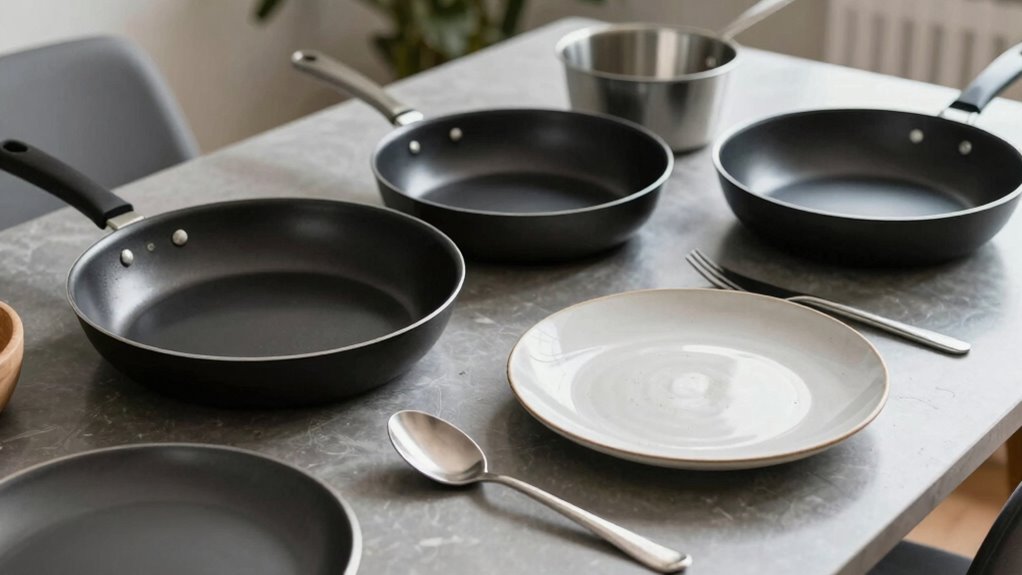
Focus on how often you actually use your dinnerware rather than how perfect it looks. Regular use causes wear like scratches or chips, signaling when it’s time to replace items. Prioritize durable materials and keep an eye out for visual signs of damage. Don’t keep pieces just for special occasions if they sit unused. Managing your collection based on usage helps avoid clutter and ensures your dinner gear stays functional and in good shape—there’s more to take into account as you go along.
Key Takeaways
- Prioritize durable, everyday cookware that withstands frequent use over fragile, decorative pieces.
- Assess wear and stains regularly to determine when replacement is necessary, not based on appearance alone.
- Match your dinnerware to your actual dining habits, emphasizing practicality over aesthetic perfection.
- Limit collection size to essential, versatile pieces that serve your routine, reducing clutter and waste.
- Select materials with proven longevity to ensure items remain functional through regular use.
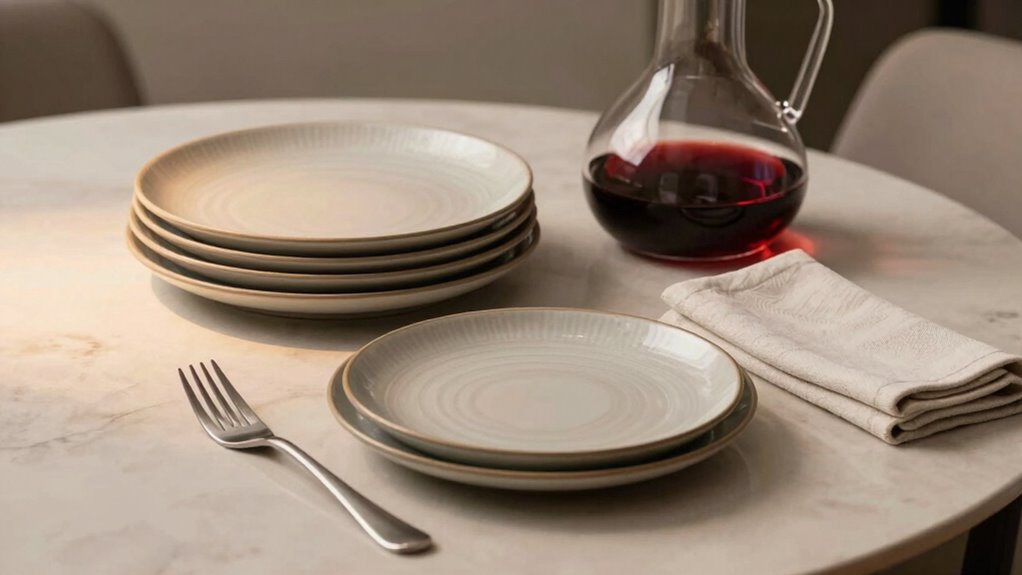
Deciding how often to update your dinner gear might seem like a simple choice, but it actually involves contemplating how frequently you use and wash your utensils, plates, and cookware. If you’re someone who hosts dinner parties regularly or eats at home every day, your gear takes a beating. Frequent use means it’s more likely to show signs of wear—scratches, chips, fading, or even stains—so updating your collection might be necessary sooner rather than later. Conversely, if your dinnerware sees occasional use, you can probably hold off on replacements longer, saving money and avoiding unnecessary clutter.
Frequent use accelerates wear, so update your dinnerware sooner if you host often or eat daily.
When thinking about updates, it’s vital to consider tableware aesthetics. Do your plates and bowls still match your current style? Or have they become outdated or chipped? While aesthetics might seem superficial, they influence your dining experience. You want your table to look inviting and cohesive, especially if you entertain often. However, don’t let aesthetics override functionality. If your current dinnerware is broken or stained, it’s better to replace it, even if it matches your decor. Balancing visual appeal with practicality ensures your table remains attractive without sacrificing durability.
Storage solutions also play an integral role in determining how often you should refresh your dinner gear. If your storage space is limited, you might prioritize sturdier, multi-purpose pieces that last longer. Proper storage can extend the lifespan of your items—keeping delicate china safe from chips or cracks and preventing clutter. If you’re constantly running out of space, it’s worth reassessing whether you need all the pieces you own or if some can be replaced with more versatile options. Efficient storage not only protects your gear but also helps you keep track of what needs replacing, reducing impulse buying and unnecessary accumulation. Additionally, understanding the wear and tear on your dinnerware can help you decide when it’s time for a refresh, especially since durable materials like certain ceramics or metals tend to withstand frequent use better than more fragile options. Regularly inspecting your material durability can help prevent unexpected breakages and extend the life of your collection. It’s also helpful to consider the lifecycle of your dinnerware pieces, as different materials have varying longevity based on their quality and usage. Moreover, considering the frequency of use of each piece can guide you in prioritizing what to replace first, ensuring your collection remains both functional and aesthetically pleasing. Taking note of chipping or staining can also serve as a useful indicator for when it’s time to retire certain items.
As an affiliate, we earn on qualifying purchases.
Frequently Asked Questions
How Do I Determine the Right Frequency for My Dinner Gear?
You determine the right frequency for your dinner gear by evaluating how often you host or dine at home, considering seasonal decorations and your lifestyle. If you host weekly, invest in durable, versatile pieces that match your storage solutions. For less frequent dinners, opt for seasonal decorations to add variety without clutter. Regularly evaluate your needs to avoid overbuying, ensuring your dinner gear matches your actual usage, not fantasy expectations.
What Materials Are Best for High-Frequency Dinnerware?
Think of high-frequency dinnerware like your trusty Swiss Army knife—durable and versatile. Porcelain and stoneware stand out because of their material durability, handling daily use effortlessly. Plus, they offer aesthetic versatility, fitting both casual and formal settings. Avoid delicate china or glass that risks chipping with frequent use. Prioritize materials that can withstand everyday wear, ensuring your dinnerware remains beautiful and functional through countless meals.
How Often Should I Replace My Dinner Gear?
You should replace your dinner gear when it shows signs of wear, such as chips or cracks, to maintain tableware elegance and safety. Regularly assess your storage solutions to prevent damage and keep your collection in good shape. Typically, replace items every few years, but high-frequency use might require more frequent updates. Prioritize quality for durability, and consider your lifestyle to decide the right timing for refreshes.
Does Frequency Affect the Style or Design Choices?
A stitch in time saves nine, so your dinner gear’s frequency influences your style choices. When you replace items often, you prioritize practicality over bold aesthetic consistency, leading to varied colors and designs. However, if you replace gear less frequently, you can focus on maintaining color coordination and a cohesive aesthetic. Your choices become a reflection of your evolving style, balancing function and visual harmony over time.
Can I Mix Different Types of Dinner Gear Based on Usage Frequency?
Yes, you can mix different types of dinner gear based on usage frequency. For daily use, opt for dishwasher-safe pieces that are durable and easy to clean, prioritizing practicality. For special occasions, choose items with aesthetic versatility to elevate your table setting. Combining these types ensures you have reliable, easy-to-maintain dinnerware for everyday and elegant options for guests, making your table both functional and stylish without sacrificing convenience.
Conclusion
Remember, choosing your dinner gear based on how often you’ll use it is like planning a voyage with your compass—trust your instincts and stay grounded. Don’t chase after every shiny new thing as if you’re hunting for the Holy Grail; instead, focus on what truly serves your daily needs. Keep it simple, like a trusty Excalibur in your kitchen arsenal, and you’ll find joy in every meal, no matter how often you dine.