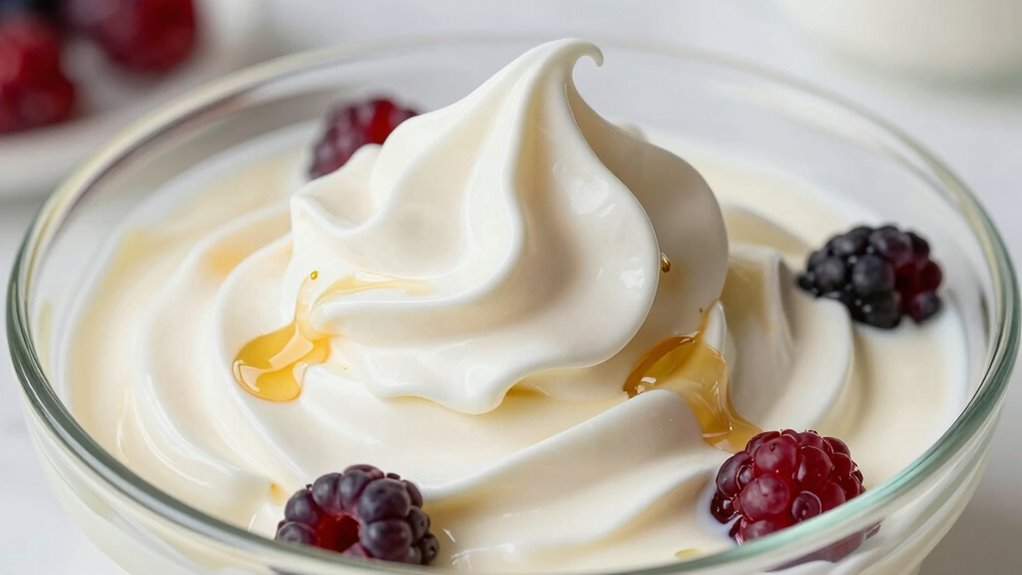

To make homemade frozen yogurt that’s not icy, you need to balance sugar and healthy fats carefully. Enough sugar prevents ice crystals, keeping it soft, while fats like coconut oil or avocado add creaminess and prevent graininess. Avoid skipping these elements, and consider chilling your mixture thoroughly before freezing. Experiment with different combinations until you find the perfect texture. Keep going, and you’ll discover how simple tweaks can transform your frozen yogurt into a smooth, scoopable treat.
Key Takeaways
- Balance sugar levels to prevent ice formation while maintaining a desirable sweetness and scoopability.
- Incorporate healthy fats like coconut oil or avocado to improve creaminess and reduce iciness.
- Use dairy alternatives with higher fat content, such as coconut milk or cashew cream, for a smoother texture.
- Avoid excessive sugar, which can make the yogurt overly sweet and affect texture; adjust during tasting.
- Employ proper freezer techniques, like high refresh rates, to minimize ice crystals and achieve a creamy consistency.
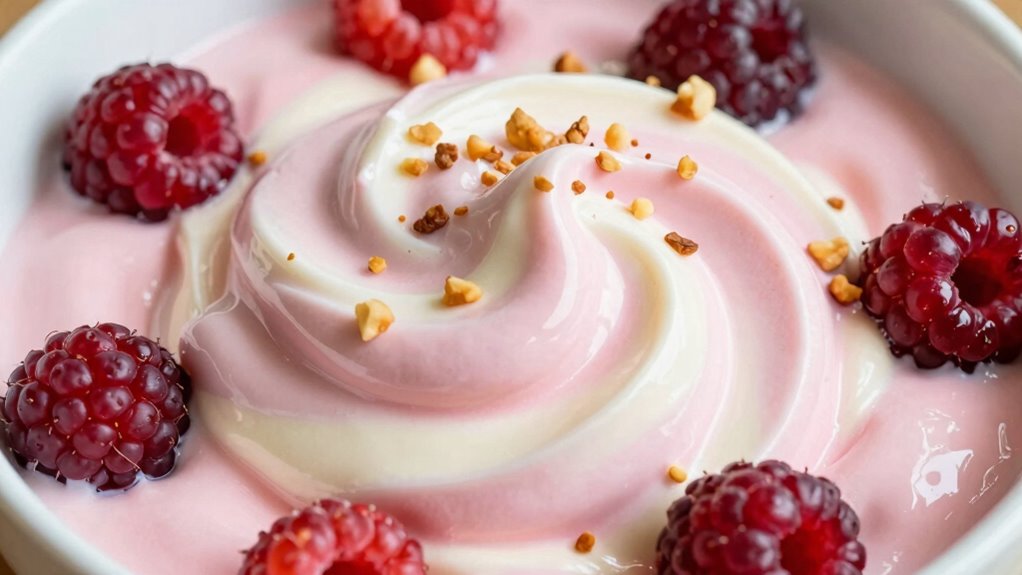
Have you ever wondered how to make creamy, invigorating frozen yogurt right in your own kitchen? The secret lies in balancing sugar and fat to avoid that icy, grainy texture common with homemade versions. When you start experimenting, consider dairy alternatives like coconut milk, almond milk, or cashew cream. These options not only cater to dietary restrictions but also open up a world of flavor combinations. For example, coconut milk pairs beautifully with tropical fruits like mango and pineapple, creating a rich, velvety texture that mimics traditional dairy-based frozen yogurt. Almond milk works well with berry blends, giving a nutty undertone that complements the tanginess of yogurt cultures. Cashew cream offers a subtly sweet, creamy base that’s perfect for more decadent flavor combos like chocolate and hazelnut or vanilla and caramel.
Using dairy alternatives can help you craft a dairy-free frozen yogurt that’s equally smooth and delicious, but it’s essential to pay attention to the fat content. Higher-fat dairy alternatives tend to produce creamier results, so opting for full-fat versions will give you that luscious mouthfeel you’re after. If you prefer lower-fat options, adding a small amount of healthy fats like coconut oil or avocado can help improve texture without making the mixture overly greasy. Remember, the key to avoiding iciness is not just fat, but also controlling sugar. Too little sugar can lead to a hard, icy texture, while too much can make the frozen yogurt overly sweet and affect the consistency. Additionally, high refresh rates in your freezer setup can help achieve a smoother texture during churning.
Flavor combinations are where your creativity shines. Think beyond traditional vanilla or plain fruit. Mix in spices like cinnamon or cardamom for warmth, or swirl in a spoonful of fruit preserves or honey for added sweetness and visual appeal. Fresh herbs such as basil or mint can give your frozen yogurt a revitalizing twist, especially when paired with citrus or berries. Additionally, adding chewy mix-ins like chopped nuts, granola, or dark chocolate chips can elevate your homemade frozen yogurt into a more satisfying treat. The trick is to taste as you go—adjust sweetness and flavor intensity to match your preferences. With the right balance of dairy alternatives, flavor combos, and proper sweetening, you’ll be able to create frozen yogurt that’s rich, smooth, and far from icy. It’s all about experimenting until you find that perfect harmony of ingredients that makes your homemade frozen yogurt irresistible.
Frequently Asked Questions
Can I Use Alternative Sweeteners in Homemade Frozen Yogurt?
Yes, you can use alternative sweeteners in homemade frozen yogurt. Stevia sweetening and monk fruit alternatives work well as natural options that won’t make your yogurt icy. Just keep in mind that these sweeteners are much sweeter than sugar, so start with small amounts and adjust to taste. They help maintain the balance of sugar and fat, ensuring your frozen yogurt stays creamy and flavorful without becoming icy.
How Long Does Homemade Frozen Yogurt Stay Good in the Freezer?
If you want your homemade frozen yogurt to stay fresh, aim for a storage duration of about 1 to 2 months in the freezer. Proper freezer safety guarantees it retains its creamy texture and flavor without becoming icy or freezer burnt. To enjoy the best quality, store it in an airtight container, and remember, the longer it stays, the more it might lose its original charm.
Is It Possible to Make Dairy-Free Frozen Yogurt at Home?
Yes, you can definitely make dairy-free frozen yogurt at home. Just use plant-based alternatives like coconut milk, almond milk, or cashew milk as your base. Blend in your favorite sweeteners and flavorings, then churn in an ice cream maker or freeze while stirring periodically. Dairy-free options give you delicious, creamy frozen yogurt without dairy, making it perfect for those with lactose intolerance or looking for vegan treats.
What’s the Best Way to Prevent Ice Crystals in Homemade Frozen Yogurt?
To prevent ice crystals in your homemade frozen yogurt, make sure to improve air circulation around the container and insulate it well. Use a tight-fitting lid or wrap the container with plastic wrap to minimize air exposure, which causes ice crystals. Also, periodically stir the mixture during freezing to break up forming crystals, ensuring a smoother texture. Proper insulation and movement keep your frozen yogurt creamy and revitalizing.
Can I Add Fruit or Toppings Directly Into the Frozen Yogurt Mixture?
Yes, you can mix in toppings or fruit directly into your frozen yogurt. For better fruit integration, chop the fruit small and fold it gently into the mixture before freezing. This helps distribute the flavors evenly and prevents large fruit chunks from sinking. Mix in toppings like chocolate chips or nuts just before serving to maintain their crunch. This way, your frozen yogurt stays creamy with nicely incorporated fruit and toppings.
Conclusion
Making homemade frozen yogurt is a simple way to enjoy a creamy treat without the ice crystals. Remember, balancing sugar and fat is key—just like the fact that adding the right amount of sugar can reduce ice formation by up to 30%. So, experiment with your recipe, adjust the ingredients, and you’ll end up with a smooth, luscious dessert every time. Enjoy your homemade frozen yogurt, and savor the perfect balance of sweetness and creaminess!