
To balance flavors in Thai curry and rice, start by adjusting the spice level with coconut milk or less spicy rice like jasmine or sticky rice. Incorporate fresh herbs like cilantro or Thai basil, and add tangy elements such as lime juice or fish sauce to enhance flavor. Including crunchy garnishes or pickled vegetables creates contrast and texture, making your meal more harmonious. Keep exploring for tips to perfect your Thai curry pairings and enjoy a vibrant, satisfying dinner.
Key Takeaways
- Use fragrant jasmine rice to complement and absorb the bold flavors of Thai curry for a balanced meal.
- Adjust spice levels with coconut milk, lime, or sugar to harmonize heat and flavor.
- Incorporate fresh herbs like cilantro or Thai basil to brighten and enhance the dish’s overall taste.
- Add crunchy garnishes such as roasted peanuts or vegetables to create texture contrast.
- Include tangy or sweet side elements, like pickled vegetables or sweet chili, to balance richness and spiciness.
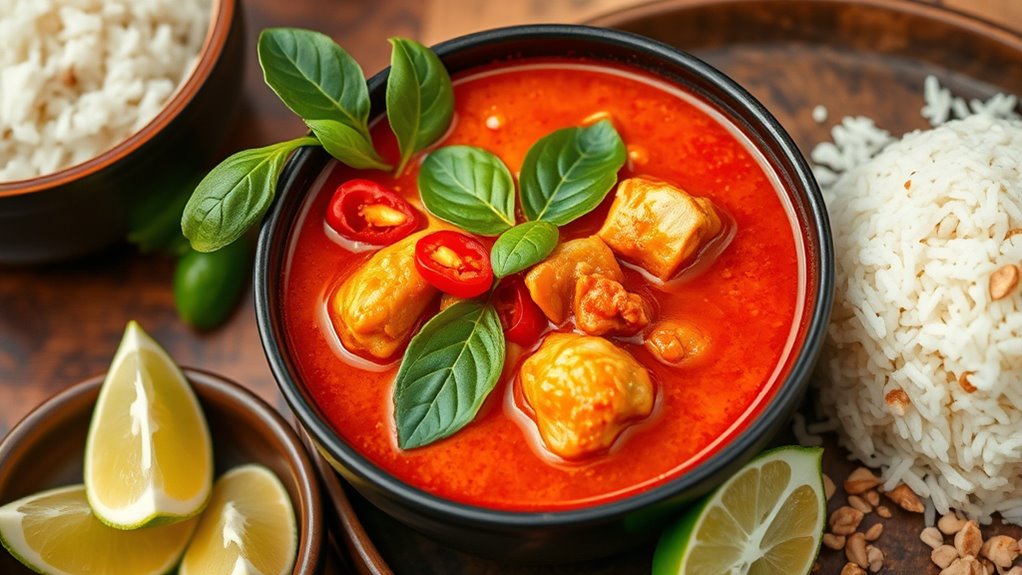
Thai curry and rice make a perfect pairing that highlights the vibrant flavors of Thailand’s cuisine. When you serve these together, you create a balanced dish where the richness of the curry complements the neutral, fluffy rice. One of the keys to a successful pairing is managing the spice level. Thai curries can range from mildly fragrant to fiery hot, so understanding your preferred spice intensity helps you choose the right curry and rice combination. If you prefer a milder dish, opt for a green or yellow curry with a gentle coconut milk base, which naturally tones down heat. For those who enjoy a kick, a spicy red curry can be balanced with slightly less spicy rice or by adding a squeeze of lime or a sprinkle of sugar to mellow the heat. Adjusting the spice level allows you to enjoy the complex flavors without overwhelming your palate.
Balancing spice levels enhances Thai curry and rice for a harmonious, flavorful meal.
Ingredient pairings are equally crucial to creating a harmonious dish. You want your rice to act as a neutral canvas that absorbs and balances the bold flavors of the curry. Typically, jasmine rice is the go-to because its fragrant aroma pairs beautifully with the aromatic spices in Thai curries. However, you can also experiment with basmati or even sticky rice, depending on the dish’s texture and your preference. To enhance the pairing, consider adding ingredients like fresh herbs—cilantro, Thai basil, or mint—either scattered over the curry or stirred into the rice. These herbs brighten the dish and add layers of freshness that cut through the richness of the curry. Additionally, some prefer adding a dash of fish sauce or lime juice to the rice, which elevates the overall flavor profile.
When creating your meal, think about how the ingredient pairings can influence the overall balance. For example, if you’re serving a spicy curry, balancing it with slightly sweet or tangy ingredients can help prevent the heat from overpowering the dish. Coconut milk in the curry adds richness, but pairing it with a slightly tangy rice or a side of pickled vegetables can create a delightful contrast. You also want to contemplate textures—adding crunchy vegetables or garnishes like roasted peanuts can complement the smoothness of the curry and the softness of the rice.
In the end, the goal is harmony. By adjusting the spice level and carefully selecting ingredient pairings, you craft a Thai curry and rice combination that’s perfectly balanced and satisfying. Whether you prefer mild or fiery, simple or complex, the right pairing enhances every bite, letting the vibrant flavors of Thailand shine through.
Frequently Asked Questions
What Are the Best Sides to Serve With Thai Curry?
You should serve Thai curry with sides that complement its rich, spicy flavors. Fresh herbs like cilantro and Thai basil add a burst of freshness, while cucumber salad provides a cool contrast. Steamed jasmine rice absorbs the coconut milk and spices beautifully, balancing the heat. You can also include roasted vegetables or a simple lime wedge to enhance the dish’s vibrant flavors, making your dinner well-rounded and flavorful.
How Do I Adjust Spice Levels in Thai Curry?
You can easily adjust spice levels in Thai curry by controlling the heat balancing. Start by adding more coconut milk or a pinch of sugar to mellow the spice if it’s too hot. To increase heat, stir in extra chili peppers or chili paste gradually. Taste as you go, and remember that balancing heat with sweetness or acidity creates a more harmonious flavor. This way, you control the perfect spice adjustment for your curry.
Can I Prepare Thai Curry in Advance?
Yes, you can prepare Thai curry in advance. For meal prep tips, store the curry in an airtight container and refrigerate it for up to 2-3 days. To preserve flavor, reheat gently on the stove, adding a splash of coconut milk or water if needed. This method helps maintain the curry’s vibrant flavors, making your dinner quick and delicious without sacrificing taste.
Which Rice Types Pair Best With Different Thai Curries?
You should pair jasmine rice with rich, creamy Thai curries since its fluffy texture complements the coconut milk varieties perfectly, balancing spiciness and sweetness. For lighter curries, opt for long-grain rice with a slightly firmer texture, like basmati. If you’re making a coconut milk-based curry, jasmine rice absorbs flavors well. Always cook rice just right to enhance the curry’s flavors and create a harmonious dinner experience.
How Do I Store Leftovers of Thai Curry and Rice?
Did you know that properly stored leftovers can last up to 3-4 days? To store Thai curry and rice leftovers, transfer them to airtight containers and refrigerate promptly. For reheating, use a microwave or stovetop, stirring occasionally to heat evenly. Avoid leaving leftovers out for more than two hours to prevent bacteria growth. Following these leftover storage and reheating tips guarantees your meal remains safe and tasty for later enjoyment.
Conclusion
Now that you know how to balance flavors, your dinner will be a hit. Pairing the right Thai curry with rice isn’t just about taste—it’s about creating harmony on your plate. Think of it as tuning a musical instrument, where each note plays a part in the symphony. With a little practice, you’ll turn every meal into a masterpiece, proving that when flavors align, the whole is greater than the sum of its parts.