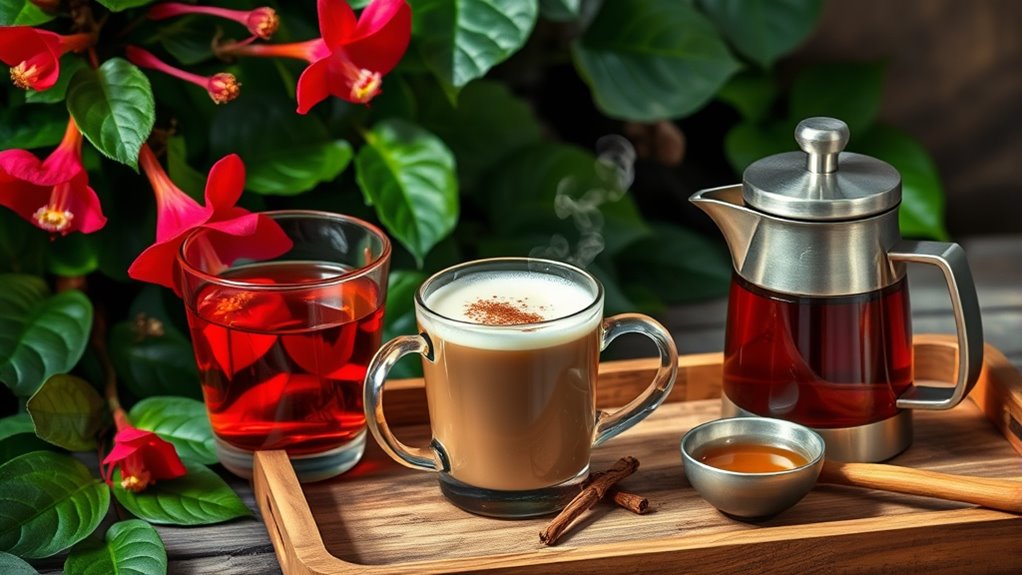

Discover the vibrant flavors of African teas like rooibos, hibiscus, and Kenyan chai. Rooibos offers a naturally sweet, honeyed profile from fermentation, while hibiscus provides a tart, cranberry-like taste in its bright red infusion. Kenyan chai combines black tea with spices for a bold, full-bodied experience. Each tea’s unique fermentation process and regional influence create distinct flavors. Continuing shows you more about the craftsmanship and cultural significance behind these iconic African brews.

Get kitchen staples and gadgets delivered free with Prime
- Fast, free delivery on millions of items
- Prime Video, Amazon Music and more included
- Member-only deals all year
Key Takeaways
- Rooibos is a naturally sweet herbal infusion from South Africa, undergoing fermentation for caramel and honey flavors.
- Hibiscus is a vibrant, tart red infusion made from dried petals, not fermented, with cranberry-like taste.
- Kenyan chai combines black tea leaves with spices, with fermentation enhancing its bold, full-bodied flavor.
- Regional climate and soil influence fermentation levels and flavor profiles of African teas.
- These teas reflect Africa’s diverse landscapes, cultural traditions, and craftsmanship through unique processing methods.
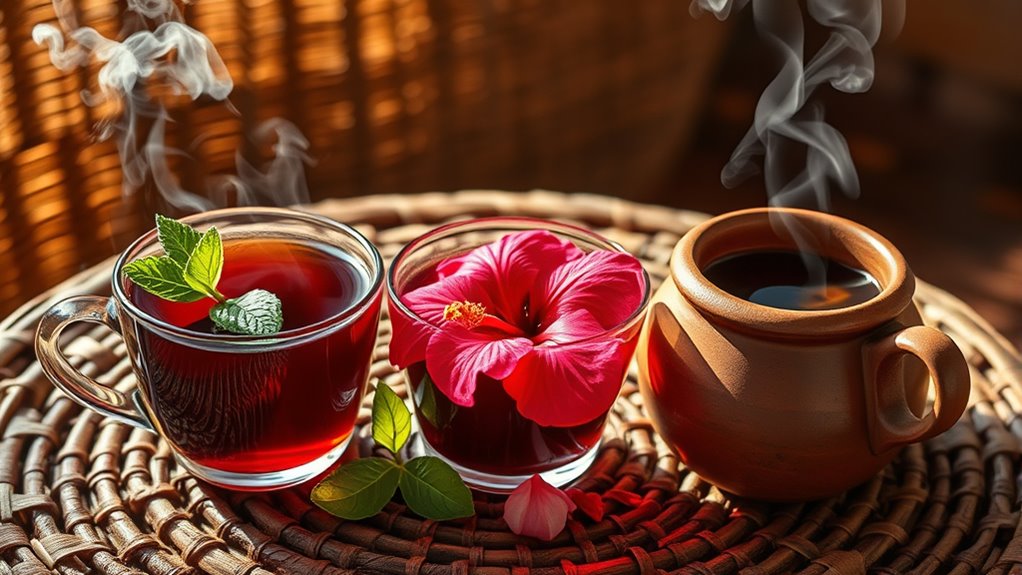
African teas offer a rich variety of flavors and cultural traditions that reflect the continent’s diverse landscapes. When exploring these teas, you’ll notice that their unique processing methods, especially tea fermentation, play a vital role in shaping their distinct flavor profiles. For example, in the case of rooibos, which isn’t technically a tea but a herbal infusion, fermentation transforms its leaves, creating a smooth, naturally sweet flavor with hints of caramel and honey. This process enhances the tea’s aroma and depth, making it a comforting drink that’s both caffeine-free and versatile. Conversely, traditional black teas like Kenyan chai undergo a different fermentation process, where the leaves are fully oxidized, resulting in bold, robust flavors with earthy undertones. Understanding how tea fermentation influences flavor profiles helps you appreciate the nuances in each brew, whether it’s the light, fruity notes of hibiscus or the spicy complexity of Kenyan chai.
When you sip on African teas, you’re engaging with centuries of cultural tradition and craftsmanship. Hibiscus, for instance, is often dried and steeped without fermentation, which preserves its vibrant red color and tart, cranberry-like taste. Its natural acidity makes it revitalizing and suitable for blending with spices or sweeteners. On the other hand, Kenyan chai combines black tea leaves with aromatic spices like cardamom, cinnamon, and ginger. The fermentation process intensifies the tea’s natural strength, creating a rich, full-bodied flavor that balances spiciness and sweetness. As you experience these teas, you’ll notice how fermentation and processing techniques influence their unique taste profiles, offering a spectrum from fruity and floral to spicy and robust.
Additionally, the fermentation process itself varies depending on the specific tea and regional practices, further contributing to the diversity of flavors across African teas. African teas also reflect the continent’s diverse landscapes, from the lush highlands of Kenya to the arid regions where rooibos is harvested. This geographical variety impacts the tea fermentation processes, as different climates and soils contribute to the unique qualities of each tea. When preparing these teas, consider the specific fermentation levels—some teas are lightly fermented, offering delicate flavors, while others are fully oxidized for a more intense experience. Your choice of brewing method can further enhance these flavor profiles, allowing you to savor the complex, layered tastes that define African teas. Whether you’re enjoying a calming cup of hibiscus, a spicy Kenyan chai, or a naturally sweet rooibos infusion, you’re indulging in a part of Africa’s rich cultural tapestry, brought to life through the art of tea fermentation and flavor craftsmanship.
As an affiliate, we earn on qualifying purchases.
Frequently Asked Questions
What Are the Health Benefits of African Teas?
You benefit from African teas’ health perks, like antioxidants in Rooibos that boost immunity and reduce inflammation. Hibiscus tea can lower blood pressure, while Kenyan Chai offers digestion support. These teas hold cultural significance, connecting you to traditions. Their unique processing techniques preserve natural nutrients, making them a delicious way to enhance your well-being. Drinking these teas helps you stay healthy while honoring African heritage.
How Is African Tea Sustainably Harvested?
You can see how African tea is sustainably harvested through sustainable farming practices, eco-friendly harvesting methods, and careful resource management. By supporting local farmers who use organic fertilizers, minimize water use, and avoid harmful pesticides, you guarantee the environment stays healthy. Eco-friendly harvesting involves hand-picking leaves at peak freshness, reducing waste and energy consumption. This balanced approach keeps ecosystems intact while delivering high-quality teas for you to enjoy responsibly.
Are There Traditional African Brewing Methods?
Yes, you’ll find traditional African brewing methods still in use today. You might participate in cultural brewing techniques like traditional fermentation, where ingredients are left to ferment naturally, creating unique flavors. These methods often involve communal practices, using locally sourced herbs and teas. By embracing these techniques, you connect with the rich heritage and flavors of African teas, preserving age-old customs in modern tea preparation.
Can African Teas Be Used in Cooking Recipes?
You might be surprised, but African teas like Rooibos and Hibiscus make fantastic ingredients in cooking. Use a tea infusion to add depth and unique flavor pairing in dishes like marinades, desserts, or stews. Their natural aroma enhances recipes, giving them a vibrant, authentic touch. Experimenting with these teas can elevate your culinary creations, making them more memorable and flavorful—an unexpected twist inspired by traditional African ingredients.
What Are the Differences Between Various Regional Tea Varieties?
You’ll notice regional tea varieties differ mainly due to tea cultivation methods and regional flavor profiles. For example, African teas like Rooibos have a naturally sweet, earthy taste, while Kenyan Chai offers bold, spicy notes. These differences come from unique climate conditions, soil types, and processing techniques. Exploring regional varieties lets you enjoy distinct flavors, each offering a unique experience rooted in their specific cultivation practices and local traditions.
Conclusion
So, next time you’re sipping that fancy imported brew, remember there’s a whole continent of bold, vibrant teas waiting to steal the spotlight. Whether it’s the sweet, nutty rooibos, the tangy hibiscus, or the spicy Kenyan chai, Africa’s got your tea cravings covered—no passport required. Who needs to jet off when you can have a taste adventure right in your cup? Cheers to discovering the continent’s best-kept secret—your new favorite brew!
NFL season / tailgating Picks
team gear
As an affiliate, we earn on qualifying purchases.