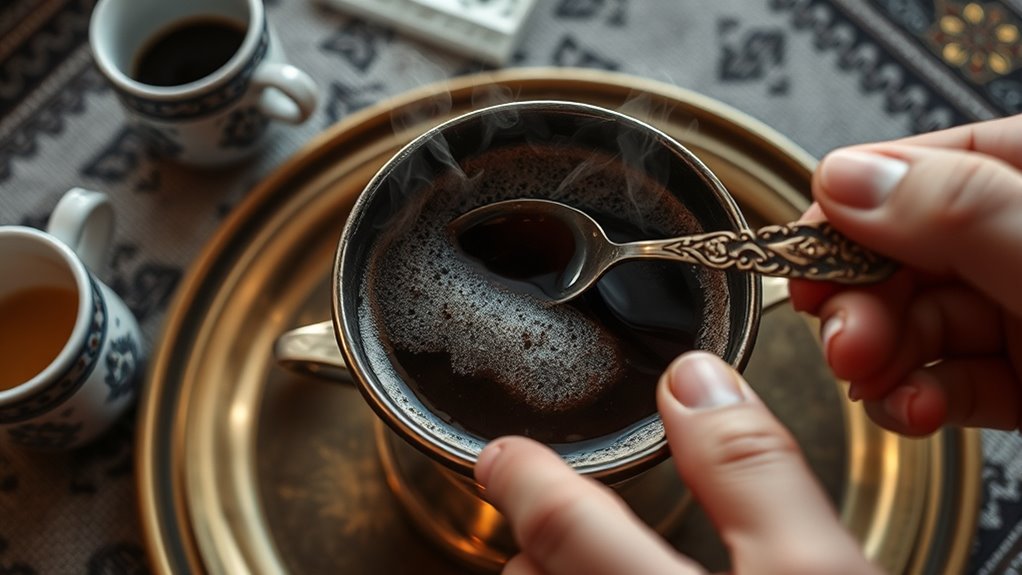

In Middle Eastern coffee culture, you’ll find traditional methods like brewing Turkish and Arabic coffee using finely ground beans in a cezve or similar pot, often with spices like cardamom. Serving coffee isn’t just about taste; it’s a gesture of hospitality and respect, fostering social bonds and shared traditions. The ritual emphasizes patience and artistry, reflecting cultural pride. To learn more about these fascinating customs and their deep significance, keep exploring these rich traditions.
Key Takeaways
- Turkish and Arabic coffee are prepared using finely ground coffee brewed slowly over low heat, often with added spices like cardamom.
- Coffee serves as a symbol of hospitality, respect, and social bonding in Middle Eastern cultures.
- Traditional coffee rituals emphasize patience, artistry, and cultural pride, often involving specific serving customs.
- Sharing coffee strengthens community ties and acts as a gesture of goodwill and generosity.
- Coffee traditions reflect cultural identity, passing down customs and reinforcing social values across generations.
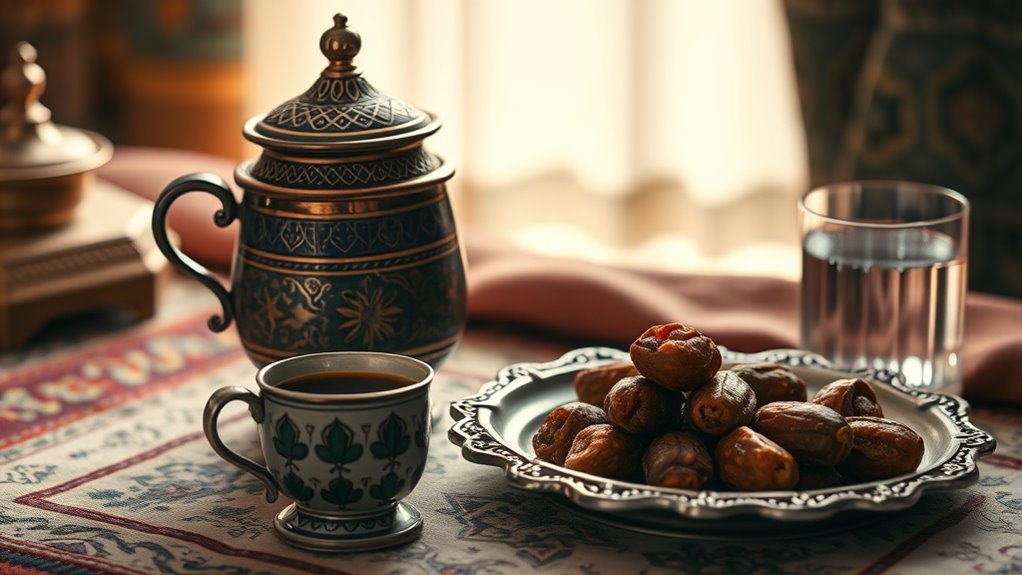
Middle Eastern coffee culture is a rich and vibrant tradition that deeply influences social interactions across the region. When you explore Turkish and Arabic coffee traditions, you’ll notice how much these beverages symbolize hospitality, respect, and community. The way coffee is prepared reveals a lot about cultural values, making its preparation techniques an essential part of the experience. Unlike drip brewing or espresso, Middle Eastern methods involve specific tools and precise steps that have been passed down through generations. For instance, in Turkish coffee, you use a cezve—a small, long-handled pot—where finely ground coffee, water, and sometimes sugar are combined. You heat this mixture slowly over low heat, allowing the coffee to foam and develop a rich aroma before pouring. This careful process ensures that the coffee’s texture and flavor are just right. Arabic coffee, on the other hand, often involves a similar approach but might include additional spices like cardamom, which are added during the brewing process to enhance its distinctive taste. The preparation techniques highlight the patience and skill ingrained in the culture, emphasizing that coffee isn’t just a beverage but a ritual that fosters connection.
The cultural significance of coffee in the Middle East extends far beyond its preparation. Serving coffee is a gesture of hospitality, signaling respect and friendship. When you’re invited into someone’s home, offering coffee is almost obligatory, and accepting it graciously is seen as a mark of good manners. Coffee ceremonies often accompany social gatherings, where the act of brewing and serving coffee becomes a shared experience—an expression of generosity and warmth. In many communities, the way coffee is presented, including the choice of cups and the manner of serving, reflects social status and tradition. The slow, deliberate process of making coffee underscores its importance as a symbol of community bonding and cultural identity. Whether in a bustling market or a quiet family home, coffee acts as a bridge connecting generations and reinforcing social bonds. It’s not just about drinking; it’s about honoring customs, building relationships, and celebrating heritage. This deep-rooted cultural significance guarantees that coffee remains a cherished part of Middle Eastern life, embodying centuries of history, artistry, and social meaning in every cup.
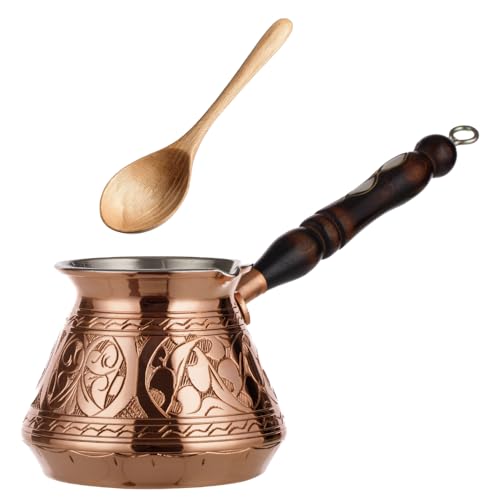
DEMMEX Copper Turkish Coffee Pot Cezve Ibrik Greek Coffee Briki Stovetop Coffee Maker with Wooden Handle & Spoon, 1mm Thick Copper, Handmade & Engraved in TURKEY, 9 fl Oz – 3 Servings
- Product Type: Turkish Greek Arabic Coffee Pot
- Material: 1mm Thick Copper with Wooden Handle
- Interior Lining: Food-safe Tin-lined Interior
As an affiliate, we earn on qualifying purchases.
As an affiliate, we earn on qualifying purchases.
Frequently Asked Questions
How Did Middle Eastern Coffee Originate Historically?
You might not know that Middle Eastern coffee originated from the vibrant coffee trade in the 15th century, spreading quickly through trade routes. As it traveled, it gained cultural influence, becoming a symbol of hospitality and social bonding. You can see how this tradition shaped regional customs, with coffee becoming more than a beverage—it’s a cherished part of Middle Eastern identity, reflecting centuries of history and cultural exchange.
What Are the Regional Differences in Coffee Preparation?
Imagine a vibrant marketplace where coffee beans of diverse varieties—Arabica or Robusta—are selected with care. You notice brewing techniques that range from the Turkish cezve to Arabic dallah, each creating unique flavors and textures. Regional differences influence preparation: Turkish coffee is finely ground and brewed slowly, while Arabic coffee often involves cardamom and a quicker infusion. These variations reflect local tastes and cultural identities, making each cup a distinct experience.
How Is Coffee Traditionally Served During Special Occasions?
During special occasions, you’ll participate in a coffee ceremony that highlights traditional hospitality. The ceremonial serving involves pouring the freshly brewed coffee into small cups, often accompanied by dates or sweets. You observe respectful gestures, like offering the first cup to elders. This ritual emphasizes warmth, respect, and community, making the moment more meaningful. It’s a cherished tradition that brings people together, celebrating both culture and shared bonds.
Are There Specific Etiquette Rules for Drinking Coffee in Middle Eastern Culture?
Like a delicate dance, the coffee-serving customs in Middle Eastern culture demand your respect. You should accept coffee with your right hand, avoid rushing the host, and never refuse a second cup, symbolizing hospitality. Maintaining eye contact and expressing gratitude show appreciation for guest hospitality etiquette. These traditions deepen connections, turning a simple cup into a meaningful gesture of friendship and respect in this rich coffee culture.
What Are the Health Benefits Associated With Middle Eastern Coffee?
You’ll find that Middle Eastern coffee offers notable health benefits, thanks to its high levels of coffee antioxidants. These antioxidants help fight free radicals, potentially lowering your risk of certain diseases. Drinking this coffee in moderation can boost your energy, improve mental focus, and support your overall health. So, enjoy your coffee knowing it’s not just flavorful but also packed with benefits that contribute positively to your well-being.
Conclusion
You embrace the rich traditions of Middle Eastern coffee, savoring its history, its rituals, and its social significance. You share stories over steaming cups, connect through centuries-old customs, and celebrate hospitality with every sip. You honor the unity in diversity, the warmth in tradition, and the timeless bond that coffee creates. In every cup, you find more than flavor—you find a way to connect, to preserve, and to cherish a vibrant cultural heritage.