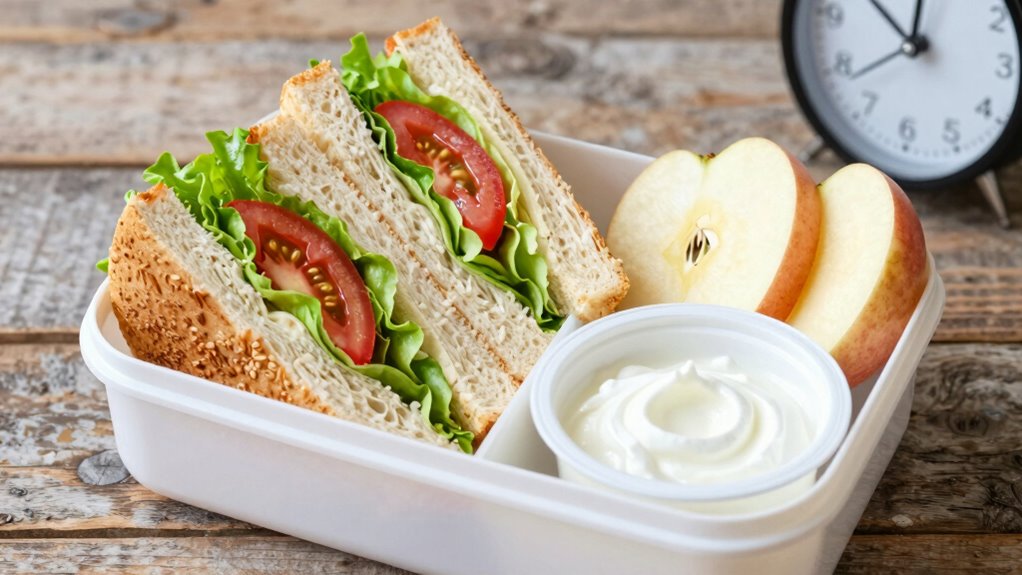
To keep your lunch safe, don’t leave perishable foods out at room temperature for more than 2 hours. If it’s above 90°F, limit that time to just 1 hour to prevent bacteria from multiplying quickly. Use insulated containers and ice packs for cold foods, and keep hot foods in thermoses above 140°F. Proper storage and knowing these limits help you avoid foodborne illnesses—discover more tips to keep your lunch safe throughout the day.
Key Takeaways
- Perishable foods should not be left out at room temperature for more than 2 hours; reduce to 1 hour in hot weather above 90°F.
- Use insulated lunchboxes and ice packs to keep cold foods below 40°F and prevent bacterial growth.
- Reheat leftovers thoroughly to kill bacteria if they have been out for an extended period.
- Store lunch in a cool place, refrigerator, or insulated container to maintain safe temperatures until consumption.
- Discard any food left out beyond the recommended time to prevent foodborne illnesses and ensure safety.
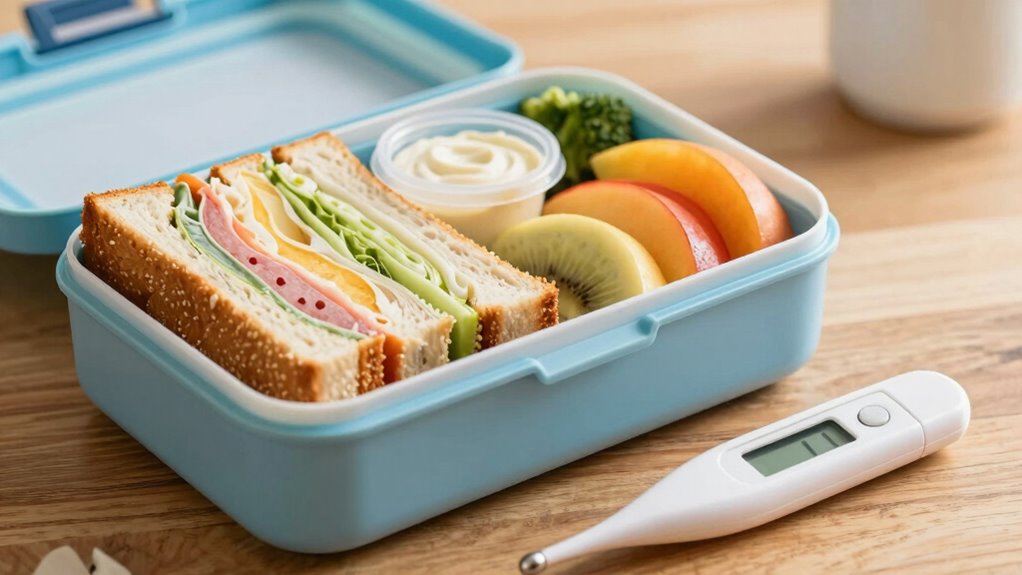
Packing a lunch for school or work means you need to be mindful of food safety to prevent illnesses. One of the most important aspects is maintaining proper temperature control. When food sits out at unsafe temperatures, bacteria can grow rapidly, increasing the risk of foodborne illnesses. You might not see or smell any signs of spoilage, but harmful bacteria like Salmonella or E. coli can multiply quickly if food isn’t kept at the right temperature. That’s why it’s essential to understand how long food can safely stay out of the refrigerator or cooler.
Proper temperature control prevents bacterial growth and keeps your lunch safe to eat.
Perishable foods like sandwiches with deli meats, dairy products, or cut fruits should never be left at room temperature for more than two hours. If the temperature is above 90°F (32°C), such as during a hot summer day, the safe window shrinks to just one hour. After that time, bacteria can reach dangerous levels, making the food risky to eat. To keep your lunch safe, you should pack an insulated lunchbox with an ice pack or use a thermos to help maintain a cool temperature until mealtime. This helps slow bacteria growth and keeps your food fresh and safe.
It’s also important to be aware that some foods are more susceptible to bacteria growth than others. For example, cooked meats, dairy, and cut vegetables can become unsafe faster if left out too long. If you notice your lunch has been sitting out beyond the recommended time, it’s better to err on the side of caution and discard it rather than risk getting sick. Proper temperature control isn’t just about keeping food cold—hot foods should be kept above 140°F (60°C) to prevent bacteria from multiplying. If you’re reheating leftovers, make sure they’re heated thoroughly to kill any bacteria that might have grown.
Another key tip is to plan ahead. Pack your lunch in the morning and ensure it’s stored properly. When you’re at school or work, keep your lunch in a cool place or within a refrigerator if available. Avoid leaving it in a hot car or exposed to direct sunlight, as this can quickly raise the temperature and promote bacteria growth. Being diligent about these practices helps you enjoy a safe, healthy meal and reduces the risk of foodborne illness. Remember, maintaining temperature control isn’t just a good idea—it’s a critical step in protecting your health every day.
Additionally, understanding the environmental conditions that affect bacterial growth can help you better manage food safety practices.

Lifewit Freezable Lunch Box, Insulated Reusable Lunch Bag with 2 Ice Packs, Mini Cooler Snack Bag for Bento Box for Salad, Sandwich, Snacks fo Men Women for Work, Black 5L
Removable Gel Packs: Equipped with 2 removable safe gel ice packs, it's more easy to clean and dry…
As an affiliate, we earn on qualifying purchases.
As an affiliate, we earn on qualifying purchases.
Frequently Asked Questions
Can Hot Foods Be Safely Reheated Multiple Times?
Yes, hot foods can be safely reheated multiple times if you follow proper food temperature and reheating guidelines. You should reheat leftovers to an internal temperature of at least 165°F (74°C) to kill bacteria. Avoid reheating more than once, as repeated heating can compromise food safety and quality. Always use a food thermometer and make certain the food stays hot enough during each reheating to prevent bacteria growth.
What Are the Signs Food Has Gone Bad in a Lunchbox?
Imagine your lunchbox as a ticking clock; signs of food spoilage indicators are like warning bells. If your food smells sour, looks slimy, or has a strange color, it’s a clear sign of lunchbox contamination. Bulging containers or a sour odor mean you should toss it. Trust your senses—these contamination signs help you avoid food poisoning and keep your meal safe and enjoyable.
How Should I Store Leftovers From a Lunch?
To store leftovers from a lunch, you should transfer food into airtight storage containers promptly. Follow refrigeration guidelines by placing the containers in the fridge within two hours of eating. Use proper storage containers to prevent contamination and maintain freshness. Label leftovers with dates to track their freshness. Always reheat to the right temperature before eating, and discard any leftovers that have been stored beyond 3-4 days.
Is It Safe to Pack Perishable Foods Overnight?
It’s not safe to pack perishable foods overnight without proper food storage. Bacteria can grow quickly if your lunchbox isn’t kept cold, risking foodborne illnesses. To maintain lunchbox hygiene, use an insulated container with ice packs to keep perishable items chilled. Always refrigerate leftovers promptly and make certain your lunchbox stays at a safe temperature. This way, you protect your health and enjoy your meals safely.
How Do Different Temperatures Affect Bacteria Growth?
You know that temperature control is key to preventing bacteria proliferation. When temperatures are too warm, bacteria grow rapidly, increasing the risk of foodborne illness. Keep perishable foods cold (below 40°F) or hot (above 140°F) to slow bacteria growth. If food sits in the danger zone (40°F-140°F) for more than two hours, bacteria can multiply quickly, making it unsafe to eat. Always monitor temperature to guarantee food safety.

THERMOS Stainless King Vacuum-Insulated Food Jar with Spoon, 16 Ounce, Matte Stainless Steel
STAYS HOT OR COLD: THERMOS vacuum insulation technology for maximum temperature retention of hot or cold meals. Keeps…
As an affiliate, we earn on qualifying purchases.
As an affiliate, we earn on qualifying purchases.
Conclusion
Remember, as you pack your lunchbox, think of it as a cozy home for your food. If it sits out too long, bacteria can start to grow like tiny invaders creeping in. Keep perishable items chilled or refrigerated, and don’t leave your food out in the sun’s harsh glare. By staying mindful, you’re protecting yourself from hidden dangers, ensuring every bite is safe and delicious. Your health depends on the choices you make—so pack smart and enjoy your meal worry-free.

Cool Coolers By Fit & Fresh 4 Pack Slim Ice Packs, Quick Freeze Space Saving Reusable Ice Packs for Lunch Boxes or Coolers, Multi Colored, Single Pack
SLIM, POWERFUL & COLORFUL: Taking "extra chill" to the next level! Measuring at 4.75” x 0.5” x 5”,…
As an affiliate, we earn on qualifying purchases.
As an affiliate, we earn on qualifying purchases.

buluker 4 Pack Bento Lunch Box Set 3 Compartment Food Storage Containers Wheat Straw Meal Prep Lunch Box Plastic Food Storage Containers, Microwave and Dishwasher Safe (light colour)
【3 Compartment Design】 Three perfectly portioned compartments for the bento box allows you to store different food separately,…
As an affiliate, we earn on qualifying purchases.
As an affiliate, we earn on qualifying purchases.