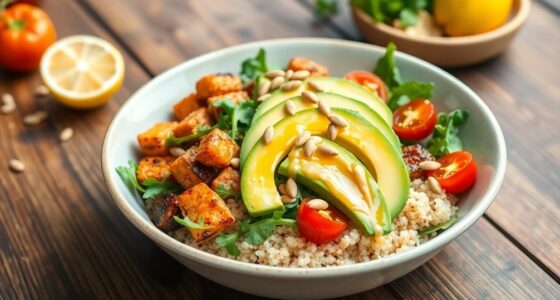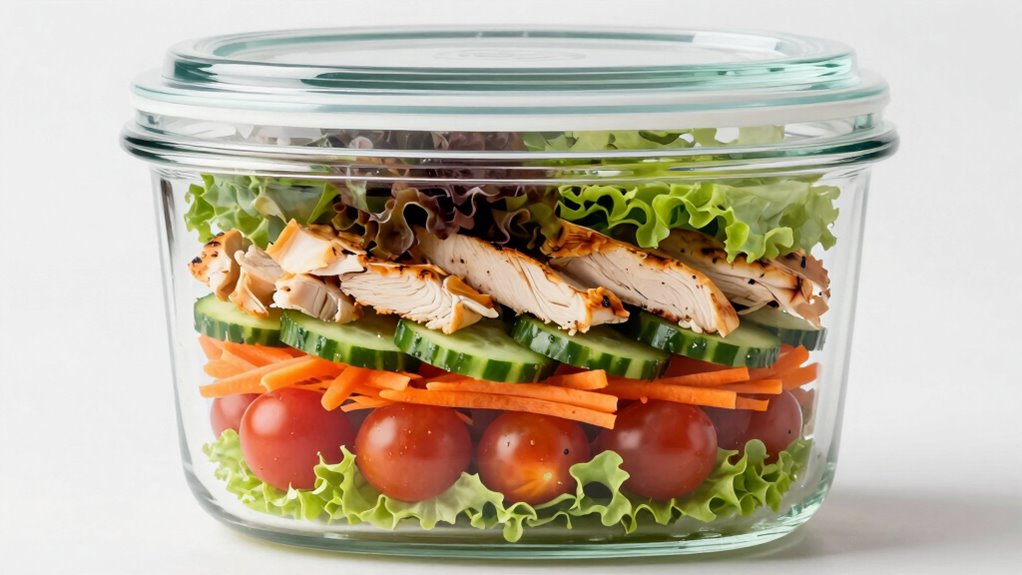

To keep your greens crisp for up to four days, layer your salad starting with sturdy ingredients like cooked chicken or chopped vegetables at the bottom. Place any wet ingredients or dressing in separate containers, and keep delicate greens like lettuce or spinach at the top. Make sure everything is dry and tightly sealed to prevent moisture buildup. If you follow these steps, you’ll maintain a fresh, crunchy salad longer—continue for more tips on perfect salad layering.
Key Takeaways
- Place delicate greens at the top of the jar to prevent moisture from seeping in and causing wilting.
- Use sturdy, moisture-resistant ingredients like carrots, cucumbers, or proteins at the bottom for stability.
- Keep wet ingredients or dressings in separate, sealed containers to avoid sogginess.
- Ensure all ingredients are thoroughly dry before layering to maintain crispness.
- Seal the jar tightly to prevent air and moisture from entering, prolonging freshness up to four days.
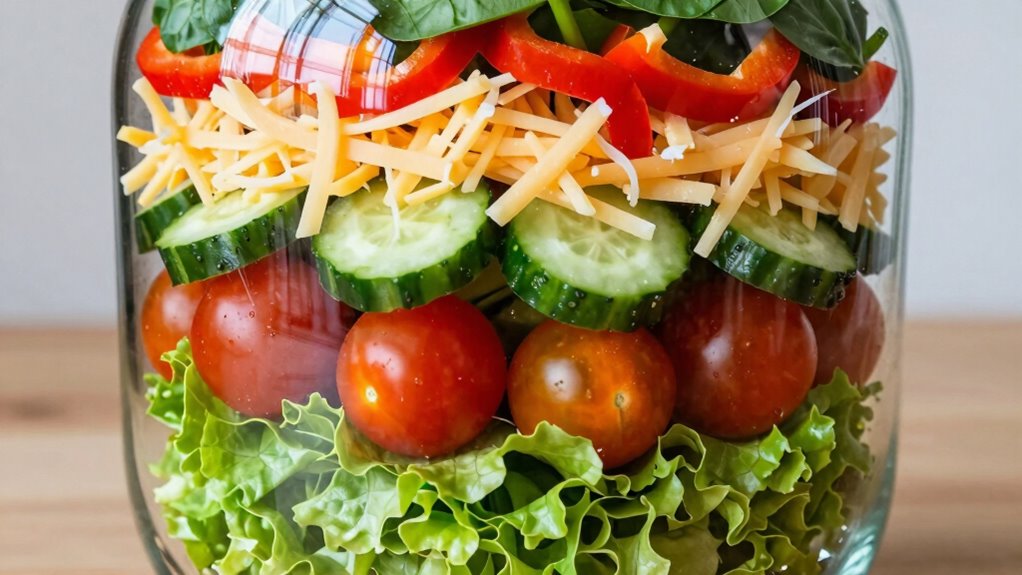
Layering a salad in a jar might seem simple, but doing it properly guarantees your salad stays fresh and crisp until you’re ready to eat. To achieve this, you need to pay close attention to storage tips and ingredient prep. First, consider how you prepare your ingredients. Wash all vegetables thoroughly and dry them completely — excess moisture can cause greens to wilt and spoil faster. Use a salad spinner or paper towels to remove as much water as possible, because dry ingredients stay fresh longer. Chop or slice your vegetables into uniform pieces, which not only makes the salad easier to eat but also helps with even layering. Precise ingredient prep ensures each layer functions as a barrier to moisture and keeps everything crisp.
Proper ingredient prep and thorough drying keep salad layers crisp and fresh longer.
Next, focus on storage tips that maximize freshness. Start with the jar’s bottom, placing ingredients least prone to wilting, like hearty vegetables or proteins, if you’re including them. For example, chopped carrots, cucumbers, or cooked chicken go well at the bottom. These layers form a sturdy base, preventing moisture from seeping upward. After that, add your dressing or any wet ingredients, but keep them separate from the greens to prevent sogginess. Use a small container or a sealed compartment if your jar has one, or simply place the dressing at the very bottom, below the sturdier ingredients. This prevents the greens from becoming soggy during storage.
The key to keeping greens crisp is prioritizing the top layer. Place your delicate greens, like lettuce, spinach, or kale, at the very top of the jar. These will be the first ingredients you reach for, and by keeping them away from moisture, you preserve their crunch. When layering, avoid pressing ingredients down too tightly — gentle packing ensures air circulation and prevents crushing delicate greens. Make sure the jar lid is tightly sealed to prevent air and moisture from entering during storage, which can cause wilting.
Finally, when you’re ready to eat, give the jar a gentle shake or stir to distribute flavors evenly, especially if you used dressings at the bottom. With proper ingredient prep and smart storage tips, your salad jar can stay fresh and crisp for up to four days. This method not only saves time but also keeps your greens lively and enjoyable until mealtime. It’s all about thoughtful layering, dry ingredients, and airtight storage that make your salad last longer without sacrificing texture or flavor.
Frequently Asked Questions
Can I Customize Salad Jar Ingredients for Dietary Restrictions?
Yes, you can customize salad jar ingredients for dietary restrictions. You just need to choose gluten-free options like quinoa or chickpeas, and swap out dairy for vegan substitutions such as plant-based dressings or tofu. Feel free to add your favorite vegetables or proteins that meet your needs. With a little creativity, you’ll enjoy a healthy, personalized salad that stays fresh and delicious for days.
What Are the Best Container Sizes for Meal Prep?
For meal prep, choose container sizes that suit your portion control needs, typically between 1 to 4 cups, depending on your meal. Opt for containers with appropriate capacity to prevent overfilling or wasted space, which helps keep ingredients fresh. Smaller containers are great for snacks or single meals, while larger ones work for multiple servings. Prioritize leak-proof lids and stackable designs for convenience and efficient storage.
How Do I Prevent Sogginess in Delicate Greens?
To prevent sogginess in delicate greens, always keep dressing separate until you’re ready to eat. Use moisture control by placing a paper towel at the bottom of your container to absorb excess moisture, which helps keep greens crisp. Layer your greens on top of the towel, and add sturdier ingredients below. This method guarantees your greens stay fresh and crisp for several days, avoiding sogginess.
Is It Safe to Prepare Salad Jars in Advance?
Yes, it’s safe to prepare salad jars in advance if you follow proper food safety guidelines. You should store them in the refrigerator at or below 40°F to prevent bacterial growth. Use airtight containers to preserve freshness and keep ingredients separated to prevent sogginess. Label jars with preparation dates, and consume within 4 days to ensure ingredient preservation and safety. Always wash ingredients thoroughly before packing.
How Should I Store Salad Jars for Optimal Freshness?
You should store your salad jars upright in the fridge to maintain freshness and presentation. Keep salad dressing separate until you’re ready to eat to prevent sogginess. For ideal salad jar presentation, layer ingredients so greens stay crisp, and add dressings just before serving. Properly sealed jars and storing them away from strong odors also help preserve flavor and texture for up to four days, ensuring a fresh, appealing salad every time.
Conclusion
By following this layering order, your salad will stay fresh and crisp for up to four days, much like a well-packed picnic basket ready for a sunny day. Keep your greens at the top and the hearty ingredients at the bottom, and you’ll enjoy a vibrant, crunch-filled salad whenever you want. Think of it as building a sturdy tower—each layer supports the next, ensuring your salad remains delicious and crisp for days to come.