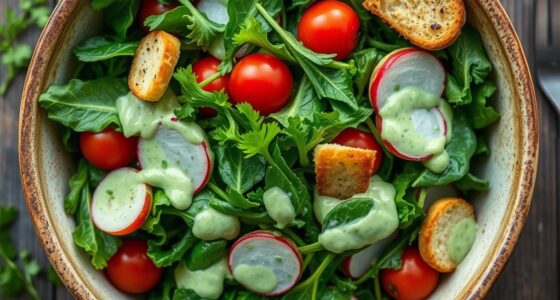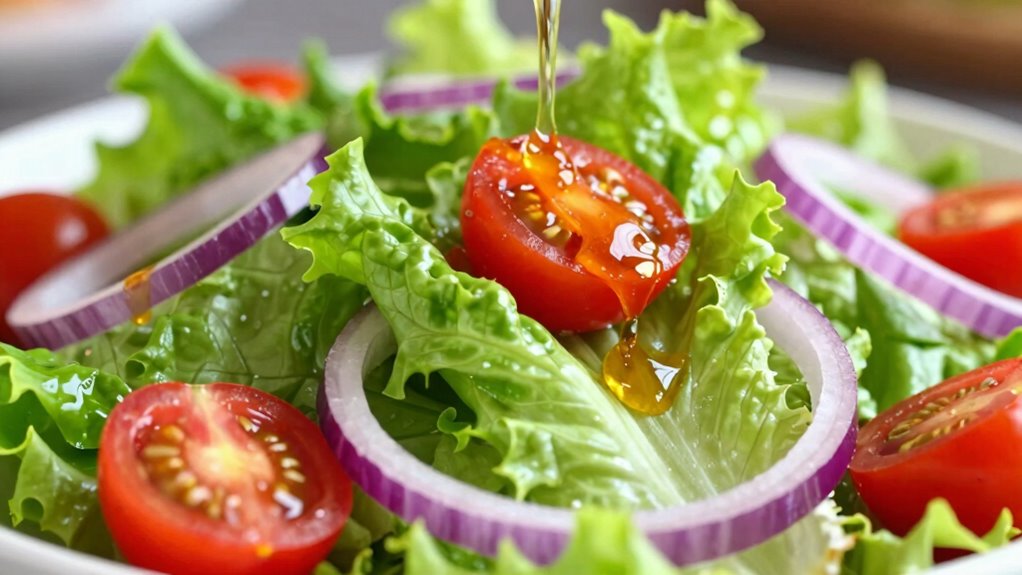

In some salads, adding acid like lemon juice or vinegar makes the flavors pop more than salt does. Acid enhances freshness, balances delicate ingredients, and adds complexity without overwhelming subtle tastes. Unlike salt, which mainly amplifies existing flavors, acid brings out the natural qualities and brightens the dish. master this technique, and you’ll transform simple salads into vibrant, memorable creations. Keep exploring how acidity can elevate your salads to the next level.

Get kitchen staples and gadgets delivered free with Prime
- Fast, free delivery on millions of items
- Prime Video, Amazon Music and more included
- Member-only deals all year
Key Takeaways
- Acid enhances the brightness and freshness of ingredients, making salads more vibrant and lively.
- Unlike salt, acid adds complexity and depth to flavor profiles without overpowering delicate ingredients.
- Acid balances bitterness and dullness, improving overall flavor harmony in salads.
- Proper use of acid can elevate simple ingredients into memorable, nuanced dishes.
- Acid’s scientific role in balancing flavors helps create more harmonious and appealing salads.
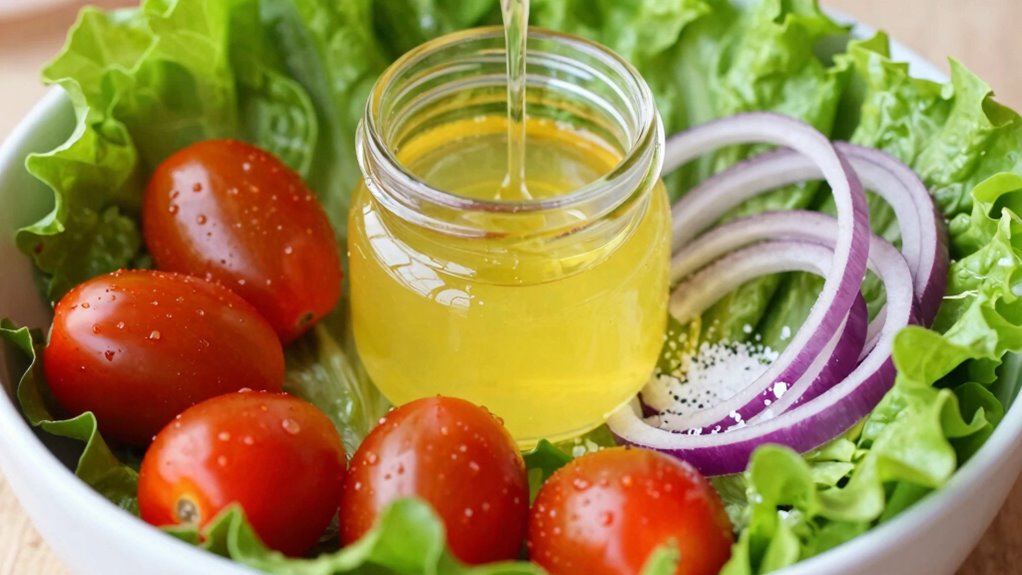
Have you ever wondered why some salads taste brighter and more vibrant even without a heavy pinch of salt? The secret often lies in the strategic use of acid. Acid can dramatically enhance the flavor of your salad, bringing out the freshness of ingredients and making the entire dish feel more lively. Unlike salt, which primarily amplifies existing flavors, acid can add a new dimension to your salad, creating a more complex and appealing taste profile. When you understand how to use acid effectively, you’ll notice a significant difference in how your salads come alive on the plate.
Flavor enhancement is at the core of why acid is so powerful. A splash of lemon juice, a dash of vinegar, or a hint of lime can elevate the natural flavors of vegetables, herbs, and even fruits. The acidity cuts through any bitterness or dullness, brightening each bite and making every ingredient pop. For example, a simple cucumber and tomato salad becomes much more vibrant when finished with a splash of vinegar or citrus. The acidity doesn’t overpower; it accentuates, turning a bland mix into a memorable dish. This is especially important when working with delicate ingredients that can be overshadowed by salt or heavy seasonings. Acid acts as a subtle yet effective enhancer that highlights the freshness and inherent qualities of your ingredients. Recognizing the role of acidity in balancing flavors can elevate your culinary skills to a new level. Understanding the science of flavor and how acids interact with different ingredients can help you create more harmonious and delicious salads. Additionally, knowing the impact of pH levels on ingredients can guide you in choosing the right acid for your desired flavor profile. Developing an awareness of acidic balance can further refine your seasoning techniques, ensuring each salad is perfectly bright and flavorful.
As an affiliate, we earn on qualifying purchases.
Frequently Asked Questions
Can Vinegar Substitute Lemon Juice in Salads?
Yes, vinegar can substitute lemon juice in salads. Vinegar alternatives, like apple cider or balsamic vinegar, provide a tangy punch similar to lemon’s acidity. While vinegar offers a different flavor profile, it still enhances the salad’s brightness and balances the ingredients. For citrusy flavor enhancement, you might also add a splash of orange juice or lime, but vinegar generally works well as a versatile lemon juice substitute.
How Does Acid Affect Salad Dressing Shelf Life?
Acid dramatically extends your salad dressing’s shelf life! When you add acid, it lowers the pH, creating a fortress against microbial growth. This pH stability slows down spoilage, keeping your dressing fresh and safe much longer. Without enough acid, bacteria and mold quickly invade, turning your vibrant salad into a slimy nightmare. So, don’t underestimate acid’s power—it’s your secret weapon for a longer-lasting, safer salad dressing!
Are There Health Benefits to Using More Acid?
Yes, using more acid in your salads offers health benefits. Acid enhances flavor, making your salad more enjoyable, and helps your body absorb nutrients like iron and calcium better. Incorporating acids like lemon juice or vinegar can also stimulate digestion and support gut health. So, by adding more acid, you’re not only elevating taste but also boosting nutrient absorption and overall well-being.
Does Acid Influence the Salad’s Texture?
Yes, acid influences the salad’s texture by affecting salad firmness. When you add acids like vinegar or citrus, they help break down cell walls in vegetables, making them crisper and more tender. Additionally, acid enhances flavor, balancing bitterness and sweetness. This combination of improved salad firmness and flavor enhancement makes your salad more appealing and enjoyable to eat, highlighting acid’s essential role in salad preparation.
Which Acids Are Safest for Sensitive Stomachs?
You should opt for milder acids like apple cider vinegar or lemon juice, as they generally offer better gastrointestinal tolerance. These acids have a stable pH that’s less harsh on sensitive stomachs, helping prevent discomfort. Always start with small amounts to test your tolerance, and consider consulting a healthcare professional for personalized advice. Selecting acids with pH stability guarantees your salad remains flavorful without upsetting your digestion.
Conclusion
So, next time you toss a salad, remember the secret ingredient that can transform it entirely. It’s not always salt you need—sometimes, a splash of acid makes all the difference. But what if there’s an even better way to elevate your greens? The answer might surprise you. Stay curious, experiment boldly, and the perfect salad might be just one unexpected splash away. Are you ready to discover what’s next?
NFL season / tailgating Picks
team gear
As an affiliate, we earn on qualifying purchases.