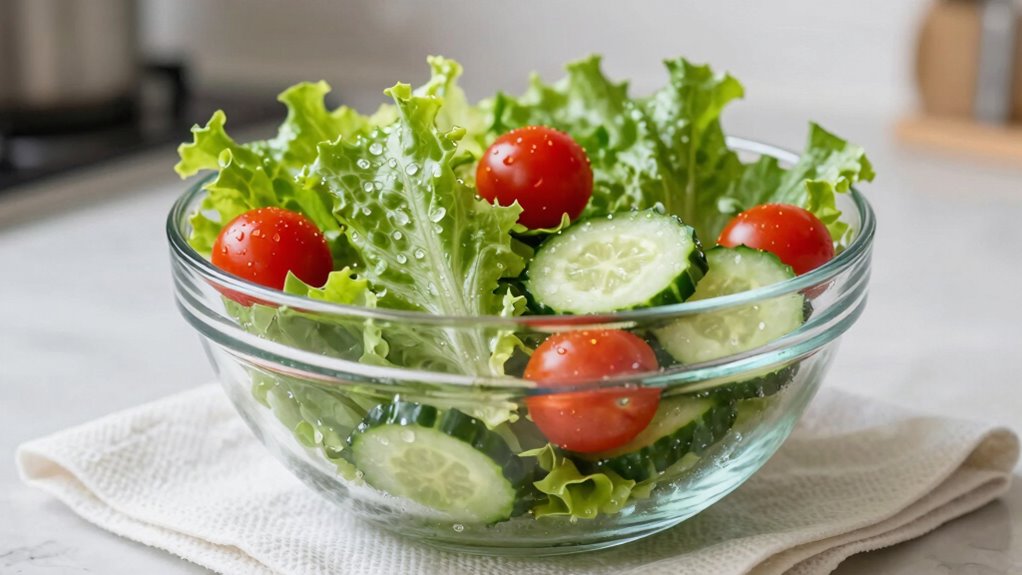

To keep your homemade salads crisp longer, start with fresh, firm vegetables and wash them gently. Dry thoroughly to prevent sogginess, then store in airtight containers with a paper towel to absorb moisture and layer sturdy vegetables at the bottom with delicate greens on top. Keep salads cold, use containers with ventilation, and handle dressings separately until just before serving. Following these tips can help maintain crunchiness longer—there’s more to discover for even better results.

Get kitchen staples and gadgets delivered free with Prime
- Fast, free delivery on millions of items
- Prime Video, Amazon Music and more included
- Member-only deals all year
Key Takeaways
- Store salads in airtight containers with a paper towel to absorb excess moisture and maintain crunchiness.
- Keep vegetables chilled at all times, using ventilation to prevent condensation and sogginess.
- Add dressing just before serving to avoid greens becoming soggy prematurely.
- Layer sturdy vegetables at the bottom and delicate greens on top to minimize damage and moisture exposure.
- Use fresh, firm produce and dry vegetables thoroughly to preserve crispness longer.
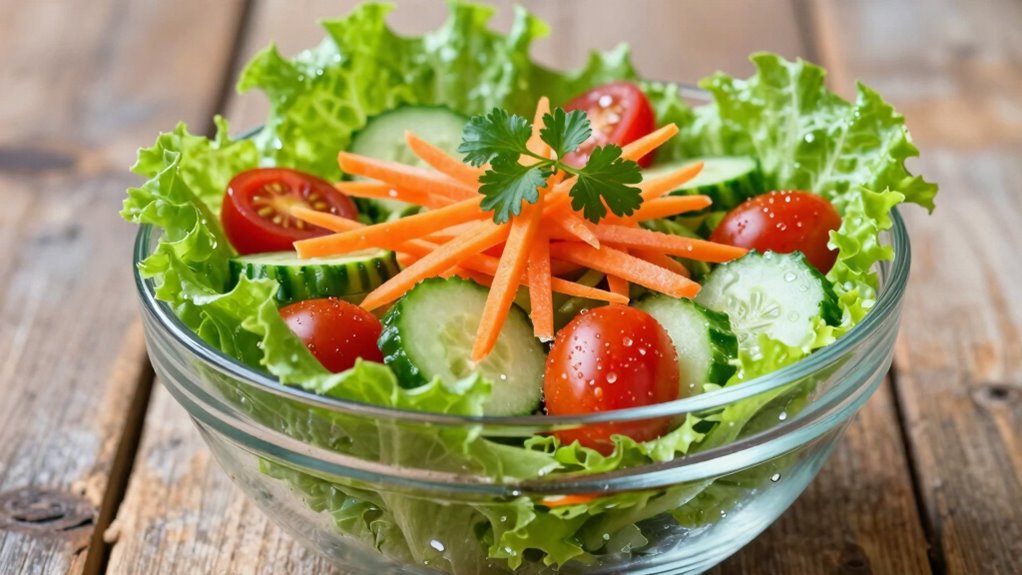
Keeping homemade salads crisp can be a challenge, especially when you want them to stay fresh and appealing for several days. The key to maintaining that crunch lies in understanding how to preserve vegetable freshness and how to handle salad dressing. Fresh vegetables tend to wilt quickly once they’re cut or exposed to air, so your goal is to slow down that process as much as possible. One effective method is to start with the freshest vegetables you can find. When shopping, choose firm, vibrant produce, and wash them thoroughly but gently. After washing, dry them completely—moisture is the enemy of crispness—using a salad spinner or paper towels. Removing excess water prevents sogginess and keeps vegetables fresh longer.
Start with fresh, firm vegetables and dry thoroughly to keep your salads crisp for days.
Once your vegetables are dry, store them properly. Use airtight containers or resealable plastic bags with a paper towel inside to absorb any remaining moisture. For leafy greens and other delicate vegetables, consider placing a paper towel directly on top of them before sealing. This simple trick helps maintain vegetable freshness by controlling humidity and preventing excess moisture buildup, which can lead to wilting and spoilage. When you’re ready to assemble your salad, keep the dressing separate until just before serving. Salad dressing preservation is vital because dressing can quickly make greens soggy and diminish their crispness if mixed too early. Use small, airtight containers or squeeze bottles to keep your dressing fresh and prevent leaks.
When it’s time to serve, toss your vegetables with the dressing just before eating. This way, your salad remains crisp and appealing for longer. If you need to store pre-dressed salads, do so in an airtight container with a paper towel on top to absorb moisture and keep the greens from getting limp. Another tip is to layer your salad ingredients: place sturdy vegetables like carrots and cucumbers at the bottom, and more delicate greens on top. This layering reduces the exposure of fragile greens to moisture and air, helping them stay crisp. Also, avoid overpacking your storage container, which can crush vegetables and accelerate spoilage. Proper storage also involves understanding how to manage humidity within your containers, which can significantly extend freshness. Incorporating proper ventilation can help prevent excess moisture buildup and keep salads crisper for longer. Additionally, choosing storage containers with ventilation options can improve airflow and reduce condensation, further preserving crunchiness. Being mindful of temperature and keeping salads cold enough during storage is another important factor that helps maintain their texture.
Incorporating these tips into your routine guarantees that your homemade salads stay fresh and crunchy for days longer than expected. By focusing on vegetable freshness and proper salad dressing preservation, you give your salads the best chance to stay appealing. With some planning and careful storage, you’ll enjoy crisp, delicious salads even days after preparing them, making your healthy meals more enjoyable and convenient.
salad spinner for drying vegetables
As an affiliate, we earn on qualifying purchases.
As an affiliate, we earn on qualifying purchases.
Frequently Asked Questions
Can Adding Salt Help Preserve Salad Crispness?
Adding salt can help preserve salad crispness by enhancing salt preservation, which slows down moisture loss and bacterial growth. When you sprinkle a small amount of salt on your salad, it helps maintain the salad texture longer. Just be careful not to overdo it, as too much salt can make your salad salty and affect the flavor. Moderation guarantees the salad stays fresh and crunchy without compromising taste.
Does the Type of Container Affect Salad Freshness?
Think of your salad like a delicate treasure; the container you choose is its treasure chest. Container materials like glass or BPA-free plastic keep your salad fresher longer by preventing moisture loss and air exposure. Salad packaging matters because it creates a barrier, sealing in crispness and flavor. So, selecting the right container directly impacts how long your salad stays vibrant and crunchy, making every bite as delightful as the first.
How Does Temperature Impact Salad Longevity?
Temperature has a big impact on your salad’s longevity. Keep your salad cold to slow down temperature fluctuations that cause wilted greens and soggy veggies. Warmth accelerates salad dehydration, making ingredients dry out and lose crunch faster. Always refrigerate your salad promptly and avoid leaving it out in warm environments. By maintaining a consistent, cool temperature, you’ll help your salad stay fresh, crisp, and delicious for longer periods.
Can Pre-Washing Salads Extend Their Shelf Life?
Did you know pre-washing salads can extend their shelf life by up to 24 hours? Yes, but it’s key to use the salad spin method to remove excess moisture, which helps prevent spoilage. Before storing, apply dressing just before serving to avoid sogginess. Properly pre-washed and dried greens stay crisp longer, so your salad remains fresh and crunchy, even days later.
Are There Natural Preservatives to Keep Salads Fresh?
Yes, natural preservatives like herb infusions and citrus sprays can help keep salads fresh. You can infuse water with herbs like basil or mint, then lightly mist your greens to inhibit spoilage. Citrus sprays, made from lemon or lime juice, provide a natural antimicrobial effect and add a revitalizing flavor. These methods boost freshness without chemicals, helping your salads stay crisp and delicious longer.
Conclusion
So, next time you marvel at how your salad stays crisp longer than expected, remember it’s probably not magic — just a few simple tricks. After all, who would’ve thought that a splash of vinegar or a paper towel could keep greens fresh? Irony has a way of sneaking in, doesn’t it? With these clever tips, you’ll master the art of longevity in salads, proving that sometimes, the simplest solutions are the most enduring.
Fall Picks
fall essentials
As an affiliate, we earn on qualifying purchases.