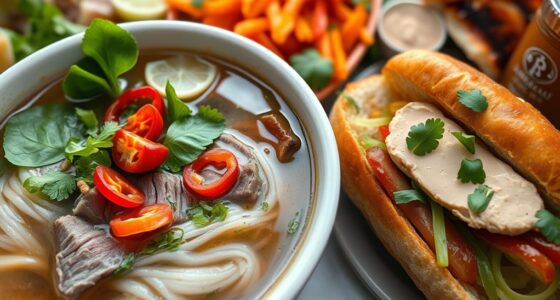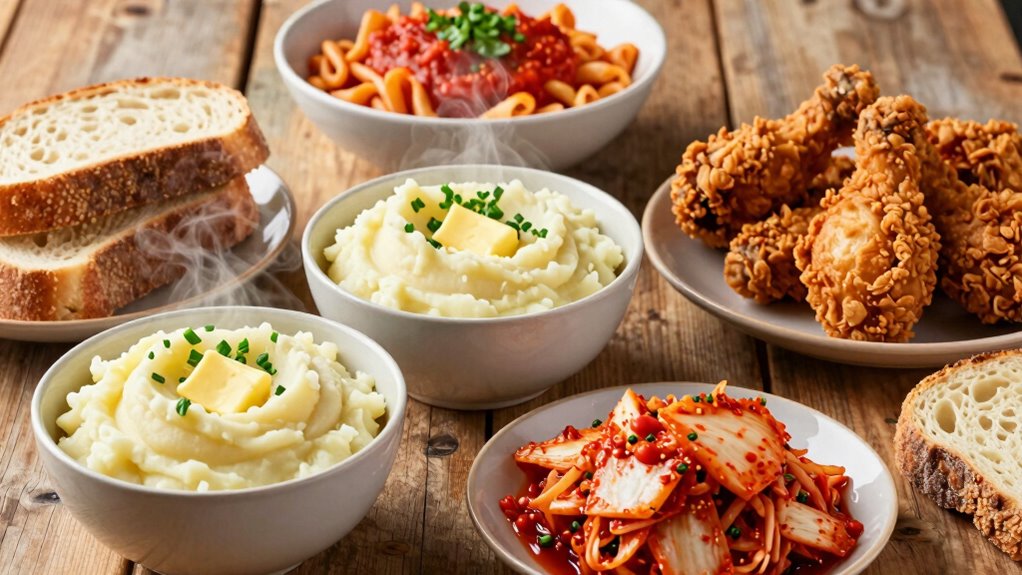

Every culture shares comfort food patterns that evoke warmth, familiarity, and emotional bonds. You’ll notice simple staples like rice, potatoes, eggs, and bread that transform into hearty dishes across cuisines. Techniques like steaming, frying, or baking are common, creating dishes rooted in tradition yet adaptable. These patterns connect you to shared memories and origins, fostering a sense of community. If you keep exploring, you’ll discover how these universal themes weave together through food’s storytelling power.
Key Takeaways
- Many cultures rely on simple staples like rice, potatoes, and bread to create familiar, comforting dishes.
- Warmth and heartiness are universal themes that evoke emotional comfort across cuisines.
- Fusion techniques blend culinary traditions, fostering shared experiences and innovative comfort food creations.
- Traditional methods and regional variations preserve cultural identity while adapting to modern tastes.
- Comfort foods often serve as emotional bridges, connecting families, communities, and personal histories worldwide.
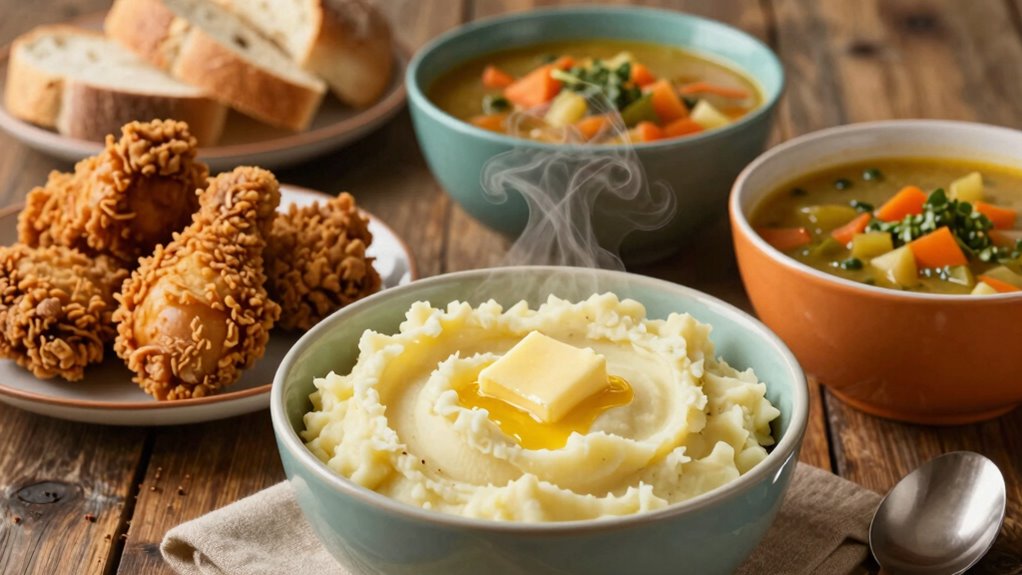
When it comes to comfort food, certain patterns emerge across cultures and households that reveal how these dishes serve as more than just nourishment—they provide connection and reassurance. One of the most fascinating aspects is how chefs and home cooks alike use fusion techniques to blend elements from different culinary traditions, creating dishes that feel both familiar and exciting. This approach isn’t just about mixing ingredients; it’s about weaving together stories, flavors, and traditions that resonate on a personal level. By combining techniques from various cuisines, you can craft comfort foods that honor your roots while embracing new influences. For example, melding Asian spices with Western methods can produce a comforting bowl of ramen-inspired pasta, offering a familiar taste with a fresh twist. These fusion techniques make comfort food adaptable, allowing you to experiment and tailor dishes to your preferences, creating a sense of ownership and intimacy with what you eat. Additionally, understanding ingredient versatility helps in improvising and customizing dishes to suit different tastes and dietary needs. ingredient versatility plays a pivotal role in these shared patterns. Many comfort foods rely on a handful of staple ingredients that lend themselves to endless variations. Potatoes, rice, eggs, and bread are prime examples—each highly versatile and capable of transforming into countless dishes. You can boil, mash, fry, or bake potatoes; cook rice in countless ways; scramble or fry eggs; and turn bread into toast, croutons, or bread pudding. This flexibility means you can adapt recipes to what’s available in your pantry, making comfort food accessible to everyone. Recognizing cultural culinary influences can deepen your appreciation for how these dishes connect across borders and histories. It also encourages creativity, as you can swap out ingredients based on dietary needs or seasonal availability, without sacrificing the essence of a dish. Exploring food heritage reveals how these timeless staples have been passed down and transformed through generations, strengthening cultural bonds. Furthermore, exploring these shared patterns highlights the importance of traditional cooking techniques that have been refined over centuries and continue to influence modern comfort foods. The use of simple, adaptable staples also allows for regional variations, which enriches the diversity of comfort food traditions worldwide. This ingredient versatility creates a shared experience, as many cultures rely on simple, adaptable staples to craft their comfort foods. What ties these patterns together is their universal ability to evoke warmth and familiarity. Whether you’re making a hearty stew, a cheesy casserole, or a noodle bowl, the core idea remains the same: using fusion techniques and ingredient versatility to forge dishes that resonate deeply. These patterns allow you to connect with your own heritage, experiment with new flavors, and create meals that bring comfort not just through taste, but through the stories and memories they carry. Ultimately, these shared culinary strategies remind us that comfort food isn’t just about satisfying hunger; it’s about building bridges—between cultures, families, and personal histories.
As an affiliate, we earn on qualifying purchases.
Frequently Asked Questions
How Do Comfort Food Patterns Evolve Over Time Globally?
You observe that comfort food patterns evolve globally through fusion flavors, blending culinary traditions from different cultures. As people explore new ingredients and cooking techniques, traditional dishes adapt, creating innovative comfort foods that resonate universally. This evolution keeps cuisines dynamic, reflecting cultural exchanges and modern tastes. Over time, these patterns foster a sense of shared familiarity, connecting people through evolving, yet comforting, culinary experiences worldwide.
Are There Common Ingredients That Define Shared Comfort Foods?
You’ll find that shared comfort foods often feature common ingredients like rice, potatoes, and bread, but ingredient diversity plays a big role in their uniqueness. Flavor combinations tend to be warm and satisfying, blending sweet, savory, and umami notes. These ingredients and flavor pairings create a universal sense of familiarity and comfort, connecting diverse cuisines worldwide through simple yet deeply satisfying dishes that evoke feelings of home and nostalgia.
How Do Cultural Influences Shape Comfort Food Preferences?
Cultural influences profoundly shape your comfort food preferences through cultural symbolism and culinary storytelling. These elements infuse dishes with meaning, memories, and motifs that resonate deeply. Your cultural background influences what flavors, textures, and traditions you find comforting, turning simple sustenance into a soulful story. As you savor familiar foods, you’re engaging in an emotional experience, reinforcing identity and connection through shared culinary customs rooted in your unique cultural narrative.
What Role Does Nostalgia Play in Comfort Food Choices?
Nostalgia plays a powerful role in your comfort food choices by creating emotional connections and serving as memory triggers. When you eat certain dishes, they remind you of happy moments, family gatherings, or childhood experiences, providing a sense of safety and belonging. These emotional bonds make comfort foods more than just nourishment—they become symbols of warmth and familiarity, reinforcing your desire to reconnect with those cherished memories.
Can Shared Comfort Food Patterns Influence International Cuisine Trends?
Yes, shared comfort food patterns can influence international cuisine trends by inspiring fusion cuisine and culinary innovation. When people connect over familiar flavors, they become open to new combinations, encouraging chefs to blend different culinary traditions. This cross-cultural exchange leads to exciting dishes that reflect diverse tastes, fostering a global food scene that evolves through shared comfort food patterns, ultimately shaping modern cuisine and appealing to a broader audience.
Conclusion
As you explore these comfort food patterns, imagine them as bridges spanning diverse cultures—each dish a warm handshake across borders. These shared culinary habits remind you that, no matter where you are, food has the power to connect hearts and histories. Like a cozy quilt stitched from countless traditions, these patterns wrap us in a universal sense of belonging. Ultimately, comfort foods are the threads that weave a vibrant, interconnected tapestry of humanity.