
Mastering French culinary techniques involves perfecting the art of preparing classic sauces like béchamel and hollandaise, baking artisanal breads such as baguettes, and creating delicate pastries like croissants and tarts. These skills require precision, patience, and attention to detail, allowing you to elevate simple ingredients into sophisticated dishes. Understanding these foundational methods helps you recreate authentic French flavors and presentation. Keep exploring, and you’ll discover the secrets behind timeless French culinary mastery.
Key Takeaways
- Mastering foundational sauces like béchamel, espagnole, and hollandaise is essential for authentic French cuisine.
- Artisanal bread baking involves fermentation, kneading, shaping, and proofing to create crusty, airy loaves.
- Crafting delicate pastries requires lamination, precise dough handling, and attention to layering and fillings.
- French techniques emphasize precision, patience, and tradition to elevate simple ingredients into culinary masterpieces.
- Developing these skills provides a deep understanding of flavors, textures, and the essence of French gastronomy.
Have you ever wondered what makes French cuisine stand out? It’s not just the rich flavors or elegant presentation — it’s the mastery of French culinary techniques that elevate every dish. These techniques form the foundation of many iconic dishes and are essential for anyone looking to truly understand and replicate authentic French cooking. From classic sauce preparations to artisanal bread baking and delicate pastry crafting, each skill requires precision, patience, and a deep respect for tradition.
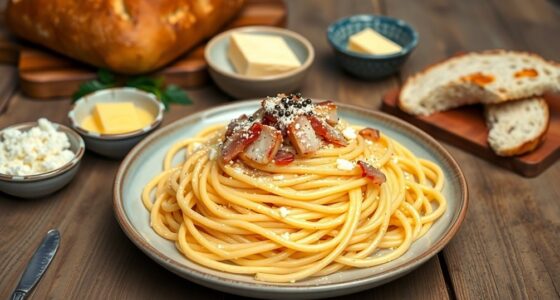
When it comes to sauces, mastering classic sauce preparations is key. French chefs often start with a few fundamental sauces, like béchamel, espagnole, or hollandaise, which serve as building blocks for countless other recipes. You’ll learn to develop complex flavors through careful simmering, reducing, and seasoning. These sauces aren’t just toppings — they’re integral to the dish’s overall character. For example, a rich sauce can transform simple ingredients into a memorable meal, and the ability to prepare them flawlessly is a mark of true culinary expertise. You’ll discover how to balance flavors, control heat, and create smooth, velvety textures that are essential to authentic French cuisine.
Artisanal bread baking is another cornerstone of French culinary techniques. French breads like baguettes and pain de campagne require more than just good ingredients — they demand a precise understanding of fermentation, kneading, and shaping. You’ll learn to cultivate yeast and develop dough with the right elasticity and texture. The process involves patience, as proofing times can vary, but the payoff is worth it: crusty, airy loaves with a tender crumb that embody the tradition and craftsmanship of French baking. Mastering artisanal bread baking allows you to bring a piece of France into your own kitchen, creating bread that’s both rustic and refined.
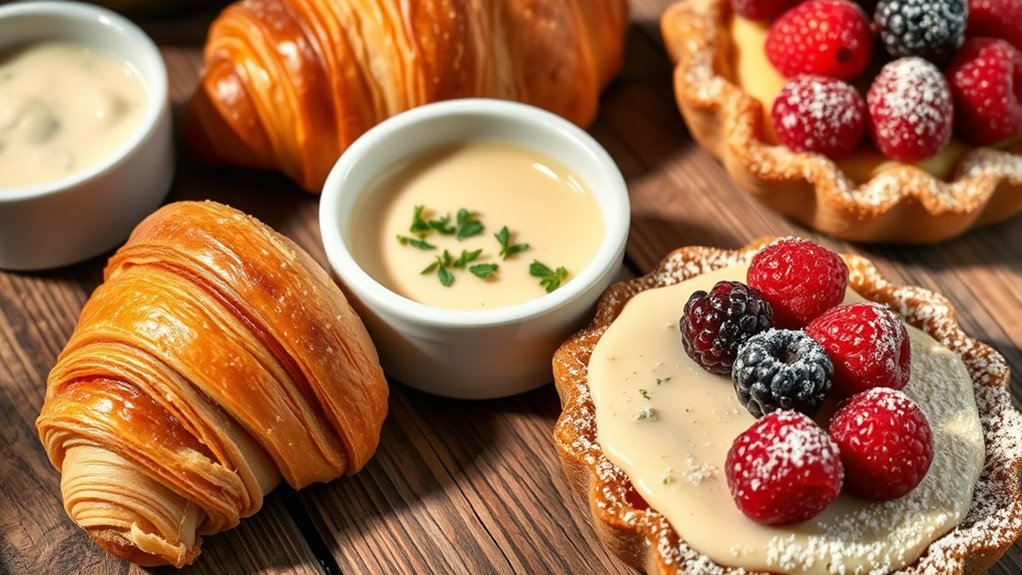
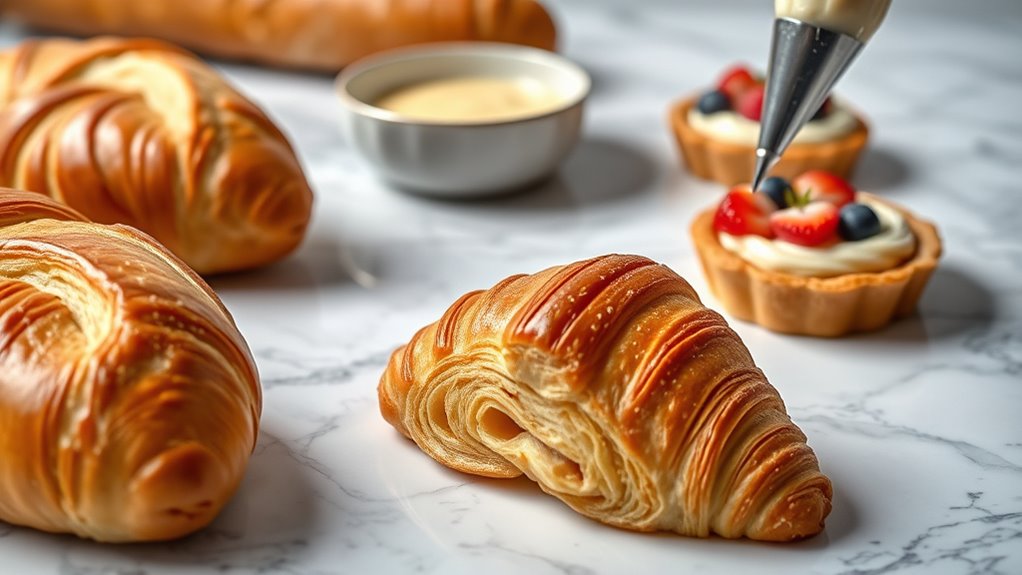
Finally, delicate pastry crafting highlights the finesse involved in French culinary techniques. Whether it’s flaky croissants, intricate tarts, or exquisite éclairs, these pastries require meticulous attention to dough consistency, layering, and filling. You’ll learn the art of lamination—folding butter into dough repeatedly to create thin, buttery layers—and how to fill and decorate with precision. This craft demands patience and practice, but it results in pastries that are light, tender, and visually stunning. Perfecting delicate pastry crafting lets you create sweet and savory treats that celebrate the elegance and artistry of French gastronomy.
Developing a deep understanding of pastry techniques is essential for recreating authentic French desserts at home. In essence, mastering these French culinary techniques opens the door to a world of sophisticated flavors and textures. It’s about respecting tradition while honing your skills — transforming simple ingredients into culinary masterpieces that capture the essence of France.
Frequently Asked Questions
What Are the Essential Tools for French Sauce Preparation?
You’ll need essential kitchen gadgets like a whisk, a saucepan, and a wooden spoon for French sauce preparation. French culinary tools such as a fine sieve, a double boiler, and a rubber spatula also come in handy. These tools help you achieve the perfect consistency and flavor. With the right French culinary tools, you can master sauces and elevate your cooking. Make sure to have these essentials nearby to streamline your process.
How Do French Bread Recipes Vary Across Regions?
French bread recipes vary across regions like a tapestry, woven with local wheat varieties and fermentation methods. In Brittany, you find hearty, dense bread made from locally grown wheat, while in Normandy, softer, crusty loaves emerge from unique fermentation techniques. These regional differences shape flavors, textures, and appearances, making each bread a delicious reflection of its terroir. Embrace these variations to truly taste the diverse soul of French baking.
What Are the Key Techniques for Mastering French Pastry Dough?
To master French pastry dough, focus on proper dough handling and pastry shaping. Keep your ingredients cold to prevent overworking, which can toughen the dough. Handle the dough gently, folding and turning it to create layers. When shaping, maintain consistent thickness and use precise techniques to ensure even baking. Practice patience and attention to detail, and you’ll develop the skills needed for perfect French pastries.
Which French Sauces Are Best Paired With Different Dishes?
Imagine a perfectly paired cheese platter complemented by a velvety béchamel or a tangy vinaigrette—these French sauces elevate your dishes. For richer mains, opt for a creamy hollandaise or robust béarnaise, matching their sauce consistency with the dish’s texture. Light salads shine with delicate vinaigrettes, while hearty meats benefit from thick, flavorful sauces like demi-glace. Your choices create harmony, enhancing each bite with the ideal pairing.
How Do French Pastry Techniques Differ From Other Baking Traditions?
French pastry techniques emphasize artistic presentation and precise flavor balancing. You’ll notice a focus on delicate lamination for flaky layers and careful tempering of chocolate. Unlike other baking traditions, French methods prioritize refined textures and intricate designs, often involving meticulous folding and shaping. You actively blend flavors to enhance each pastry’s elegance, creating visually stunning treats that highlight craftsmanship and a harmonious taste experience.
Conclusion
By mastering French sauces, breads, and pastries, you open a world of culinary artistry. Did you know that France produces over 600 varieties of cheese, highlighting its rich gastronomic heritage? Incorporating these techniques elevates your cooking, connecting you to centuries of tradition. With practice, you’ll create dishes that impress and delight, embodying the elegance and precision that define French cuisine. Embrace these skills, and transform your kitchen into a sophisticated culinary atelier.