To balance sweet, sour, salty, and spicy flavors in Vietnamese noodle bowls, start with a flavorful broth made from bones and aromatic spices. Add a touch of sugar or caramelized onions for sweetness, lime or tamarind for tang, fish sauce for saltiness, and fresh chilies or chili paste for heat. Adjust each element until they complement each other perfectly, creating harmony. Keep exploring to discover the secrets behind mastering this vibrant, flavorful dish.
Key Takeaways
- Use fish sauce, lime, sugar, and chili paste to adjust and harmonize the four primary flavors in your bowl.
- Incorporate fresh herbs like cilantro and Thai basil to enhance aroma and balance spicy and sour notes.
- Taste throughout the cooking process, gradually balancing sweetness, acidity, saltiness, and heat for a well-rounded broth.
- Add ingredients like pineapple or caramelized onions to naturally introduce sweetness; tamarind or vinegar for tanginess.
- Remember that regional variations may emphasize certain flavors; aim for a harmonious blend that suits your taste.
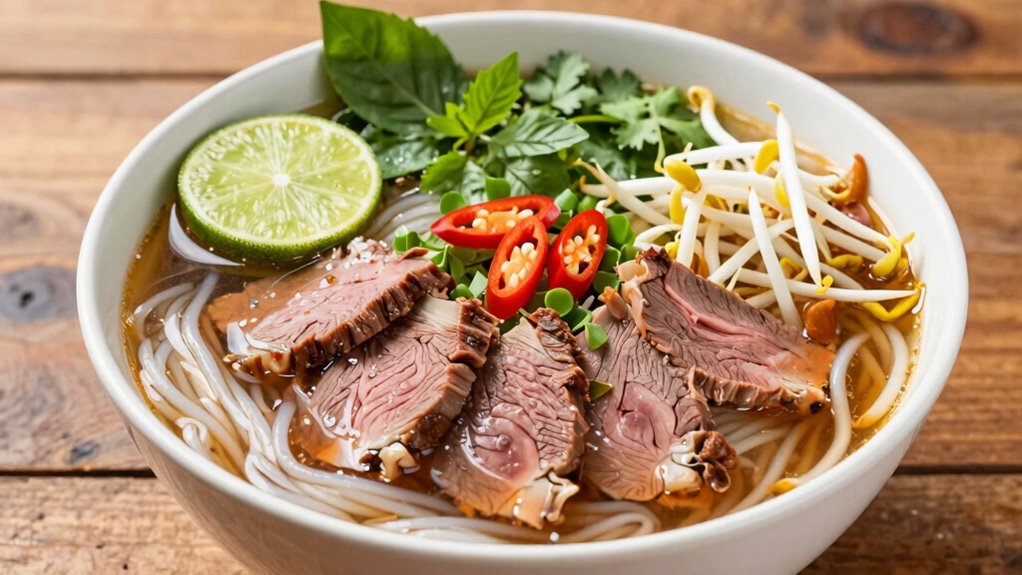
Have you ever wondered what makes Vietnamese noodle bowls so irresistibly flavorful? The secret lies in the perfect harmony of soup ingredients and the rich tapestry of regional variations that influence every bowl. Each spoonful delivers a complex balance of sweet, sour, salty, and spicy notes, crafted through a careful selection of ingredients and cooking techniques. When you explore a bowl of pho or bun bo Hue, you’re tasting a culinary story that varies from one region to another, yet always maintains that signature depth of flavor.
Discover the rich regional flavors and harmonious ingredients that make Vietnamese noodle bowls irresistibly delicious.
The soup ingredients are the backbone of these dishes. Broth is typically made by simmering bones—beef or chicken—along with aromatics like onion, ginger, and spices such as cinnamon, star anise, and cloves. These ingredients create a fragrant, rich base that forms the foundation of the noodle bowl. Herbs and vegetables—cilantro, Thai basil, bean sprouts, and scallions—are added fresh, providing contrasting textures and flavors. The noodles themselves, whether rice vermicelli or thicker wheat-based varieties, soak up the broth, ensuring every bite is flavorful and satisfying.
Regional variations considerably influence the choice of soup ingredients, giving each bowl a unique character. In northern Vietnam, the broth tends to be clearer, lighter, and more delicate, emphasizing subtle flavors and fewer spices. It often features fewer herbs, allowing the pure taste of the meat and broth to shine. Central Vietnam’s dishes, like bun bo Hue, boast a spicier, more complex broth, with added ingredients like lemongrass, shrimp paste, and chili oil, creating a bolder, more pungent profile. In southern Vietnam, the broth is generally sweeter and more aromatic, often incorporating sugar, pineapple, or other fruits to balance the spices and acidity. These regional differences are not just about ingredients but also cooking styles and presentation, which influence how you experience the flavors.
You’ll notice that balancing these flavors takes skill. A good Vietnamese noodle bowl combines the natural sweetness of caramelized onions or sugar, the tang of lime or tamarind, the saltiness of fish sauce, and the heat from fresh chilies or chili paste. These ingredients come together in a way that highlights each flavor without overpowering the others. It’s a dance of taste, where each element complements the next, creating a sensory experience that’s both comforting and exciting. Understanding regional culinary styles and how they influence ingredient choices helps you appreciate why Vietnamese noodle bowls are so much more than just a meal—they’re a vibrant expression of regional culture and culinary artistry.

Ninja MC1001 Foodi PossibleCooker PRO 8.5 Quart Multi-Cooker, with 8-in-1 Slow Cooker, Dutch Oven, Steamer, Glass Lid Integrated Spoon, Nonstick, Oven Safe Pot to 500°F, Sea Salt Gray
REPLACES 14 COOKING TOOLS & APPLIANCES: This cooker replaces the need for a slow cooker, steam oven, food...
As an affiliate, we earn on qualifying purchases.
Frequently Asked Questions
What Are the Regional Variations of Vietnamese Noodle Bowls?
You’ll notice regional variations in Vietnamese noodle bowls shaped by local ingredients and cultural influences. In Hanoi, you get clearer broths with less spice, while in Huế, the bowls are spicier with bolder flavors. Southern styles incorporate sweeter, more tropical ingredients like sugar and fresh herbs, reflecting nearby influences. These differences make each bowl unique, giving you a flavorful journey through Vietnam’s diverse culinary traditions.
How Do I Properly Balance Flavors When Making at Home?
To achieve flavor harmony when making noodle bowls at home, taste as you go and make ingredient adjustments. Adjust acidity with lime or vinegar, sweetness with sugar or honey, saltiness with fish sauce or soy, and spiciness with chili. Keep balancing these elements until you find the perfect harmony that suits your palate. Remember, small tweaks make a big difference in creating authentic, flavorful bowls.
What Are Authentic Ingredients for Vietnamese Noodle Bowls?
Think of your bowl as a symphony—authentic ingredients set the tone. Use rice noodles, fresh herbs like cilantro, basil, and mint, and a flavorful broth simmered with garlic, ginger, and fish sauce. Add thinly sliced beef or chicken, and incorporate bean sprouts, lime, and chili for brightness. These herb pairings and a slowly simmered broth create the depth and balance that make Vietnamese noodle bowls truly authentic.
Can These Bowls Be Made Vegetarian or Vegan?
Yes, you can make Vietnamese noodle bowls vegetarian or vegan. Use vegetarian options like tofu or mushrooms for protein, and swap fish sauce with vegan substitutions such as soy sauce or tamari. You can also add fresh vegetables, herbs, and spicy chilies to enhance flavor. These adjustments keep the balance of sweet, sour, salty, and spicy, so your bowls stay authentic and satisfying without animal products.
How Do I Customize Spice Levels to Personal Taste?
Did you know spicy dishes can boost metabolism? To customize spice levels in your bowl, start by adding small amounts of chili or hot sauce, tasting as you go. This way, you can control your flavor adjustment and find the perfect balance for your taste buds. Remember, adding more spice gradually prevents overwhelming the dish and keeps your flavor profile just right.

Easy-Freeze Instant Pot Pressure Cooker Cookbook: 100 Freeze-Ahead, Make-in-Minutes Recipes for Every Multi-Cooker
As an affiliate, we earn on qualifying purchases.
Conclusion
Think of Vietnamese noodle bowls as a mirror to life—balancing sweet, sour, salty, and spicy flavors like the ebb and flow of your days. Each spoonful invites you to embrace harmony amid chaos, reminding you that mastery comes from savoring every moment’s unique taste. Just as these bowls symbolize unity in diversity, let your culinary journey reflect your own ability to find balance and joy in life’s vibrant, unpredictable symphony.

The One-Pot Family Comfort Cookbook: Easy Low Budget Meals Ready in 30 Minutes - Delicious Dinners Even Picky Eaters Will Love - using pantry staples and minimal prep - 28-Day Meal Plan
As an affiliate, we earn on qualifying purchases.
Thermomix TM6 15-Minute One-Pot Meals: Fast, Fuss-Free Recipes Cooked in a Single Bowl for Busy Everyday Cooking (The Complete Thermomix™ TM6 Collection)
As an affiliate, we earn on qualifying purchases.