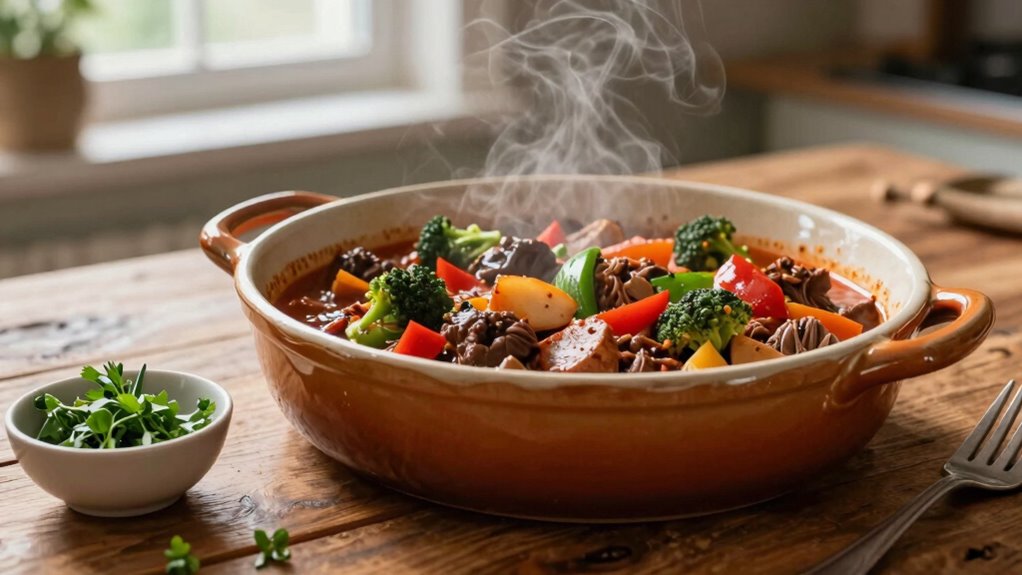

Many global dishes taste better the next day because flavors have time to meld and deepen as ingredients interact. Spices, herbs, and seasonings fully integrate, creating a harmonious, layered taste. Texture also improves when ingredients absorb moisture, making dishes more tender and cohesive. Resting reduces sharpness and balances flavors, while absorption enhances flavor uniformity. These changes make dishes richer and more satisfying, often requiring less re-seasoning. Keep exploring—there’s more to discover about these delicious transformations.

Get kitchen staples and gadgets delivered free with Prime
- Fast, free delivery on millions of items
- Prime Video, Amazon Music and more included
- Member-only deals all year
Key Takeaways
- Flavors meld and deepen overnight, creating a more harmonious and complex taste profile.
- Ingredients absorb moisture and flavors, resulting in improved texture and richer taste.
- Spices and seasonings mellow, balancing the dish and reducing sharpness.
- The dish’s overall flavor and texture become more cohesive and satisfying.
- Longer resting allows flavors to fully develop and integrate, enhancing the culinary experience.
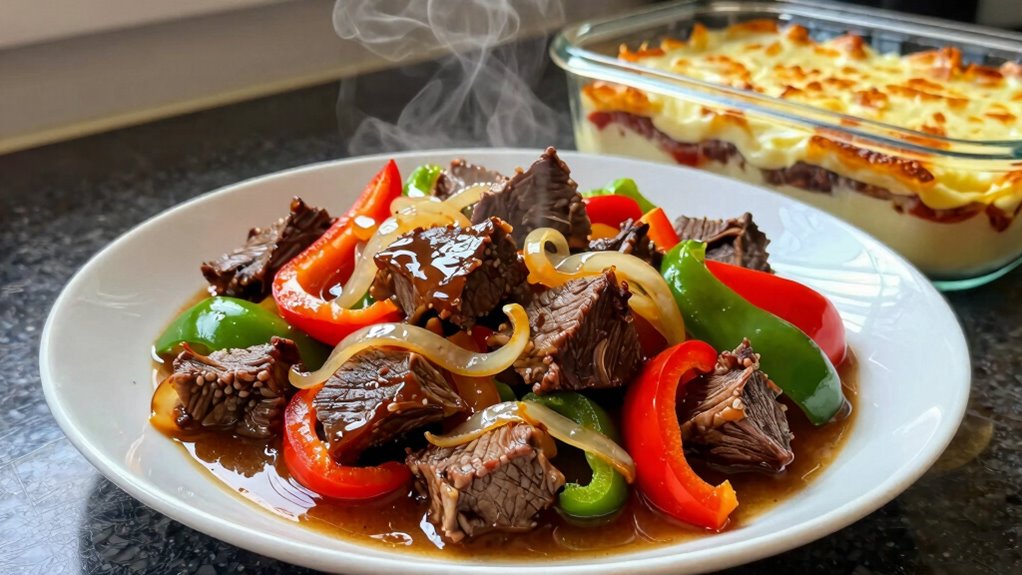
Many global dishes taste better the next day because their flavors have time to meld and deepen. When you let a dish sit overnight, the ingredients interact, creating a richer, more complex flavor profile. This process, known as flavor development, allows spices, herbs, and other seasonings to integrate fully, resulting in a more harmonious taste. Instead of just tasting a collection of individual flavors, you experience a layered, balanced experience that can’t be achieved in a single serving. As the dish rests, acids and oils continue to mingle, enhancing each bite and making the overall flavor more satisfying.
In addition to flavor development, you also notice significant texture transformation. Many dishes—like stews, curries, and even pasta salads—undergo changes that improve their mouthfeel after sitting. The ingredients absorb moisture and flavors, which can make proteins more tender and vegetables more infused with the surrounding flavors. For example, a spicy chili or a hearty casserole becomes thicker and more cohesive as it sits, with the sauce thickening and clinging better to the ingredients. Pasta dishes, especially those with sauce, tend to become silkier and more flavorful because the pasta continues to absorb the sauce, resulting in a more unified bite. This transformation often means that textures soften or meld together, making each forkful more satisfying. Additionally, flavor absorption can enhance the overall taste and texture, making leftovers more appealing. Recognizing how flavor interactions evolve over time helps in planning meals that taste better after resting.
Moreover, allowing a dish to rest can also help the flavors to mellow out, creating a more balanced and harmonious taste profile. This flavor maturation process can also decrease the need for additional seasoning, as the flavors have already developed into a well-rounded profile. You might find that some dishes, after resting, require less reheating or seasoning because the flavors have matured and balanced out. The longer sitting time allows the spices to mellow out, reducing sharpness and creating a more rounded taste. This is particularly true for dishes with complex spice blends or fermented ingredients, like kimchi or sauerkraut, which develop deeper tangs and nuances over time. The texture change isn’t just about softness; it’s about the whole sensory experience becoming more integrated. The dish feels more cohesive, and each ingredient seems to complement the others better. Additionally, flavor development can lead to a more satisfying and memorable eating experience overall.
best slow cooker for flavorful stews
As an affiliate, we earn on qualifying purchases.
As an affiliate, we earn on qualifying purchases.
Frequently Asked Questions
Does Refrigeration Affect the Flavor of Leftover Dishes?
Refrigeration can affect the flavor of leftover dishes by causing flavor absorption and texture changes. As leftovers sit in the fridge, they absorb surrounding odors, which may alter their original taste. Additionally, cold temperatures can make some ingredients lose their texture, becoming soggy or rubbery. However, proper storage and reheating can help maintain the dish’s flavor and texture, making leftovers taste just as good, if not better, the next day.
Can Certain Ingredients Improve Flavor After Sitting Overnight?
Did you know that dishes with ingredients like garlic and spices often improve after sitting overnight? You can achieve flavor infusion and ingredient synergy, making leftovers taste even better. When you give flavors time to meld, the dish’s complexity deepens. Including ingredients like herbs, onion, or citrus can boost this process, enhancing the overall taste. So, next time, prepare ahead and enjoy a richer, more flavorful meal the following day.
How Does Marinating Influence the Taste of Dishes the Next Day?
Marinating influences the taste of dishes the next day by enhancing flavor penetration and causing texture transformation. As you let the ingredients sit, the marinade seeps deeper into the food, intensifying flavors. It also softens tough textures, making dishes more tender. This process allows the flavors to meld and develop further, so when you reheat or serve the dish, it offers a richer, more cohesive taste experience than freshly prepared food.
Do Cultural Cooking Practices Impact How Dishes Taste Over Time?
You might find that dishes from cultures practicing fermentation, like kimchi or sauerkraut, taste even better the next day, enhancing their complex flavors. Cultural cooking practices, especially traditional techniques like slow simmering or fermenting, shape how dishes evolve over time. These methods allow flavors to meld and deepen, making leftovers more flavorful and rewarding. So, your culinary experience is often influenced by ancient wisdom passed down through generations.
Is There a Difference Between Flavor Development in Savory and Sweet Dishes?
Yes, there’s a difference in flavor development between savory and sweet dishes. In savory dishes, flavor synergy develops as ingredients meld, creating richer, more complex tastes, and aroma enhancement deepens the sensory experience. Sweet dishes often improve overnight as sugars and flavors intensify, allowing the aroma to evolve and the overall sweetness to balance better. You’ll notice both types taste better the next day because of these processes.
Conclusion
So, the next time you taste that leftover stew or reheated curry, remember it’s not just about convenience. It’s about flavors deepening, spices melding, and textures softening—transforming your dish into a richer, more satisfying experience. Embrace the wait, savor the anticipation, and let the flavors unfold like a story. Because in that quiet time, your meal becomes more than just food; it becomes a symphony of taste, waiting to be rediscovered with every bite.
Evergreen bestsellers Picks
bestsellers
As an affiliate, we earn on qualifying purchases.