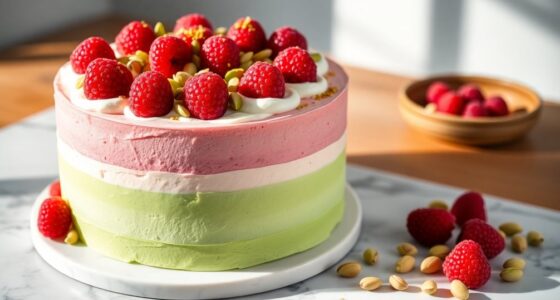
Vegan desserts like aquafaba meringues and coconut whipped cream use plant-based ingredients to mimic traditional textures. You can whip aquafaba until fluffy for light, crispy meringues perfect for toppings or cookies. For a creamy finish, chill and whip coconut cream for a rich, dairy-free alternative to whipped cream. These innovative ingredients make your desserts visually appealing and delicious. Keep exploring to discover more tips and tricks to elevate your vegan creations.
Key Takeaways
- Aquafaba can be whipped into fluffy meringues, mimicking traditional egg whites for vegan desserts.
- Chilled coconut cream creates rich, stable whipped toppings comparable to dairy-based whipped cream.
- Both aquafaba meringues and coconut whipped cream are versatile, suitable for pies, cakes, and decorative toppings.
- Proper preparation involves whipping aquafaba until stiff peaks form and chilling coconut cream for best results.
- These plant-based alternatives enhance the texture and visual appeal of vegan desserts without animal products.
Are vegan desserts just a passing trend, or do they offer a delicious alternative for everyone? If you’re exploring plant-based treats, you’ll find that vegan desserts have come a long way, offering textures and flavors that rival traditional sweets. One of the secrets to creating these indulgent treats lies in smart substitutions, like egg substitutes and dairy alternatives, which help mimic the richness and structure of conventional ingredients. These options make vegan baking accessible and enjoyable, even if you’re new to plant-based cooking.
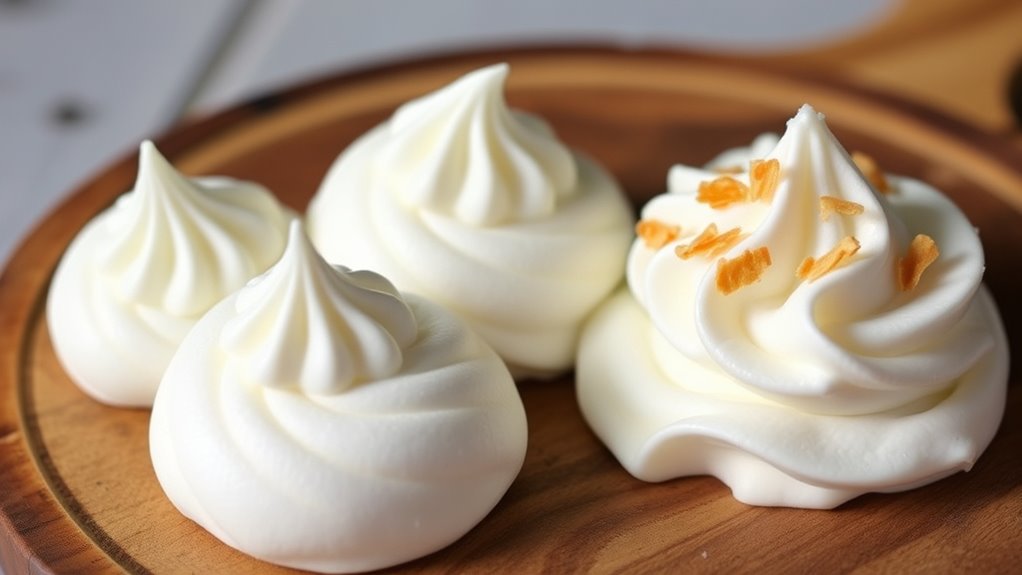
Take aquafaba, for example. This versatile egg substitute is the liquid from canned chickpeas or other beans. When whipped, aquafaba creates a light, fluffy meringue that’s perfect for topping pies or making crispy cookies. It’s a game-changer because it captures the airy, crisp texture that egg whites usually provide. You don’t need eggs to get that same volume and tenderness—just aquafaba. Its neutral flavor also makes it ideal for sweetening with sugar or vanilla, blending seamlessly into your recipes.
Dairy alternatives are equally essential. Coconut cream, almond milk, cashew cream, and soy-based yogurts serve as excellent substitutes for dairy in desserts. Coconut cream, with its rich, velvety texture, works wonders in whipped toppings, mousses, and custards. When chilled and whipped, it becomes a luscious topping that rivals traditional whipped cream. Almond milk and other nut milks are perfect for puddings, cakes, and sauces, providing moisture and flavor without dairy. You can also find plant-based yogurts that lend tang and creaminess to parfaits and cheesecakes, creating a satisfying dairy-free experience.
Using these ingredients, you can craft a variety of vegan desserts that don’t sacrifice taste or texture. For instance, a coconut whipped cream can top a fruit tart or serve as a frosting for cakes. Aquafaba meringues can be baked into light, crispy cookies or used as decorative toppings. By embracing egg substitutes and dairy alternatives, you open up a world of possibilities, allowing you to enjoy classic desserts without compromising your dietary choices.
In addition, understanding the importance of color accuracy and visual appeal can elevate your vegan desserts, making them not only tasty but also visually stunning. Using the right ingredients and techniques ensures that your creations look as good as they taste. In the end, vegan desserts aren’t just a fleeting trend—they’re a creative, tasty alternative that broadens your baking horizons. With the right substitutions, you don’t have to give up your favorite sweets. Instead, you can reinvent them with plant-based ingredients, proving that delightful, satisfying desserts are possible for everyone, regardless of dietary restrictions.
Frequently Asked Questions
Can Aquafaba Be Used as an Egg Replacer in Baking?
Yes, aquafaba can be used as an egg replacer in baking. It’s a popular choice for vegan baking because it substitutes eggs perfectly in many recipes. When you whip aquafaba, it creates a light, airy texture similar to egg whites, making it ideal for meringues, mousses, and baked goods. Using aquafaba as an egg substitute allows you to enjoy delicious vegan desserts without compromising on texture or taste.
How Long Do Vegan Meringues Stay Fresh?
Vegan meringues stay fresh for about 1 to 2 weeks if stored properly. To maximize shelf life, keep them in an airtight container at room temperature, away from humidity and direct sunlight. Avoid stacking them to prevent breakage. For longer storage, you can freeze them for up to a month, but make sure to wrap them tightly to prevent moisture absorption. Proper storage tips help maintain their crispness and flavor.
Is Coconut Whipped Cream Suitable for All Allergies?
An ounce of prevention is worth a pound of cure. Coconut whipped cream may not suit everyone with allergies, as it’s a dairy-free alternative that can still trigger nut or seed allergies, depending on the brand. Always check labels for allergy considerations, especially if you’re sensitive to coconut or other ingredients. If you have allergies, explore other dairy-free alternatives to guarantee your desserts are both safe and delicious.
What Are the Best Flavorings for Vegan Whipped Cream?
You can enhance vegan whipped cream with natural flavor combinations and aromatic extracts for a delightful taste. Popular choices include vanilla, almond, and peppermint extracts, which add depth and aroma. Fresh citrus zests or a sprinkle of cinnamon also work well. Experiment with these flavorings to suit your dessert, ensuring you choose natural options to keep your vegan whipped cream fresh, flavorful, and free from artificial additives.
Can Aquafaba Be Whipped Into Stiff Peaks Without Sugar?
Yes, you can whip aquafaba into stiff peaks without sugar, but its stability may be limited. Sugar helps improve aquafaba stability, creating a more stable, glossy sugar-free meringue. Without sugar, it’s trickier to achieve firm peaks, and the meringue might be less glossy and more fragile. For a sugar-free meringue, consider adding a small pinch of cream of tartar or lemon juice to help stabilize the foam, but expect some differences in texture and stability.
Conclusion
Next time you whip up vegan desserts, remember that aquafaba and coconut whipped cream aren’t just substitutes—they can surprise you with their versatility and taste. It’s funny how a simple can of chickpeas or coconut milk can turn into a fluffy meringue or creamy topping, making your baking both easier and more delicious. So, keep experimenting—sometimes, the best desserts come from the most unexpected ingredients. Happy vegan baking!