Mastering essential knife skills like precise julienne cuts and proper meat slicing helps you prepare a variety of cuisines efficiently and confidently. Using sharp knives, maintaining good hand positioning, and practicing controlled, steady strokes improve safety and consistency. These skills guarantee your ingredients cook evenly and look appetizing, whether you’re making stir-fries, salads, or roasts. If you keep exploring, you’ll discover even more techniques that will elevate your cooking experience across many dishes.

Get kitchen staples and gadgets delivered free with Prime
- Fast, free delivery on millions of items
- Prime Video, Amazon Music and more included
- Member-only deals all year
Key Takeaways
- Mastering precise julienne cuts ensures evenly cooked vegetables across diverse cuisines like Asian, French, and Mediterranean dishes.
- Proper meat slicing techniques enhance tenderness and presentation, applicable to roasts, poultry, and fish in various culinary styles.
- Maintaining sharp knives improves safety and efficiency, essential for quick, accurate prep in multiple cuisine preparations.
- Developing control and confidence with basic knife skills streamlines tasks like chopping, slicing, and dicing universally.
- Understanding knife care prolongs blade sharpness, supporting consistent performance across a wide range of recipes and cuisines.
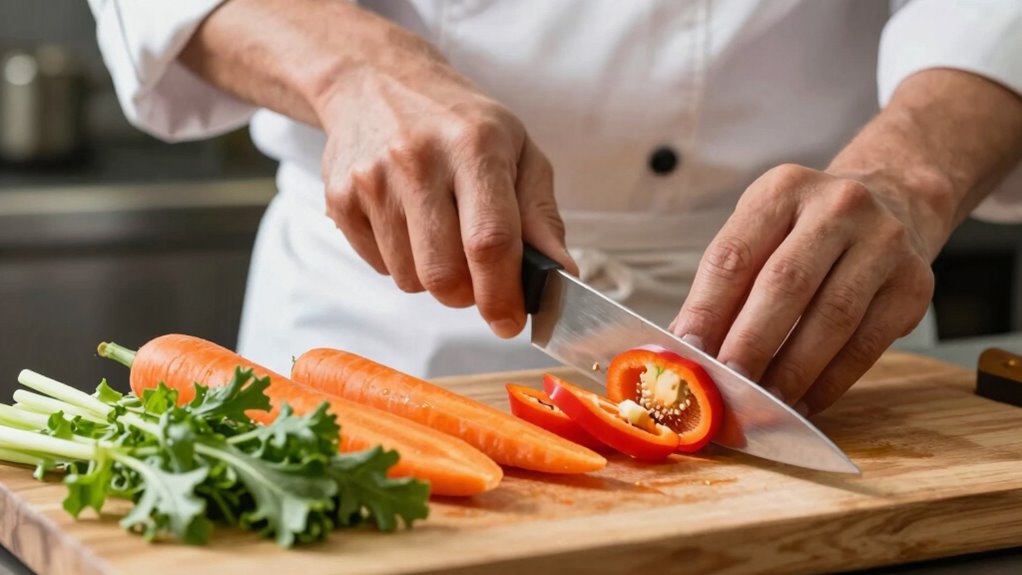
Mastering knife skills is essential for preparing a wide range of cuisines efficiently and safely. When you develop good technique, tasks like creating vegetable julienne cuts or slicing meat become quicker and more precise. These skills form the foundation that lets you handle different ingredients with confidence, whether you’re making a stir-fry, a salad, or a hearty stew.
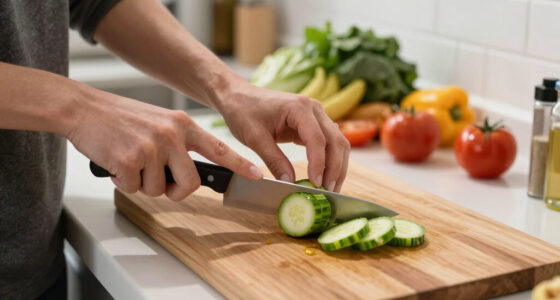
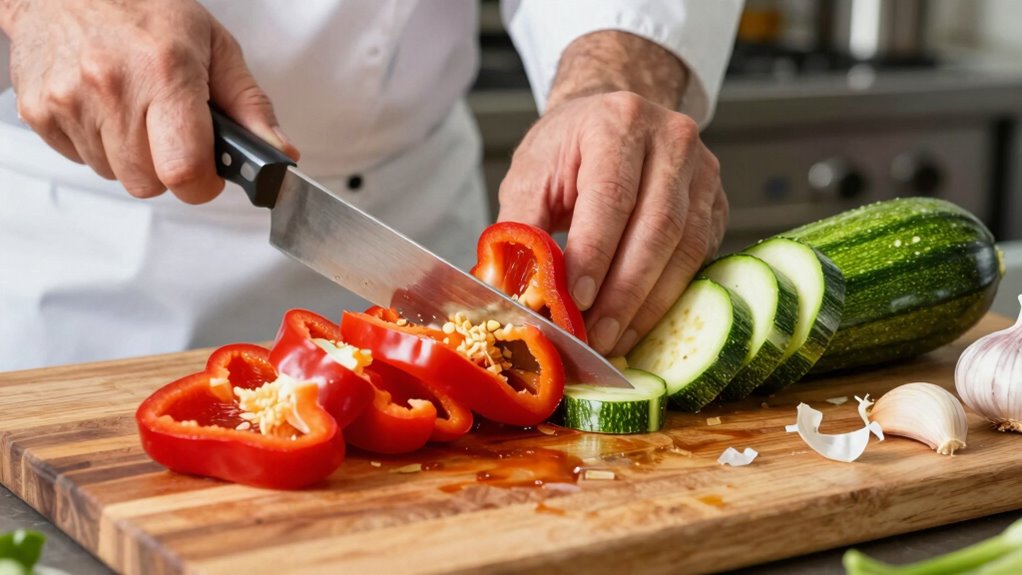
Vegetable julienne is a technique that requires careful control. When you slice vegetables into thin, uniform strips, you ensure even cooking and appealing presentation. To achieve this, you start by cutting the vegetable into manageable portions, then use a sharp knife to make long, consistent cuts. Keep your fingers tucked under your guiding hand to protect them from the blade, and maintain a steady, controlled motion. As you practice, you’ll notice your cuts becoming more uniform and your speed increasing. This skill isn’t just for aesthetics; it ensures that vegetables cook evenly, which is crucial in many dishes across Asian, European, and American cuisines. Developing good knife skills can also help you work more efficiently when handling different cutting techniques, and understanding how to maintain a sharp knife is a key part of safety and precision. Regular maintenance, including proper sharpening, ensures your knives stay effective and reduces the risk of accidents caused by dull blades.
Meat slicing is another fundamental skill that transfers well across many culinary traditions. Whether you’re preparing roast beef, chicken breasts, or fish fillets, slicing meat properly affects the texture and presentation of your dish. To do this effectively, you need a sharp, well-maintained knife. Always slice against the grain of the meat to maximize tenderness. When slicing, hold the meat steady with your non-dominant hand, and make smooth, confident strokes, applying even pressure. This technique minimizes tearing and ensures clean, thin slices. Proper meat slicing not only improves the look and feel of your dish but also helps it cook evenly if you’re preparing ingredients for stir-fries or sandwiches. Additionally, understanding proper knife maintenance can prolong the sharpness of your blades and improve safety during use. Both vegetable julienne and meat slicing demand precision, but they also build your overall knife confidence. As you become more comfortable with these techniques, you’ll find it easier to adapt to other cutting styles, whether you’re julienning carrots for a salad or slicing ham for a charcuterie board. The key is maintaining a sharp knife, practicing proper hand positioning, and making controlled, deliberate cuts. Developing good knife skills also involves understanding how to care for your knives, including proper sharpening and storage, which prolongs their effectiveness and safety. Learning proper knife care techniques can extend the lifespan of your blades and keep them performing at their best.
Ultimately, good knife skills transform your cooking experience. They allow you to prepare ingredients with consistency, speed, and safety—qualities that are valued in every cuisine. Whether you’re a beginner or an experienced cook, mastering vegetable julienne and meat slicing will elevate your dishes and enhance your confidence in the kitchen.
As an affiliate, we earn on qualifying purchases.
Frequently Asked Questions
What Are the Essential Knives for a Beginner’s Collection?
As a beginner, you should start with a chef’s knife, a paring knife, and a serrated bread knife. Keep your knives sharp through regular knife maintenance, like honing and occasional sharpening. Always follow knife safety tips, such as using a cutting board and keeping fingers tucked. These essential knives and safety practices will help you handle ingredients confidently and efficiently across various cuisines.
How Often Should I Sharpen My Kitchen Knives?
You should sharpen your kitchen knives every 1-3 months, depending on use. Regular knife maintenance keeps blades sharp and safe, so use proper sharpening techniques like honing with a steel or using a whetstone. If you notice your knives aren’t slicing as smoothly or require more pressure, it’s time to sharpen. Consistent maintenance prevents dullness, extends your knives’ life, and makes prep work easier and safer.
Can Proper Knife Skills Prevent Accidents?
Absolutely, proper knife skills can prevent accidents. By practicing safety techniques like keeping your knives sharp, controlling your cuts, and focusing on your task, you reduce the risk of slips and injuries. Regular knife maintenance guarantees blades stay effective and safe to use. When you stay attentive, use proper grip, and maintain your knives, you create a safer kitchen environment, minimizing the chances of accidents while cooking.
What Are Common Mistakes to Avoid When Slicing?
When slicing, avoid common mistakes like using an improper grip or inconsistent pressure. Always maintain a proper grip on your knife to guarantee control and safety. Apply consistent pressure as you cut, which helps create even slices and reduces the risk of slipping. Stay focused, and don’t rush your slices. These habits help prevent accidents and improve your overall technique, making your prep safer and more precise.
How Do I Choose the Right Cutting Board Material?
Choose a cutting board made from eco-friendly materials like bamboo or recycled plastic, which are durable and gentle on knives. Consider how you’ll preserve it; bamboo boards require regular oiling, while plastic ones are easier to clean. Proper cutting board maintenance ensures longevity and hygiene. Opt for a material that suits your kitchen habits and values, balancing durability, ease of cleaning, and environmental impact for the best cooking experience.
Conclusion
Mastering these knife skills isn’t just helpful — it’s like wielding a culinary superpower that transforms you into a kitchen legend across every cuisine! With just a few precise cuts, you’ll impress even the toughest food critics and turn ordinary ingredients into extraordinary dishes faster than you can say “Julienne.” So, sharpen that knife, practice relentlessly, and prepare to conquer kitchens worldwide — because once you’ve got these skills, the culinary universe is at your fingertips!
Halloween Picks
halloween
As an affiliate, we earn on qualifying purchases.